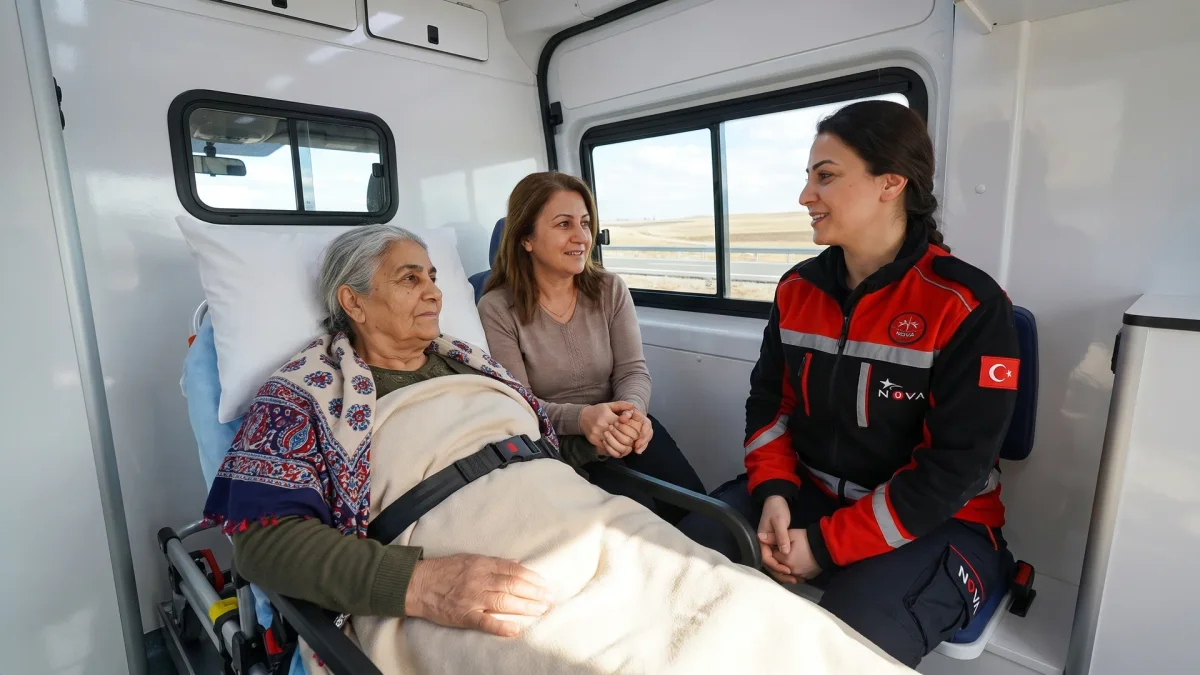
- Physical Comfort: Pain is reduced with position change and pillow support.
- Psychological Support: Clear and calm communication is established to eliminate uncertainty.
- Companion: Paying attention to your own health gives morale to the patient too.
- Nova Difference: Holistic comfort is provided with air conditioning, suspension, and experienced team.
Intercity or cross-country long ambulance journeys can be emotionally challenging as well as medical for the patient and relatives. Spending hours on a stretcher, moving away from the familiar environment, and the feeling of uncertainty increase anxiety. In this article, we focus on what can be done to increase comfort and strengthen psychological support in long-distance ambulance journeys.
Why is Physical Comfort Important?
Lying on a stretcher for a long time is challenging, especially for patients who are not used to being immobile or have pain problems:
- Waist, neck, and joint pains may increase.
- Pressure sore (bed sore) risk rises. [3]
- Staying in the same position affects circulation negatively. As noted in the EPUAP/NPIAP/PPPIA International Clinical Practice Guideline [3], regular repositioning during prolonged immobility is critical; repositioning frequency should be individualised to the person's mobility, tissue tolerance, and support surface. [3]
Therefore, professional ambulance teams:
As a companion, you can make small touches to increase the patient's comfort with the team's guidance.
Psychological Support: Power of Communication Along the Way
Patients frequently ask these questions on long journeys: "How much is left?", "What will happen when we get there?", "Will I be able to return?". These questions are natural reflections of anxiety and uncertainty. [1]
- Give the patient clear and realistic information about the destination.
- Emphasize that the doctor and team have a plan without going into too many medical details.
- If possible, ensure that a favorite item (shawl, photo, a small souvenir) is with them.
The calm and professional attitude of the ambulance team also ensures the patient feels safe.
Suggestions for Companions
Long journey is tiring not only for the patient but also for the companion:
- Eat light and balanced before setting off, do not neglect consuming water.
- Use deep breathing exercises to manage your own panic and anxiety. [1]
- Instead of interfering with the team's operation, be ready to give information when they need it.
Long Road Comfort at Nova Ambulans
Nova Ambulans, in long-distance transports:
- Advanced suspension systems
- Comfortable stretchers and air conditioning
- Communication-oriented approach of experienced teams
observes both medical safety and psychological comfort. Sharing your needs with our team before planning for all your transfers requiring long journeys is sufficient.
Frequently Asked Questions
How should I prepare the patient before a long ambulance journey?
It is important to collect the patient's regular medications, latest tests, and epicrisis in a single file and take it with you. Getting a written recommendation from your physician before the journey and asking for information especially about nutrition, fluid intake, and position makes the process safe.
What should I keep with me as a companion?
It will be practical to take water, light snacks, basic personal items, and spare clothes if necessary. Keeping phone charge and a written copy of important phone numbers on long roads also reduces possible communication problems.
Does sleeping along the way harm the patient or me?
As long as the team interested in the patient's medical follow-up is awake and controlled, it is generally not objectionable for the companion to rest for short periods. However, it is more appropriate not to stay in deep sleep for a long time to not miss information coming from the team and to give psychological support to the patient when necessary.
Rapid Emergency Support
24/7 emergency ambulance service across Istanbul. Fast response, fully equipped team.
Average response time: 15 seconds
Related Articles
How is Patient Safety and Comfort Ensured in Private Ambulance?
How Nova Ambulans ensures patient safety and comfort: regularly serviced equipment, trained medical crews, and personalised transport planning for every journey.
EducationAmbulance Personnel Training Standards: 2026 Regulation Update
The 8 January 2025 and 24 June 2025 regulatory amendments made ministry-designated training modules mandatory for every ambulance health worker in Türkiye: hour breakdown, certification cycle, and a family verification checklist.
EducationConcussion Symptoms After a Fall or Head Injury: Bystander Guide (2026)
After a fall or head injury, concussion symptoms bystanders must recognize, step-by-step first aid, the CDC HEADS UP danger signs that require calling 112 immediately, age-specific notes for children and elderly patients, and the recovery timeline — grounded in Türk Kızılay 2025 First-Aid Pocket Book pp.19-20 and 47-48, T.C. Ministry of Health May 2025 First-Aid Training Book Chapter X.A and VII.B, Gazi University Pediatric Emergency PECARN application review, Turkish Neurosurgery 2025 national survey (n=1,875 neurosurgeons), JAMA April 2026 pediatric concussion systematic review, and CDC HEADS UP with WHO falls data.
Popular Ambulance Topic Clusters
You may also like
- Private ambulance pricing
- Istanbul private ambulance
- Intercity patient transport
- Doctor-accompanied ambulance
- Dialysis patient transport
- How intercity patient transport works
- Ambulance response time in Istanbul
- Home-to-hospital patient transport
- Modern ambulance equipment and team standards
- Heart attack symptoms and first response
This content is informational only and does not replace professional medical evaluation. In emergencies, call 112 or +90 216 339 00 39.
