- Safety: Mark the scene and take personal protective measures.
- ABC Check: Check Airway, Breathing, and Circulation (bleeding).
- Immobilize: Do not move the patient if trauma is suspected.
- Calm: Keep the conscious patient calm by talking to them.
In an accident or sudden illness, the minutes passing after calling 112 or Nova Ambulans are critical. Simple and correct steps in these "golden minutes" increase the chance of survival [1][3]. The World Health Organization (WHO) reports that "an estimated 19.8 million people died from CVDs in 2022, representing approximately 32% of all global deaths" [6] — most of those acute events are time-sensitive. Here is what you need to do before the ambulance:
First Steps While Waiting for Ambulance
Ensure Safety First
Ensuring the safety of both yourself and the patient should be your first priority.
- Scene Safety: If it is a traffic accident, place warning signs (reflector etc.) to prevent other accidents. If there is a danger like fire or gas leak, carefully move the patient to a safe area.
- Personal Protection: Protect yourself from blood or other body fluids by wearing disposable gloves if possible.
Assess the Patient's Condition (ABC)
- A (Airway): If the patient is unconscious, check if the airway is open. Clean if there is a foreign object in their mouth. If there is no suspicion of trauma or a neck/spine injury, open the airway with the head-tilt, chin-lift manoeuvre (gently tilt the head back and lift the chin). If a fall, traffic accident, or neck/spine injury is suspected, do not tilt the head; keep the head and neck still and try to open the airway with the jaw-thrust manoeuvre instead [2][3].
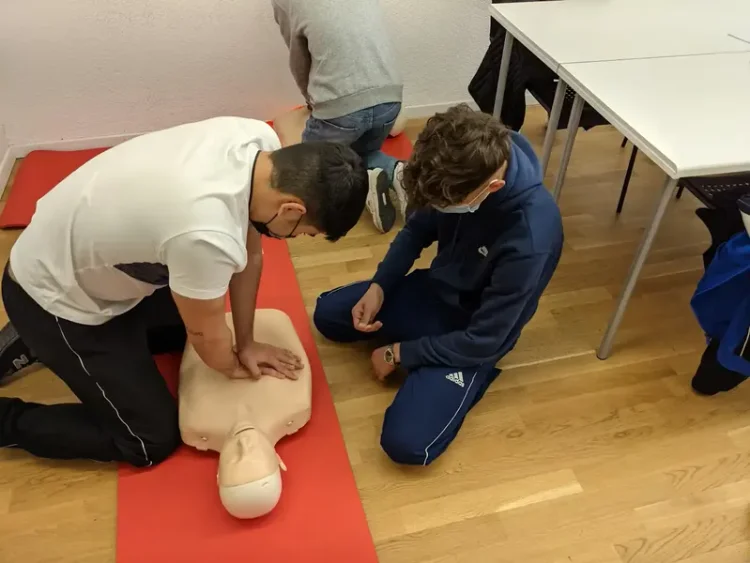
- B (Breathing): Check if the patient is breathing with the "Look-Listen-Feel" method for 10 seconds [3]. Look for chest movement, listen for breath sounds, and try to feel their breath on your cheek. If there is no breathing, start basic life support. If you are not trained, perform hands-only chest compressions; if you are trained, continue cycles of 30 chest compressions and 2 rescue breaths. In either case, push hard and fast in the centre of the chest at 100–120 compressions per minute, depressing the chest 5–6 cm [1][2].
- C (Circulation): Check for serious bleeding. If there is active bleeding, press directly and firmly on the wound with a clean cloth or piece of clothing [2]. Try to keep the bleeding area above heart level.
Do Not Move the Patient
If there is a suspicion of a fall, traffic accident, or trauma, absolutely do not move the patient [3]. Especially if there is a risk of head, neck, and spine injuries, keeping the patient stable is vital. The only exception is if there is a vital danger where the patient is located (fire, explosion risk, etc.).
Inform and Calm Down
If the patient is conscious, help them stay calm by talking to them. Say who you are, state that help is on the way, and try to keep their consciousness open by asking simple questions.
Frequently Asked Questions
Who is responsible if the ambulance arrives late?
As long as you make the call to the right address, with clear information, and on time, you have done your part. Although you cannot control the time, factors like address clarity and scene safety are in your hands and can speed up the intervention.
Should I intervene without knowing basic life support (Cardiopulmonary Resuscitation, CPR)?
The American Heart Association reports that "more than 417,000 cardiac arrest deaths occur each year in the U.S." and notes that "cardiac arrest may be treated if CPR is performed and a defibrillator shocks the heart and restores a normal heart rhythm within a few minutes" [5]. If the person is unresponsive and not breathing, hands-only chest compressions in the centre of the chest at 100–120/min can save a life — the 112 operator will guide you step by step. The Centers for Disease Control and Prevention (CDC) confirms that "the more time that passes without treatment to restore blood flow, the greater the damage to the heart muscle" [7], so untrained intervention is far better than waiting passively.
Information: If you called Nova Ambulans and have a private hospital preference, our team will check the hospital capacity status and direct you to the most suitable private hospital or the nearest public hospital.
How can I manage the crowd until the ambulance arrives?
You can ask a specific person for help to pull the crowd back, ensure curious people do not take images, and keep the road open. Clear and calm instructions facilitate the health team's job and protect the patient's privacy.
Rapid Emergency Support
24/7 emergency ambulance service across Istanbul. Fast response, fully equipped team.
Average response time: 15 seconds
Related Articles
Ambulance Personnel Training Standards: 2026 Regulation Update
The 8 January 2025 and 24 June 2025 regulatory amendments made ministry-designated training modules mandatory for every ambulance health worker in Türkiye: hour breakdown, certification cycle, and a family verification checklist.
EducationDog and Cat Bite First Aid: Rabies Risk, the 15-Minute Wash and When to Call 112
If a dog or cat bites or scratches you, wash the wound at once with plenty of soap and water for at least 15 minutes, press directly on it if it bleeds, cover it with a clean cloth and go to a health facility the same day. Rabies cannot be treated once symptoms begin; a doctor decides whether you need the vaccine. Call 112 for bleeding that pressure does not stop or for any threat to life.
EducationMushroom Poisoning Symptoms and First Aid: When Do Symptoms Start, When to Call 112?
If nausea, vomiting, diarrhea, abdominal pain or any other symptom begins after eating foraged mushrooms or mushrooms of unknown origin, call 112, whatever hour it began; do not induce vomiting and give nothing by mouth. People without symptoms, including a child who ate a mushroom in a garden or park, still need hospital assessment; call 112 and explain, because with amatoxin, which damages the liver, the symptom-free interval averages 8-10 hours. The National Poison Information Center (UZEM) on 114 gives advice but does not replace 112.
Popular Ambulance Topic Clusters
You may also like
- Private ambulance pricing
- Istanbul private ambulance
- Intercity patient transport
- Doctor-accompanied ambulance
- Dialysis patient transport
- How intercity patient transport works
- Ambulance response time in Istanbul
- Home-to-hospital patient transport
- Modern ambulance equipment and team standards
- Heart attack symptoms and first response
This content is informational only and does not replace professional medical evaluation. In emergencies, call 112 or +90 216 339 00 39.
