
Carbon Monoxide Poisoning in Winter: Symptoms, First Aid, and When to Call an Ambulance
Carbon monoxide (CO) poisoning symptoms are often mistaken for the flu. Learn the warning signs, step-by-step first aid, prevention tips, and when to call 112 or Nova Ambulans.
💡Özet & Önemli Notlar
- CO Symptoms: Headache, nausea, and dizziness are often mistaken for the flu -- think CO.
- First Aid: Ventilate the area and move the person to fresh air immediately, then call 112 or Nova Ambulans.
- Risk Groups: Infants, the elderly, pregnant women, and those with chronic illness are affected faster.
- Prevention: Regular chimney maintenance, boiler servicing, and CO alarms save lives.
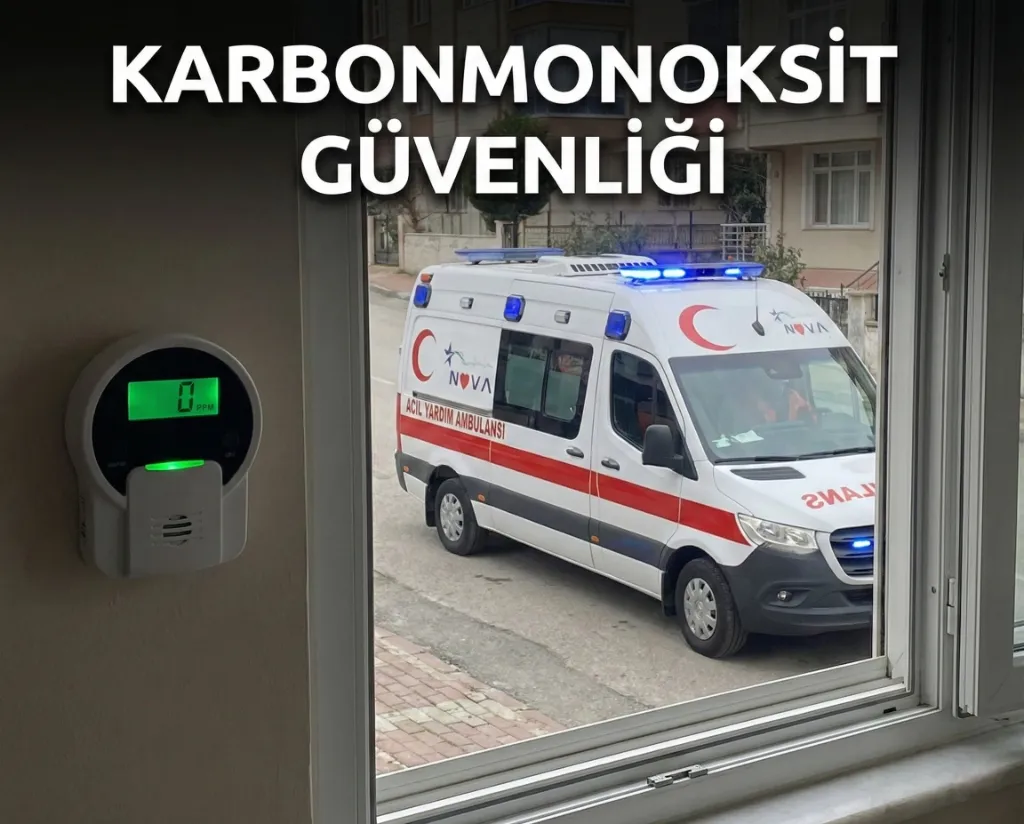
During winter, the increased use of stoves, boilers, water heaters, and similar heating devices -- combined with chimney blockages, poor ventilation, and equipment malfunctions -- raises the risk of carbon monoxide poisoning. Carbon monoxide (CO) is a colorless, odorless, and non-irritating gas, making it one of the most difficult poisons to detect. [1][2] This guide walks you through CO symptoms, practical first aid steps you can apply at home, and clear criteria for when to call 112 or an ambulance.
What Is Carbon Monoxide (CO) and Why Is It Dangerous?
Carbon monoxide forms when fuels such as natural gas, coal, wood, and gasoline undergo incomplete combustion. When inhaled, CO passes from the lungs into the bloodstream and binds to hemoglobin far more strongly than oxygen, disrupting oxygen delivery to tissues throughout the body. [1] This is why CO exposure can cause headache and nausea within minutes, progressing to loss of consciousness and life-threatening complications.
CO poisoning in winter commonly occurs in these scenarios:
- Stove poisoning: Improper ignition, leaving the stove lit overnight, or using low-quality coal
- Chimney blockage or reverse draft (caused by wind, bird nests, soot buildup, or lack of maintenance)
- Boiler or water heater leaks or combustion problems
- Generators or motor-powered devices running in enclosed spaces
- Running a car engine in a closed garage or parking area
Why Is CO Poisoning More Common in Winter?
In winter, homes are kept sealed to retain heat. Windows stay closed for extended periods, ventilation grilles are blocked, and chimneys go uncleaned. These conditions cause indoor CO levels to rise. The danger is especially acute at night, when household members are asleep and CO accumulates to hazardous concentrations unnoticed.
Carbon Monoxide Poisoning Symptoms
CO poisoning symptoms are frequently mistaken for the flu, which delays recognition. [2] The following complaints should raise suspicion of CO exposure, especially if multiple people in the same household develop symptoms simultaneously.
Early Symptoms
- Headache (the most common symptom) [1]
- Dizziness and lightheadedness
- Nausea and vomiting (headache and nausea often occur together)
- Fatigue, weakness, and drowsiness
- Shortness of breath (especially in those with heart or lung disease)
- Palpitations and chest tightness
Moderate to Severe Symptoms
- Difficulty concentrating, confusion (mental fog)
- Loss of balance, difficulty walking
- Visual disturbances
- Loss of consciousness
- Seizures, fainting
- Cherry-red or unusually flushed skin (though this sign may be subtle or absent) [1] and severe respiratory distress
Who Is at Higher Risk?
- Infants and children
- Elderly adults
- Pregnant women
- Those with heart disease, COPD, asthma, or other chronic conditions [1][2]
- People who are asleep when exposure occurs (nighttime stove/boiler scenarios)
First Aid for Carbon Monoxide Poisoning: What to Do at Home
The most critical action when CO poisoning is suspected is to stop the exposure immediately and provide fresh air. [1][2] The following steps can be lifesaving until professional help arrives.
1) Ensure Your Own Safety First
CO is odorless, so a rescuer entering the space can quickly become affected as well. If possible:
- Open doors and windows to ventilate the area.
- If an unconscious person is inside, do not remain in the enclosed space alone and unprotected for a prolonged period.
2) Move the Person to Fresh Air
- Take the affected person outdoors or to a well-ventilated area as quickly as possible.
- Do not remain in the enclosed space; CO accumulation may still be ongoing.
3) Call 112 or Nova Ambulans and Describe the Situation Clearly
When calling 112 or Nova Ambulans (0216 339 00 39), provide the following information:
- Suspected carbon monoxide poisoning (mention stove, boiler, or heater if applicable)
- How many people are affected
- Level of consciousness (awake, drowsy, or unconscious)
- Full address and access details
4) Basic Checks for an Unconscious Person
- Check whether they are breathing.
- If there is no breathing and you are trained, begin CPR (basic life support). [3]
- Do not give food or drink to an unconscious person.
- If the person is unconscious and vomiting, position them to protect the airway (if untrained, follow the phone guidance from 112 or Nova Ambulans).
5) Shutting Off the Source -- Exercise Caution
- If it is safe to do so, the stove or boiler can be turned off. However, the priority is getting people out of the environment.
- If shutting off a gas valve seems risky, do not waste time -- professional teams will handle it.
When Should You Call an Ambulance? (112 or Nova Ambulans)
Even seemingly mild CO exposure ("I just had a headache, it passed") can progress insidiously. In the following situations, do not delay calling an ambulance:
Always Call 112 or Nova Ambulans (0216 339 00 39) For:
- Loss of consciousness, fainting, or unresponsiveness
- Seizures
- Severe shortness of breath, chest pain, or pronounced palpitations
- Persistent vomiting, marked weakness, or excessive drowsiness
- CO suspected in a pregnant woman, baby, child, elderly person, or someone with chronic disease
- Similar symptoms appearing in multiple people in the same household simultaneously
- Symptoms that do not fully resolve after moving to fresh air, or that recur shortly after
Why Is Medical Evaluation Important Even for "Mild" Cases?
Because CO disrupts tissue oxygenation, some individuals may appear to have minimal symptoms while still facing ongoing risk. Medical evaluation ensures appropriate treatment -- including oxygen therapy and hospital monitoring when needed -- and reduces the risk of delayed complications.
What Happens at the Hospital? (Brief Overview)
Medical teams will typically address CO poisoning with:
- Oxygen therapy
- Monitoring of vital signs (pulse, respiratory rate, blood pressure, oxygen saturation)
- Necessary blood tests and physician assessment
The goal is to restore adequate oxygen delivery to tissues and minimize the risk of complications.
Winter Safety: Practical Tips to Prevent CO Poisoning
Carbon monoxide poisoning is largely preventable. The following precautions are critical during winter months:
For Stove Users
- Have a plan to safely extinguish the stove before going to sleep; avoid leaving it burning overnight.
- Burn coal properly; do not overload the stove.
- Ventilate the room regularly.
Chimney Blockage and Maintenance
- Have chimneys cleaned regularly to reduce soot buildup and blockage risk.
- Be aware that strong winds can cause reverse drafts; if you develop a headache or dizziness, think of CO.
Boiler and Water Heater Safety
- Schedule periodic maintenance for your boiler combustion system.
- Do not seal ventilation grilles; ensure the room where the device is located has adequate airflow.
- If you feel sudden weakness or dizziness in the bathroom while the water heater is running, leave the area immediately.
CO Alarm Devices
- Installing carbon monoxide alarms in appropriate locations provides early warning [2] (especially near stoves, boilers, and bedrooms).
- Test alarms periodically and replace batteries as recommended.
Private Ambulance Support in Istanbul: Nova Ambulans
In suspected carbon monoxide poisoning, rapid and accurate triage can be lifesaving. Nova Ambulans provides 24/7 emergency ambulance service in Istanbul with professional crews and appropriate equipment for both emergency situations and patient transport needs. In CO exposure, the correct approach is to move the person safely to fresh air, call 112 or Nova Ambulans (0216 339 00 39), and not delay medical evaluation. The key difference: 112 transports to the nearest public hospital, while Nova Ambulans can take you to the private hospital of your choice.
Conclusion
During winter, carbon monoxide poisoning can strike suddenly due to stove, boiler, and chimney-related risks. It often starts with flu-like symptoms but can escalate rapidly. Take early signs such as headache, nausea, and dizziness seriously -- especially if multiple household members are affected simultaneously. In first aid, the priority is fresh air and rapid medical assistance. For loss of consciousness, shortness of breath, chest pain, or exposure involving pregnant women, children, or the elderly, call 112 or Nova Ambulans (0216 339 00 39) without hesitation.
Frequently Asked Questions
Where should carbon monoxide detectors be placed in a home?
Install at least one CO detector on every floor, near sleeping areas, and at ceiling height or on a wall 15-30 cm below the ceiling. Avoid placing detectors directly next to fuel-burning appliances, windows, or in bathrooms where steam may cause false alarms.
What are the earliest symptoms of carbon monoxide poisoning?
The earliest symptoms include headache, dizziness, nausea, and fatigue. Because these mimic flu symptoms, a key warning sign is when multiple people in the same enclosed space develop similar complaints simultaneously.
What should I do immediately if I suspect CO poisoning?
Open all windows and doors, turn off all fuel-burning appliances, evacuate everyone from the building, and call 112 or Nova Ambulans immediately. Do not re-enter the building until emergency services confirm it is safe.
How is carbon monoxide poisoning treated?
Treatment involves high-flow oxygen therapy to displace CO from hemoglobin. In severe cases, hyperbaric oxygen therapy in a specialized chamber may be required. Early medical intervention significantly improves outcomes.
Sonraki Adım: Ambulans Gerekir mi?
1 dakikalık lojistik kontrol listesi ile hızlı karar verin. Tıbbi veri paylaşmadan WhatsApp üzerinden fotoğraf, konum ve kat bilgisi gönderebilirsiniz.
- Asansör/sedye erişimi var mı?
- Başlangıç ve varış noktası net mi?
- Tahmini çıkış saati ve refakatçi hazır mı?
İlgili Yazılar
Ramazan'da Sağlık Riskleri: Kronik Hastalar İçin Acil Durum Rehberi
Ramazan orucunda diyabet, tansiyon ve kalp hastaları için sağlık riskleri, hipoglisemi belirtileri ve ne zaman ambulans çağrılır — uzman rehberi.
EğitimModern Ambulans Ekipmanları ve Ekip Standartları
Güncel ambulanslarda bulunması gereken temel ekipmanlar ve acil sağlık ekibinin sahip olması gereken yetkinlikler.
Hizmet BilgisiAmbulans Türleri: Kırmızı Şerit, Mavi Şerit, Yoğun Bakım ve Özel Donanımlı Ambulanslar
Türkiye'deki dört ambulans türü: kırmızı şeritli acil yardım, gri gövdeli mavi şeritli hasta nakil, yoğun bakım ve özel donanımlı ambulansların farkları, personel yapıları ve 2025 yönetmelik değişiklikleri.
Kaynaklar
- World Health Organization (WHO) - Carbon Monoxide — World Health Organization
- Centers for Disease Control and Prevention (CDC) - CO Poisoning — Centers for Disease Control and Prevention
- American Heart Association (AHA) — American Heart Association
Popüler Ambulans Konu Kümeleri
İlginizi çekebilir
- Diyaliz hasta nakli
- Yatalak / yoğun bakım nakli
- Havalimanı ambulans transferi
- Organizasyon ambulansı
- Özel ambulans ücretleri
- İstanbul'da ambulans kaç dakikada gelir?
- Hasta nakli için doğru ambulans nasıl seçilir?
- Ambulans beklerken: hasta yakınları rehberi
- Modern ambulans ekipmanları ve ekip standartları
- Kalp krizi belirtileri ve ilk müdahale
Tıbbi İnceleme ve Sorumluluk Reddi
Bu içerik Nova Ambulans Sağlık Kurulu tarafından tıbbi doğruluk açısından gözden geçirilmiştir. İnceleme politikası ve kurul üyeleri için Sağlık Kurulu sayfasını ziyaret edin.
Sağlık Kurulu sayfasına gitBu içerik yalnızca bilgilendirme amaçlıdır ve profesyonel tıbbi değerlendirmenin yerine geçmez. Acil durumda 112’yi veya 0216 339 00 39’u arayın.