
Winter Frostbite and Hypothermia Risk: First Aid After Falls on Ice and When to Call an Ambulance
First aid steps after falls on icy surfaces, fracture assessment, head trauma evaluation, hypothermia prevention, and when to call 112 or Nova Ambulans in winter.
💡Özet & Önemli Notlar
- Icy Surface Risk: An uncontrolled fall can cause fractures, head trauma, and hypothermia simultaneously.
- Hypothermia: Prolonged exposure to cold can drop body temperature to dangerous levels, even in seemingly mild conditions.
- First Aid: Do not move the patient unnecessarily, prevent heat loss, and monitor vital signs.
- Emergency: Call 112 or Nova Ambulans immediately if there is loss of consciousness, suspected fracture, or cyanosis.
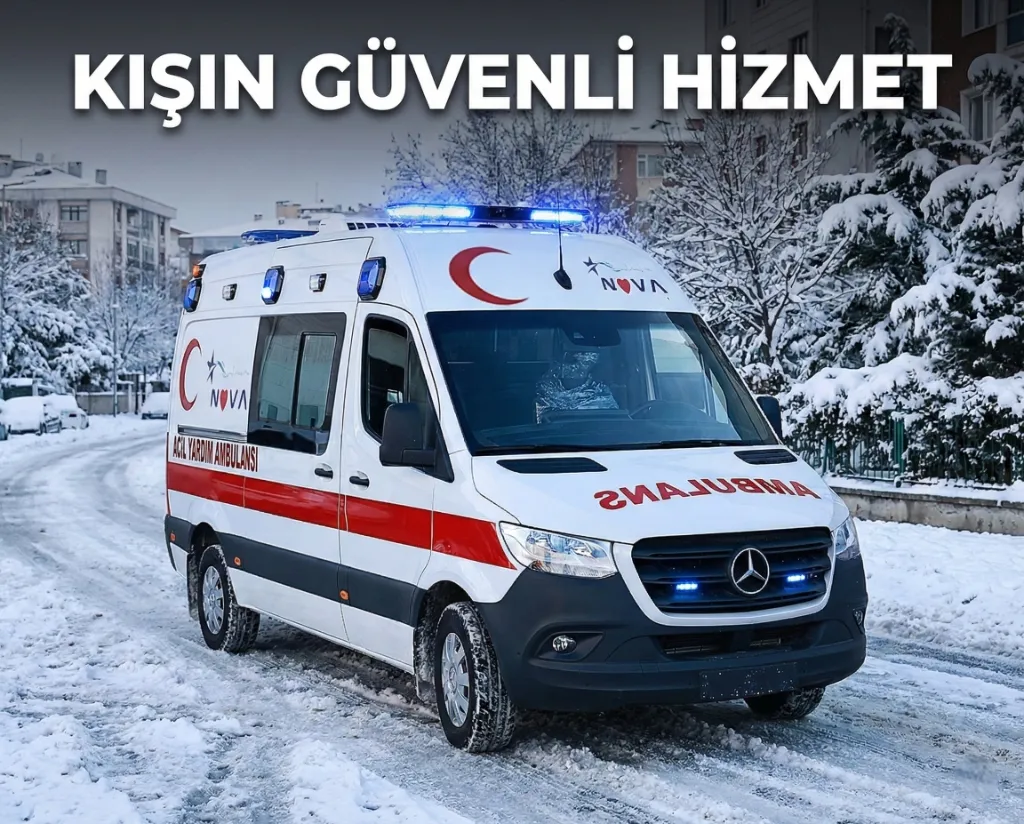
Winter in Istanbul brings icy sidewalks, slippery surfaces, and low temperatures that significantly increase the risk of falls, fractures, sprains, head injuries, and hypothermia. For elderly individuals, a fall followed by prolonged exposure to cold ground can quickly progress to hypothermia without anyone noticing. [1] This guide covers the correct first aid steps after a fall on ice, how to recognize hypothermia, and when to call 112 or a private ambulance.
Why Are Icy Conditions More Dangerous in Winter?
Falls on icy ground may seem like simple slips, but they can produce serious outcomes for several reasons:
- Uncontrolled falls: Reflexively extending an arm increases the risk of wrist fractures and shoulder injuries. [2]
- Head striking the ground: Risk of concussion and traumatic brain injury.
- Prolonged cold exposure: The longer a person remains on the ground, the higher the risk of hypothermia.
- Elderly fragility: Osteoporosis and balance problems make serious injuries such as hip fractures far more common. [2]
What Is Hypothermia? Who Is at Higher Risk?
Hypothermia occurs when the body's core temperature drops to a dangerously low level. [3] It does not only happen in extreme cold; wet clothing, wind, prolonged immobility, and inadequate clothing can all trigger it.
High-Risk Groups
- Elderly adults (thermoregulation weakens with age; after a fall, time spent on the ground may be prolonged)
- Infants and young children
- People with chronic conditions (cardiovascular disease, diabetes, etc.)
- Those under the influence of alcohol or sedatives
- People living alone
Recognizable Signs of Hypothermia
- Shivering (in advanced hypothermia, shivering may decrease or stop) [3]
- Slurred speech, drowsiness, confusion
- Loss of coordination, stumbling
- Pale or cold skin, bluish lips
- Altered consciousness or fainting
These signs are especially urgent when they follow a fall and prolonged contact with cold ground.
First Assessment After a Fall on Ice: Safety First
Before helping someone who has fallen, ensure environmental safety:
- Protect yourself from slipping (approach from a non-slippery surface if possible).
- If near traffic, increase visibility (hazard lights, reflective items, alert bystanders).
- Do not attempt to lift the person before performing a quick assessment.
Step-by-Step First Aid After a Fall
1) Check Consciousness and Breathing
- Call out to the person and gently tap their shoulder.
- Check whether they are breathing.
- If unconscious or not breathing normally, call 112 or Nova Ambulans (0216 339 00 39) and follow basic life support guidelines.
2) Check for Severe Bleeding
- Apply direct pressure with a clean cloth.
- If bleeding is pulsating or will not stop, call 112 or Nova Ambulans (0216 339 00 39) immediately.
3) Watch for Head Trauma Signs
A person who hit their head may initially appear fine, but dangerous symptoms can develop later. This is especially true for elderly individuals and those taking blood thinners.
Call an ambulance if you observe any of the following:
- Any loss of consciousness, even briefly
- Severe headache or repeated vomiting
- Increasing drowsiness, confusion, or behavioral changes
- Weakness in arms or legs, speech difficulty
- Blood or clear fluid from the ears or nose
- Unequal pupils or seizures
4) Fracture vs. Sprain: How to Tell
Moving a fractured limb can worsen the injury significantly.
Signs suggesting a fracture: [2]
- Visible deformity or abnormal angle
- Severe pain, inability to bear weight
- Rapidly increasing swelling and bruising
- Bone visible through an open wound (open fracture)
Signs suggesting a sprain or strain:
- Pain limited to a joint with some range of motion
- Swelling and tenderness
- Generally no visible deformity (definitive diagnosis requires imaging)
5) Basic First Aid Measures
- Do not force the person to stand, especially if they report hip, back, or neck pain.
- Immobilize the suspected area (if you lack splinting knowledge, simply support it and prevent sudden movement).
- Apply cold packs for swelling (place a cloth between ice and skin; 10-15 minutes at a time). [4] Note: if the person is already cold from the environment, do not over-cool them -- preventing hypothermia takes priority.
- Do not administer pain medication unless directed by a physician.
- Stay with the person and monitor their consciousness, skin color, and breathing.
Fall + Cold Exposure: Preventing Hypothermia at the Scene
If the person has been lying on the ground or is wearing wet or thin clothing, hypothermia may develop simultaneously. The goal of first aid is to stop heat loss and warm safely.
What to Do
- Move the person to a sheltered area away from wind and cold (only if safe to do so).
- If possible, remove wet clothing and wrap them in dry blankets or clothing. [3]
- Protect the head and neck area (significant heat is lost through the head).
- If the person is conscious and can swallow safely, offer a warm (not hot) beverage. Never give alcohol. [1]
What NOT to Do
- Do not rewarm the person rapidly or aggressively (no very hot showers, no placing directly against a heater). [3]
- Do not give food or drink to someone with altered consciousness.
- Avoid excessive movement (in severe hypothermia, the heart rhythm can be fragile). [1]
When to Call an Ambulance: 112 and Nova Ambulans Both Handle Emergencies
In winter conditions, a "wait and see" approach can lead to dangerous delays for fractures, head trauma, and hypothermia. Do not postpone the decision to call an ambulance in the following situations.
Call 112 or Nova Ambulans (0216 339 00 39) for These Emergencies
- Loss of consciousness, seizures, absent or abnormal breathing
- Severe bleeding
- Head trauma signs (vomiting, drowsiness, speech difficulty, neurological symptoms)
- Neck or back pain, suspected spinal injury
- Suspected hip fracture (especially in elderly patients who cannot move their leg or bear weight after a fall)
- Open fracture or visible deformity
- Chest pain or shortness of breath
- Moderate to severe hypothermia signs (confusion, cyanosis, reduced shivering, extreme drowsiness)
When Is a Private Ambulance Appropriate?
If there is no immediate life-threatening emergency but safe, supervised transport is needed, a private ambulance can be helpful. Examples include:
- Fall patients who cannot walk and need patient transport to a hospital
- Transport to an orthopedic assessment with immobilization
- Planned post-discharge transfers between home and hospital
- Elderly fall patients whose general condition seems stable but who require safe handling
Nova Ambulans provides 24/7 private ambulance service in Istanbul with professional equipment, stretchers, immobilization tools, and experienced crews for these situations.
Falls in the Elderly: Why They Require Extra Attention
Falls in elderly individuals can be far more than a simple bruise:
- Hip fracture risk is high, and early intervention is critical. [2]
- Those on blood thinners face an increased risk of intracranial bleeding. [2]
- Cold tolerance decreases with age; lying on the ground after a fall accelerates hypothermia.
If an elderly loved one has fallen, do not delay medical evaluation even if they "look fine." Watch for pain, dizziness, head impact, inability to walk, or shivering and chills.
Winter Safety: Practical Tips to Prevent Falls on Ice
- Wear shoes with non-slip soles; take shorter steps on icy days.
- Use handrails on stairs and slopes; do not walk with your hands in your pockets.
- For elderly individuals, a cane tip with a non-slip attachment can be very helpful.
- Ensure that building entrances, driveways, and walkways are salted or sanded.
- Keep your phone fully charged so you can quickly reach 112 or Nova Ambulans (0216 339 00 39) in an emergency.
Conclusion
A winter fall on ice can result in a fracture or head trauma on its own. When combined with cold exposure, hypothermia adds another layer of danger. The correct first aid approach is to avoid unnecessary movement, check vital signs, reduce heat loss, and call 112 or Nova Ambulans (0216 339 00 39) at the right time. Both handle emergencies -- 112 transports to the nearest public hospital, while Nova Ambulans can take you to the private hospital of your choice. When in doubt, calling for professional help without delay is always the safest option.
Frequently Asked Questions
Which body parts are most vulnerable to frostbite?
Fingers, toes, nose, ears, and cheeks are most susceptible because they have the least blood flow protection in cold conditions. Exposed skin in windy or wet conditions is especially at risk.
What are the stages of hypothermia?
Mild hypothermia involves intense shivering and impaired coordination. Moderate hypothermia is marked by slowed speech, drowsiness, and shivering that may stop. Severe hypothermia causes loss of consciousness, rigid muscles, and cardiac irregularities — this stage requires immediate emergency medical care.
What are the dos and don'ts of warming a hypothermic person?
Do move the person to a warm, sheltered area, remove wet clothing, and cover with dry blankets. Do not use hot water, heating pads, or direct heat sources; do not rub frostbitten areas; and do not give alcohol. Use gradual, gentle warming and seek medical help immediately.
When should I go to the hospital for cold-weather injury?
Seek emergency care if you notice white or blue-gray skin, skin that feels hard or waxy, loss of sensation, blistering, confusion, shivering that suddenly stops, or altered consciousness. These signs indicate serious cold injury requiring professional treatment.
Sonraki Adım: Ambulans Gerekir mi?
1 dakikalık lojistik kontrol listesi ile hızlı karar verin. Tıbbi veri paylaşmadan WhatsApp üzerinden fotoğraf, konum ve kat bilgisi gönderebilirsiniz.
- Asansör/sedye erişimi var mı?
- Başlangıç ve varış noktası net mi?
- Tahmini çıkış saati ve refakatçi hazır mı?
İlgili Yazılar
Ramazan'da Sağlık Riskleri: Kronik Hastalar İçin Acil Durum Rehberi
Ramazan orucunda diyabet, tansiyon ve kalp hastaları için sağlık riskleri, hipoglisemi belirtileri ve ne zaman ambulans çağrılır — uzman rehberi.
EğitimModern Ambulans Ekipmanları ve Ekip Standartları
Güncel ambulanslarda bulunması gereken temel ekipmanlar ve acil sağlık ekibinin sahip olması gereken yetkinlikler.
Hizmet BilgisiAmbulans Türleri: Kırmızı Şerit, Mavi Şerit, Yoğun Bakım ve Özel Donanımlı Ambulanslar
Türkiye'deki dört ambulans türü: kırmızı şeritli acil yardım, gri gövdeli mavi şeritli hasta nakil, yoğun bakım ve özel donanımlı ambulansların farkları, personel yapıları ve 2025 yönetmelik değişiklikleri.
Kaynaklar
- World Health Organization (WHO) - Hypothermia — World Health Organization
- American Academy of Orthopaedic Surgeons (AAOS) — aaos.org
- Centers for Disease Control and Prevention (CDC) - Hypothermia — Centers for Disease Control and Prevention
- European Resuscitation Council (ERC) — European Resuscitation Council
Popüler Ambulans Konu Kümeleri
İlginizi çekebilir
- Diyaliz hasta nakli
- Yatalak / yoğun bakım nakli
- Havalimanı ambulans transferi
- Organizasyon ambulansı
- Özel ambulans ücretleri
- İstanbul'da ambulans kaç dakikada gelir?
- Hasta nakli için doğru ambulans nasıl seçilir?
- Ambulans beklerken: hasta yakınları rehberi
- Modern ambulans ekipmanları ve ekip standartları
- Kalp krizi belirtileri ve ilk müdahale
Tıbbi İnceleme ve Sorumluluk Reddi
Bu içerik Nova Ambulans Sağlık Kurulu tarafından tıbbi doğruluk açısından gözden geçirilmiştir. İnceleme politikası ve kurul üyeleri için Sağlık Kurulu sayfasını ziyaret edin.
Sağlık Kurulu sayfasına gitBu içerik yalnızca bilgilendirme amaçlıdır ve profesyonel tıbbi değerlendirmenin yerine geçmez. Acil durumda 112’yi veya 0216 339 00 39’u arayın.