
Regular Transport Services for Dialysis Patients: Safety, Scheduling, and Comfort
How scheduled dialysis transport services protect treatment continuity, ensure fistula and catheter safety, and improve quality of life for chronic kidney patients in Istanbul.
💡Özet & Önemli Notlar
- Dialysis patients need reliable transport 2-3 times per week -- missed sessions carry serious health risks.
- Professional ambulance transport is critical for protecting fistulas and catheters during transfers.
- A consistent transport schedule directly supports treatment adherence and patient comfort.
- Nova Ambulans offers planned, reliable transport for chronic patients: 0216 339 00 39.
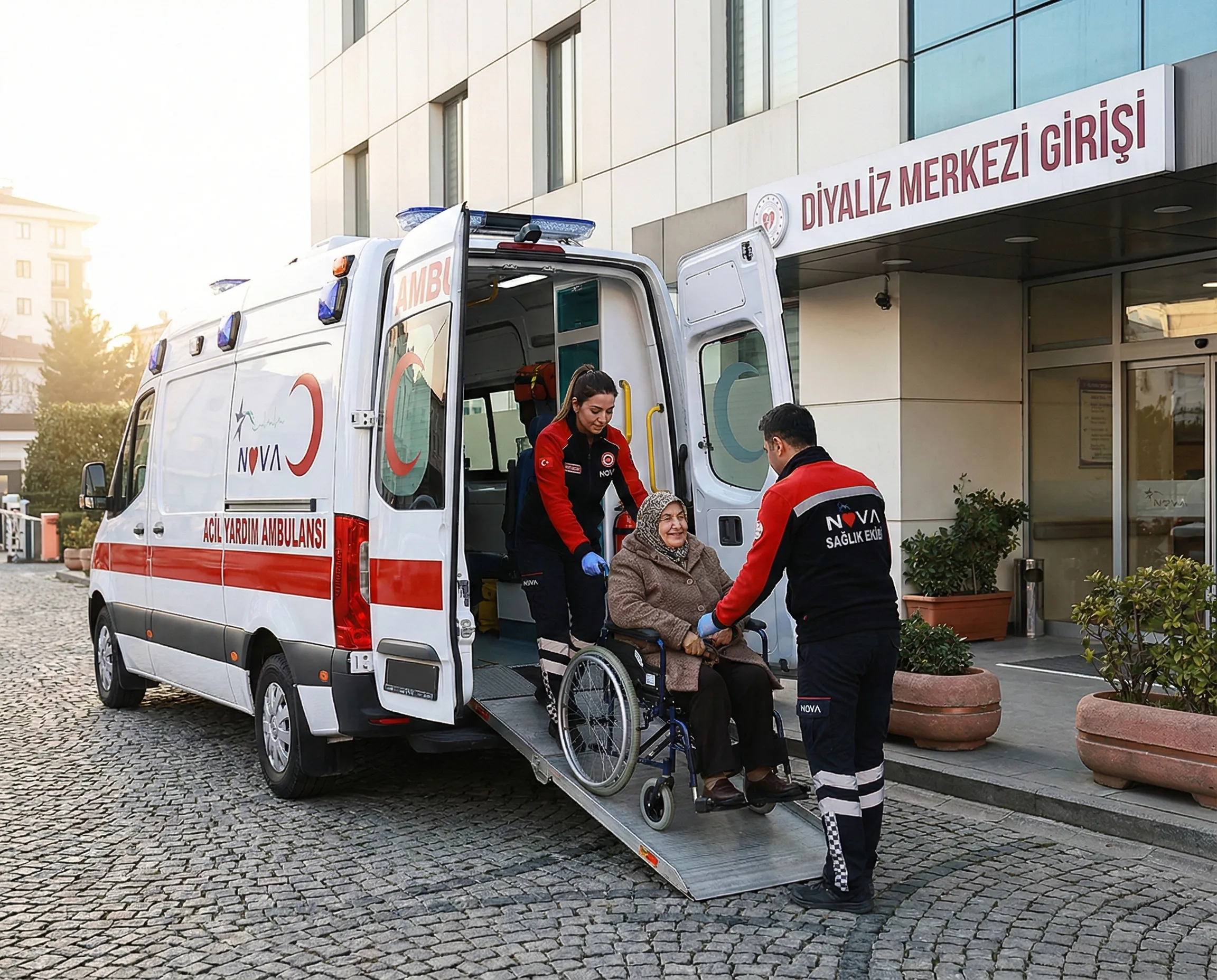
Dialysis is an essential, life-sustaining treatment for people living with chronic kidney failure [1]. Traveling to a hospital or dialysis center two to three times per week [1] becomes especially challenging for patients dealing with advanced age, comorbidities, limited mobility, or post-session fatigue. This is where scheduled dialysis transport services make a critical difference -- protecting the patient's health, maintaining treatment continuity, and preserving quality of life.
In a city like Istanbul, where traffic conditions are unpredictable, a disrupted transport plan can lead to missed appointment times, delayed treatment, and significant physical and psychological strain on the patient. Nova Ambulans addresses this with structured, professional transport solutions designed specifically for dialysis patients.
Why Regular Transport Is Vital for Dialysis Patients
Dialysis must be performed at specific intervals on a consistent schedule. When the transport plan is unreliable, the entire treatment routine is placed at risk.
Treatment Continuity and Appointment Discipline
Missing a dialysis session or arriving late can lead to fluid overload, blood pressure fluctuations, weakness, and overall clinical deterioration [1]. A reliable scheduled transport service ensures the patient reaches their session on time, every time. Choosing the right ambulance for patient transport makes a significant difference in this process.
Fatigue and Mobility Challenges in Chronic Patients
Dialysis patients frequently live with co-existing conditions such as cardiovascular disease, diabetes, and hypertension [2]. Being aware of the link between diabetes and emergencies is also important. Pre- and post-session fatigue and dizziness are common [1]. For this patient group, transport must be managed not simply as a ride but as a health-centered process.
Navigating Istanbul Traffic Safely
Istanbul's road and traffic conditions vary widely by time of day and district. Professional patient transport teams plan routes with built-in time buffers, aiming to deliver the patient via the most comfortable and efficient path while minimizing the risk of delays.
What Is Dialysis Transport and Who Needs It?
Dialysis transport is the safe transfer of a dialysis patient from home to the dialysis center or hospital, and back home after the session [3]. This service is tailored to the patient's clinical status and may involve different vehicle configurations and levels of medical support.
When Should Scheduled Patient Transport Be Preferred?
- Patients who require a wheelchair for mobility
- Patients who have difficulty with stairs or are at risk of falling
- Patients who experience post-session drops in blood pressure, weakness, or nausea [1]
- Patients who need a companion to travel safely
- Anyone who needs reliable, on-time transport for weekly dialysis sessions
Transport Options Based on Patient Condition
Dialysis patients have varying needs. The transport plan should account for the patient's mobility, comorbidities, and physician recommendations. The standards for patient safety and comfort in private ambulances are equally applicable to dialysis transport. The goal is to position and transport the patient in the safest, most comfortable way possible.
Core Criteria for Safe Dialysis Transport
Quality in dialysis transport depends on the seamless integration of the right vehicle, a trained crew, clear processes, and strong communication.
Hygiene and Infection Prevention
Chronic patients face a higher risk of infection [4]. Transport vehicles must maintain rigorous cleaning and hygiene protocols, with all contact surfaces properly disinfected between patients [4].
Critical Point: Protecting the fistula or catheter site is the single most important safety concern during any dialysis patient transfer [1][3]. No pressure should be applied to the access point, and proper positioning must be maintained throughout.
Transfer Safety: Reducing Fall and Strain Risks
The greatest physical risk occurs during transfers -- from home to vehicle and from vehicle to the dialysis center. Trained personnel use safe transfer techniques, correct grip methods, and appropriate equipment (wheelchair ramps, transfer boards) to minimize this risk. Navigating narrow stairwells and tight doorways requires professional skill and planning.
Comfort: Planning That Reduces Waiting and Stress
Dialysis days are physically demanding. The purpose of a scheduled transport service is to eliminate unnecessary waiting, create a predictable routine for the patient, and lower overall stress levels.
How to Build a Regular Transport Plan
A sustainable dialysis transport service should be built on routine rather than ad hoc arrangements.
Route and Time Management Based on Session Schedule
The ideal pickup time is calculated by factoring in the dialysis center's admission times, session duration, and the patient's preparation needs (getting dressed, medications, arranging a companion). Istanbul traffic patterns are also considered to ensure a "just in time" approach.
The Advantage of a Consistent Team
When the same crew handles a patient's regular transfers, they learn the patient's specific needs -- building entrance details, elevator dimensions, transfer challenges, and individual sensitivities. This familiarity makes each trip smoother and safer.
Communication and Coordination
Clear communication among the patient, family members, and the dialysis center is essential:
- The patient and family should know the pickup time in advance
- Scheduling should be coordinated with the dialysis center
- Any delays or changes should be communicated promptly
Nova Ambulans Dialysis Transport: A Reliable Solution in Istanbul
Nova Ambulans provides a structured transport service across Istanbul designed to meet the regular transfer needs of dialysis patients. Our priorities include preventing missed sessions, safeguarding the patient during transfer, and maintaining comfort throughout the journey. For details on pricing, visit our private ambulance fees page.
Our Priorities
- On-time pickup and sustainable, repeatable scheduling
- Transport approach matched to the patient's clinical condition
- Safe transfer procedures and careful driving
- A trackable transport routine aligned with weekly dialysis sessions
Who Is This Service For?
- Patients attending routine weekly dialysis sessions
- Patients who use a wheelchair or need physical support
- Chronic patients who experience post-session fatigue and need a safe ride home
- Families who cannot manage regular transport on their own
Frequently Asked Questions
Can a regular transport plan be set up for dialysis?
Yes. Because dialysis days and session times follow a fixed schedule, establishing a regular transport plan is one of the most effective ways to maintain treatment continuity. Nova Ambulans supports weekly routine scheduling for dialysis patients.
What should be considered during the post-session ride home?
Post-session fatigue, dizziness, and blood pressure changes are common. The transfer should be conducted calmly, safely, and without rushing the patient. Proper positioning and monitoring during the return trip are essential.
Is scheduled patient transport only for dialysis?
No. Scheduled transport can also be arranged for physical therapy appointments, follow-up visits, or any long-term treatment requiring regular hospital visits. However, dialysis is one of the most common use cases due to its strict schedule requirements.
Is the fistula or catheter protected during transport?
Absolutely. Professional transport crews pay special attention to dialysis access points (fistula, graft, or catheter). No pressure is applied to these areas during transfer, and correct positioning is maintained at all times.
Sonraki Adım: Ambulans Gerekir mi?
1 dakikalık lojistik kontrol listesi ile hızlı karar verin. Tıbbi veri paylaşmadan WhatsApp üzerinden fotoğraf, konum ve kat bilgisi gönderebilirsiniz.
- Asansör/sedye erişimi var mı?
- Başlangıç ve varış noktası net mi?
- Tahmini çıkış saati ve refakatçi hazır mı?
İlgili Yazılar
Ramazan'da Sağlık Riskleri: Kronik Hastalar İçin Acil Durum Rehberi
Ramazan orucunda diyabet, tansiyon ve kalp hastaları için sağlık riskleri, hipoglisemi belirtileri ve ne zaman ambulans çağrılır — uzman rehberi.
EğitimModern Ambulans Ekipmanları ve Ekip Standartları
Güncel ambulanslarda bulunması gereken temel ekipmanlar ve acil sağlık ekibinin sahip olması gereken yetkinlikler.
Hizmet BilgisiAmbulans Türleri: Kırmızı Şerit, Mavi Şerit, Yoğun Bakım ve Özel Donanımlı Ambulanslar
Türkiye'deki dört ambulans türü: kırmızı şeritli acil yardım, gri gövdeli mavi şeritli hasta nakil, yoğun bakım ve özel donanımlı ambulansların farkları, personel yapıları ve 2025 yönetmelik değişiklikleri.
Kaynaklar
- National Kidney Foundation — kidney.org
- World Health Organization -- Chronic Kidney Disease — World Health Organization
- European Renal Association (ERA) — era-online.org
- Centers for Disease Control and Prevention -- Chronic Kidney Disease — Centers for Disease Control and Prevention
Popüler Ambulans Konu Kümeleri
İlginizi çekebilir
- Diyaliz hasta nakli
- Yatalak / yoğun bakım nakli
- Havalimanı ambulans transferi
- Organizasyon ambulansı
- Özel ambulans ücretleri
- İstanbul'da ambulans kaç dakikada gelir?
- Hasta nakli için doğru ambulans nasıl seçilir?
- Ambulans beklerken: hasta yakınları rehberi
- Modern ambulans ekipmanları ve ekip standartları
- Kalp krizi belirtileri ve ilk müdahale
Tıbbi İnceleme ve Sorumluluk Reddi
Bu içerik Nova Ambulans Sağlık Kurulu tarafından tıbbi doğruluk açısından gözden geçirilmiştir. İnceleme politikası ve kurul üyeleri için Sağlık Kurulu sayfasını ziyaret edin.
Sağlık Kurulu sayfasına gitBu içerik yalnızca bilgilendirme amaçlıdır ve profesyonel tıbbi değerlendirmenin yerine geçmez. Acil durumda 112’yi veya 0216 339 00 39’u arayın.