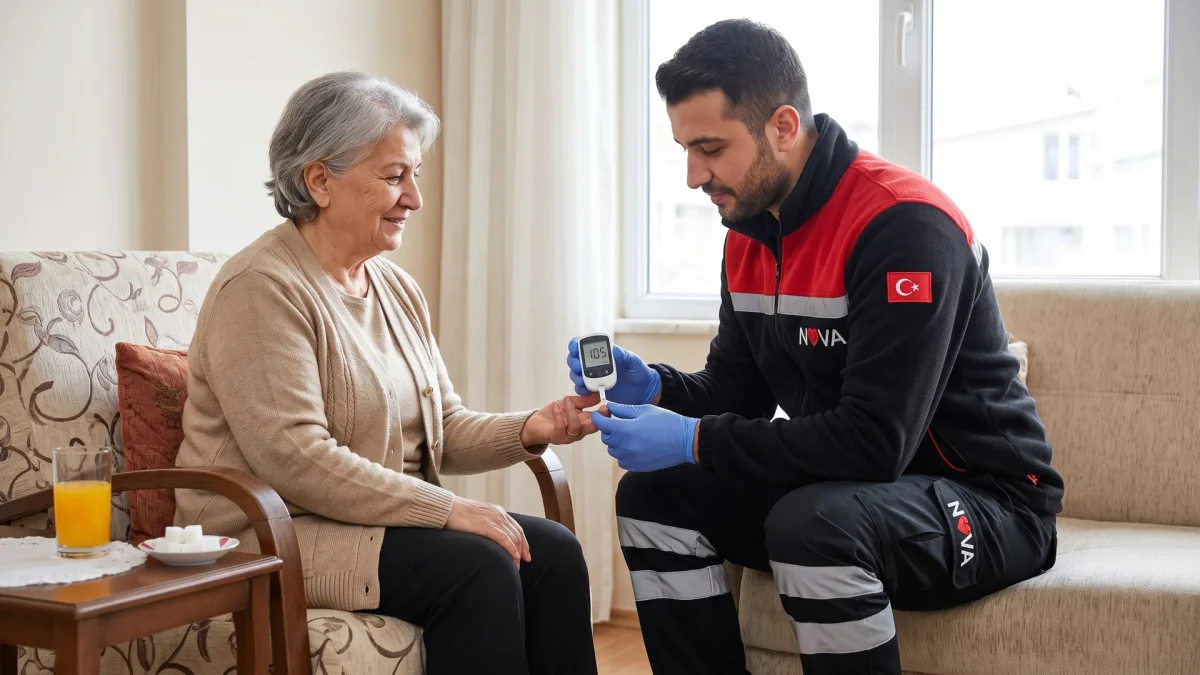
- Hypoglycemia (Low Blood Sugar): Trembling, sweating, and confusion require immediate action.
- Hyperglycemia (High Blood Sugar): Excessive thirst, frequent urination, and fruity breath odor are danger signs.
- Diabetic Ketoacidosis (DKA): A life-threatening condition that demands an immediate ambulance call.
- Emergency Kit: Diabetic patients should always carry a glucagon kit and a blood glucose meter.
Diabetes affects hundreds of millions of people worldwide and is one of the most common chronic conditions managed across all age groups [2]. The World Health Organization (WHO) reports that "the number of people living with diabetes rose from 200 million in 1990 to 830 million in 2022," and notes that "hyperglycaemia, also called raised blood glucose or raised blood sugar, is a common effect of uncontrolled diabetes" [5]. The Centers for Disease Control and Prevention (CDC) adds that "more than 40 million Americans have diabetes, and more than 1 in 4 adults with diabetes don't know they have it" [6] — many emergencies present in undiagnosed people. While the condition can be controlled with regular monitoring and treatment, sudden drops in blood sugar (hypoglycemia) or dangerous spikes (hyperglycemia) can create life-threatening emergencies within minutes [1]. This guide explains how to recognize the warning signs, what first aid steps to take, and when to call an ambulance.
What Is Hypoglycemia (Low Blood Sugar)?
Hypoglycemia occurs when blood glucose falls below 70 mg/dL [1]. It typically develops after an excessive insulin dose, a skipped meal, or intense physical exercise. It is one of the fastest-developing and most dangerous diabetic emergencies.
Recognizing the Symptoms
- Early signs: Hand tremors, cold sweating, sudden hunger, heart palpitations.
- Progressing signs: Dizziness, difficulty concentrating, irritability, slurred speech.
- Severe signs: Loss of consciousness, seizures.
First Aid for Hypoglycemia
- If the patient is conscious: Give 15-20 grams of fast-acting sugar immediately [1] -- 4-5 sugar cubes, half a glass of fruit juice, or glucose tablets. Wait 15 minutes and re-check blood sugar. Repeat if levels have not risen.
- If the patient is unconscious: Never give anything by mouth -- this can cause choking [1]. If a glucagon injection kit is available, administer it according to the instructions. Then call 112 or Nova Ambulans without delay.
Important: After any severe hypoglycemic episode, even if the patient recovers, medical evaluation is strongly recommended. [1]
Hyperglycemia (High Blood Sugar) and Diabetic Ketoacidosis
Diabetic Ketoacidosis (DKA) is a serious, life-threatening emergency in which acidic byproducts called ketones build up in the blood. Blood sugar is usually high (often above 250 mg/dL), but current international diagnostic criteria lowered the hyperglycemia threshold to >=200 mg/dL, and DKA can also develop while glucose is near-normal -- especially in people taking SGLT2-inhibitor medications (euglycemic DKA). For this reason, a low or normal glucose reading alone is not reassuring [7]. Mild-to-moderate cases can often be managed in the emergency department or on a ward, while severe cases may require intensive care [1][7].
Symptoms of DKA
- Extreme thirst and dry mouth
- Frequent urination
- Fruity or acetone-like breath odor
- Nausea, vomiting, and abdominal pain
- Rapid, deep breathing (Kussmaul breathing) [1]
- Confusion, drowsiness, or loss of consciousness
When Should You Call an Ambulance?
If someone with diabetes shows any of the following signs, do not attempt to drive them to the hospital yourself. Call 112 or Nova Ambulans immediately:
- Unconscious or confused: The patient cannot answer questions coherently or cannot be woken.
- Seizures: Convulsions triggered by severe hypoglycemia.
- No response to glucagon: If consciousness does not return within 15 minutes of a glucagon injection. [1]
- Persistent vomiting: The patient cannot keep fluids down and is becoming dehydrated.
- Rapid, deep breathing: A sign that the body's acid-base balance is severely disrupted.
Professional ambulance crews can start IV access, administer glucose or insulin as needed, and monitor vital signs throughout transport [3] -- interventions that are simply not possible in a private car.
Staying Prepared: The Diabetic Emergency Kit
Every person living with diabetes -- and their close family members -- should maintain an emergency kit that includes:
- A blood glucose meter with test strips and fresh batteries
- Fast-acting sugar sources (glucose tablets, juice boxes)
- A glucagon emergency injection kit (check expiration dates regularly) [1]
- A written list of current medications, doses, and physician contact information
- Medical ID bracelet or card [1]
Preparation and awareness save lives. Never ignore the symptoms, and never hesitate to call for help.
Nova Ambulans: Your Partner in Diabetic Emergencies
When a diabetic emergency exceeds what can be managed at home, a fully equipped ambulance and trained medical team are essential. Nova Ambulans crews carry blood glucose monitoring equipment, IV supplies, and emergency medications. They begin stabilization at the scene and ensure safe transport to the most appropriate medical facility.
Frequently Asked Questions
How can I tell the difference between hypoglycemia and hyperglycemia?
Hypoglycemia (low blood sugar) causes sweating, trembling, rapid heartbeat, and confusion — it develops quickly. Hyperglycemia (high blood sugar) develops gradually with symptoms like excessive thirst, frequent urination, blurred vision, and fruity breath odor.
When should I call an ambulance for a diabetic emergency?
Call immediately if the person loses consciousness, has a seizure, cannot swallow safely, has blood sugar below 54 mg/dL that doesn't respond to glucose, or shows signs of diabetic ketoacidosis (vomiting, abdominal pain, rapid breathing, fruity breath). Note that DKA can occur even when glucose is near-normal in people on SGLT2-inhibitor medications, so symptoms -- not just a high reading -- should prompt the call [7].
How is glucagon used in a diabetic emergency?
Glucagon is injected into the thigh or upper arm of an unconscious hypoglycemic patient who cannot swallow. Family members and close contacts of insulin-dependent diabetics should be trained on its use before an emergency occurs.
What precautions should diabetic patients take when traveling?
Carry at least one week's extra medication supply, keep insulin in a temperature-controlled case, bring a blood glucose meter with extra test strips, carry a medical ID card, and research the nearest hospital at your destination.
Rapid Emergency Support
24/7 emergency ambulance service across Istanbul. Fast response, fully equipped team.
Average response time: 15 seconds
Related Articles
Concussion Symptoms After a Fall or Head Injury: Bystander Guide (2026)
After a fall or head injury, concussion symptoms bystanders must recognize, step-by-step first aid, the CDC HEADS UP danger signs that require calling 112 immediately, age-specific notes for children and elderly patients, and the recovery timeline — grounded in Türk Kızılay 2025 First-Aid Pocket Book pp.19-20 and 47-48, T.C. Ministry of Health May 2025 First-Aid Training Book Chapter X.A and VII.B, Gazi University Pediatric Emergency PECARN application review, Turkish Neurosurgery 2025 national survey (n=1,875 neurosurgeons), JAMA April 2026 pediatric concussion systematic review, and CDC HEADS UP with WHO falls data.
EducationSuspected Fracture and Dislocation: Splinting, Immobilization, and Calling 112 (2026)
What a bystander does at the scene for suspected fracture, dislocation, sprain and strain — the Turkish Red Crescent 2025 First Aid Pocket Book (pp.38–42), the Turkish Ministry of Health May 2025 First Aid Training Book Chapter XII, the Gazi University 2026 Ankara pediatric hand-foot fracture series (n=278), the İstanbul University Çapa 12-month hip fracture mortality data, and the World Health Organization (WHO) falls factsheet applied to splinting, immobilization, and the 112 chain.
EducationSepsis Symptoms: Flu or Sepsis? How to Spot It at Home and When to Call 112
Sepsis is an emergency in which the body responds to an infection in an extreme, uncontrolled way, and it can worsen within hours. If someone with a fever or an infection becomes confused, breathes very fast, has pale or blotchy skin, a rash that does not fade when pressed, or a very high or very low temperature, call 112 without waiting. Until the ambulance arrives, do not leave them alone, give them nothing by mouth and check their consciousness every 2-3 minutes.
Popular Ambulance Topic Clusters
You may also like
- Private ambulance pricing
- Istanbul private ambulance
- Intercity patient transport
- Doctor-accompanied ambulance
- Dialysis patient transport
- How intercity patient transport works
- Ambulance response time in Istanbul
- Home-to-hospital patient transport
- Modern ambulance equipment and team standards
- Heart attack symptoms and first response
This content is informational only and does not replace professional medical evaluation. In emergencies, call 112 or +90 216 339 00 39.
