
Winter Burn Accidents at Home: First Aid Steps and When to Call an Ambulance
How to administer first aid for stove, heater, and hot water burns in winter. Burn degrees, step-by-step treatment, common myths, and when to call an ambulance.
💡Özet & Önemli Notlar
- Cool the burn under cool running water for at least 20 minutes.
- Never apply toothpaste, yogurt, butter, or home remedies -- they cause infection.
- Do not pop blisters; they act as a natural protective barrier.
- Call an ambulance for large-area burns, facial/genital burns, or if the patient is a child or elderly.
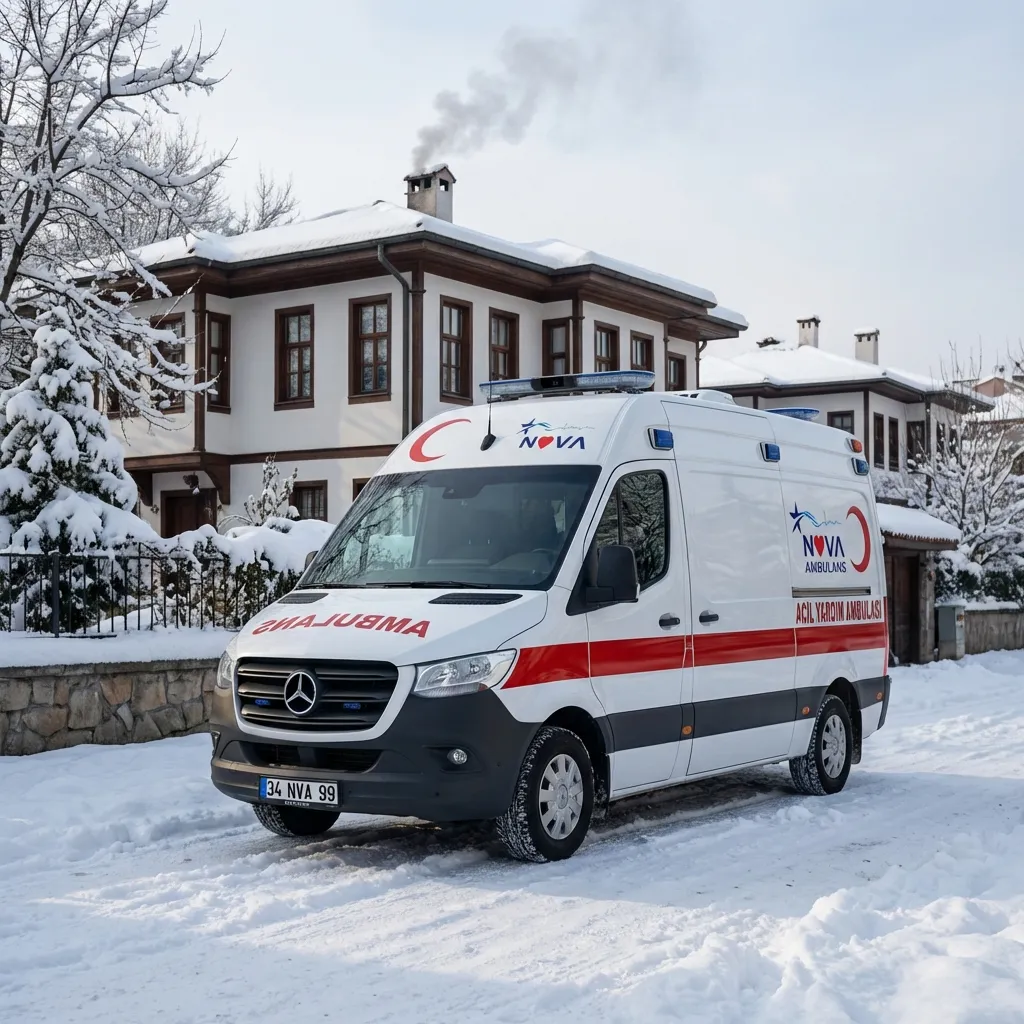
As temperatures drop, the need for indoor heating brings a sharp increase in household burn injuries. [1] Stoves, electric heaters, and hot water are the most common culprits during winter months. What may start as "a small moment of carelessness" can lead to permanent scarring or life-threatening complications when treated incorrectly.
At Nova Ambulans, we emphasize the importance of correct first aid for burn injuries encountered at home. Here is what you need to know about winter burn risks and the right steps to take.
Why Is Winter the "Burn Season"?
As the weather gets colder, risk factors multiply inside our living spaces:
- Stoves: Contact with hot metal surfaces or flare-ups.
- Electric heaters: Tipping over or igniting nearby fabrics and objects.
- Hot beverages and liquids: Spilled tea, soup, or hot water cause scalding injuries, especially in children.
Understanding Burn Severity (Burn Degrees)
Not all burns are the same. Assessing the severity before acting is essential: [2]
First-Degree Burn (Superficial)
Redness, mild swelling, and pain on the skin surface. Similar to sunburn. Usually treatable at home.
Second-Degree Burn (Blistering)
Fluid-filled blisters form on the skin. Pain is intense. Infection risk is significant.
Third-Degree Burn (Deep)
The skin may appear charred, white, or brown. Because nerve endings are destroyed, pain may not be felt. This is extremely dangerous and requires immediate medical intervention.
Step-by-Step Burn First Aid
Stay calm and follow these steps if a burn occurs:
1. Stop the Burning Process
First, ensure the person is moved away from the heat source. If clothing has caught fire, use the "Stop, Drop, and Roll" technique. [3]
2. Cool the Burn (The Most Important Step)
Hold the burned area under gently running cool tap water (not ice-cold) for at least 20 minutes. [1] This prevents heat from penetrating deeper tissues and limits the damage.
Warning: Never apply ice directly to the skin. Ice can cause a "cold burn" (frostbite) that worsens the injury. [1]
3. Remove Jewelry and Accessories
Before swelling begins, immediately remove rings, watches, and bracelets from the affected area. [3]
4. Do Not Pull Off Stuck Clothing
If fabric has melted or adhered to the burn, never pull it off -- you risk tearing the skin underneath. [2] Cut around the stuck fabric and remove the loose portions only.
5. Cover with a Clean Dressing
Loosely cover the area with a clean, lint-free damp cloth or cling film (loosely applied).
When Should You Call an Ambulance?
Even minor-seeming household burns sometimes require professional help. Call 112 or Nova Ambulans (0216 339 00 39) without delay in these situations: [2]
- The burned area is larger than the person's palm.
- The burn involves the face, hands, feet, genital area, or joints.
- The burn was caused by electrical shock (internal organ damage may be present).
- The patient is a baby, child, or elderly person.
- There is breathing difficulty or hoarseness (signs of smoke inhalation).
Common Myths: What You Should NEVER Do
Widely believed home remedies actually make treatment harder and increase infection risk: [1]
- Do not apply toothpaste to a burn.
- Do not apply yogurt, butter, or tomato paste.
- Do not apply olive oil or cream (these trap heat in the skin).
- Do not pop blisters. Blisters serve as a natural sterile barrier that protects healing tissue underneath. [2]
Prevention: Keeping Your Home Safe in Winter
Preventing home accidents is always easier than treating them. Especially in homes with children:
- Secure heaters so they cannot tip over and keep them away from curtains and furniture.
- Keep hot beverages and cooking pots out of children's reach.
- Never leave a child unattended near a stove or heater.
- Install smoke detectors and check them regularly.
- Keep a basic emergency kit with burn dressings at home.
Frequently Asked Questions
How long should I cool a burn under water?
At least 20 minutes of running lukewarm water is recommended by major burn treatment guidelines. This is the single most effective first aid step you can take. Even if 20 minutes feels long, do not cut it short.
Should I go to the ER for a second-degree burn?
If blisters are large, if the burn is on the face, hands, feet, or joints, or if the patient is a child or elderly person, yes -- seek medical evaluation. Small second-degree burns in non-critical areas can often be managed by a primary care physician, but when in doubt, get assessed.
Is it safe to use burn ointment from the pharmacy?
Do not apply any cream, ointment, or spray before medical evaluation. Cool water is the safest immediate treatment. A healthcare professional can recommend appropriate wound care after assessment.
Sonraki Adım: Ambulans Gerekir mi?
1 dakikalık lojistik kontrol listesi ile hızlı karar verin. Tıbbi veri paylaşmadan WhatsApp üzerinden fotoğraf, konum ve kat bilgisi gönderebilirsiniz.
- Asansör/sedye erişimi var mı?
- Başlangıç ve varış noktası net mi?
- Tahmini çıkış saati ve refakatçi hazır mı?
İlgili Yazılar
Ramazan'da Sağlık Riskleri: Kronik Hastalar İçin Acil Durum Rehberi
Ramazan orucunda diyabet, tansiyon ve kalp hastaları için sağlık riskleri, hipoglisemi belirtileri ve ne zaman ambulans çağrılır — uzman rehberi.
EğitimModern Ambulans Ekipmanları ve Ekip Standartları
Güncel ambulanslarda bulunması gereken temel ekipmanlar ve acil sağlık ekibinin sahip olması gereken yetkinlikler.
Hizmet BilgisiAmbulans Türleri: Kırmızı Şerit, Mavi Şerit, Yoğun Bakım ve Özel Donanımlı Ambulanslar
Türkiye'deki dört ambulans türü: kırmızı şeritli acil yardım, gri gövdeli mavi şeritli hasta nakil, yoğun bakım ve özel donanımlı ambulansların farkları, personel yapıları ve 2025 yönetmelik değişiklikleri.
Kaynaklar
- World Health Organization (WHO) - Burns — World Health Organization
- American Burn Association — ameriburn.org
- AHA CPR & First Aid — American Heart Association
Popüler Ambulans Konu Kümeleri
İlginizi çekebilir
- Diyaliz hasta nakli
- Yatalak / yoğun bakım nakli
- Havalimanı ambulans transferi
- Organizasyon ambulansı
- Özel ambulans ücretleri
- İstanbul'da ambulans kaç dakikada gelir?
- Hasta nakli için doğru ambulans nasıl seçilir?
- Ambulans beklerken: hasta yakınları rehberi
- Modern ambulans ekipmanları ve ekip standartları
- Kalp krizi belirtileri ve ilk müdahale
Tıbbi İnceleme ve Sorumluluk Reddi
Bu içerik Nova Ambulans Sağlık Kurulu tarafından tıbbi doğruluk açısından gözden geçirilmiştir. İnceleme politikası ve kurul üyeleri için Sağlık Kurulu sayfasını ziyaret edin.
Sağlık Kurulu sayfasına gitBu içerik yalnızca bilgilendirme amaçlıdır ve profesyonel tıbbi değerlendirmenin yerine geçmez. Acil durumda 112’yi veya 0216 339 00 39’u arayın.