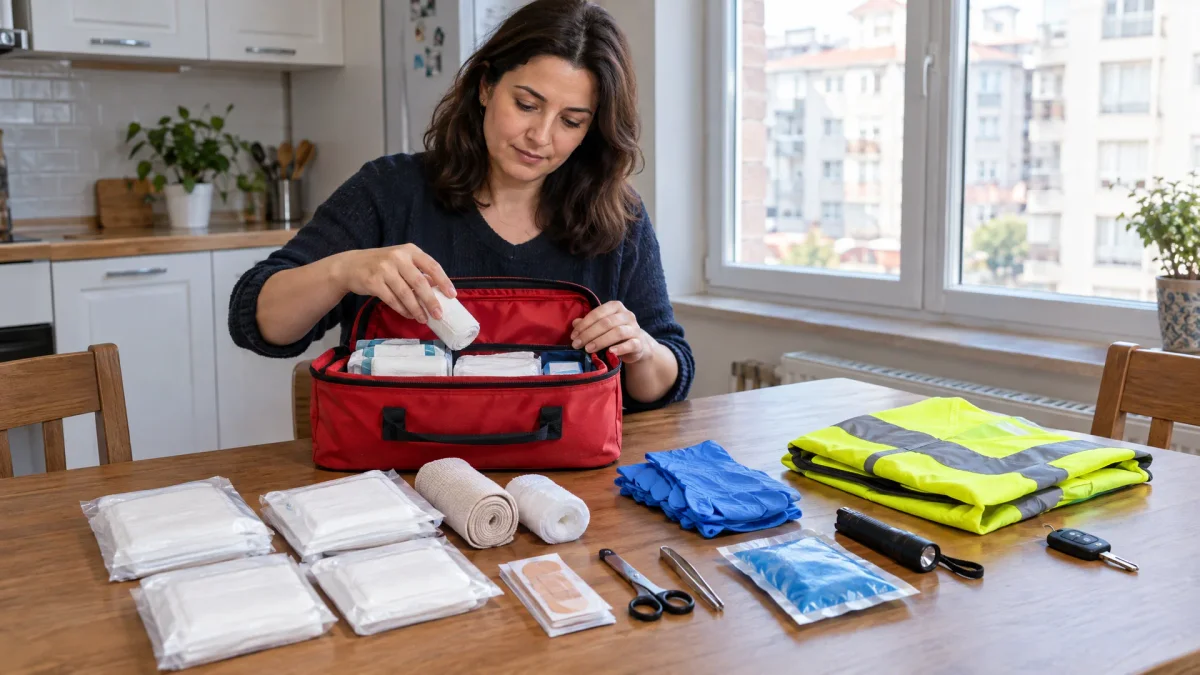
- Home kit essentials: wound care, antiseptics, and burn care.
- Car kit requirements: reflective vest, larger bandages, and breathing support.
- Regular maintenance: Check expiration dates every 6 months.
- Training: Having a kit is useless without knowing how to use it.
Minor household accidents, injuries in traffic, or unexpected health issues can happen anytime. The World Health Organization (WHO) reports that "37.3 million falls that are severe enough to require medical attention occur each year" globally [5], and that road traffic crashes kill "approximately 1.19 million people" annually [6]. Ready.gov reminds families that "after an emergency, you may need to survive on your own for several days" [4]. A well-stocked first aid kit helps you stabilise the situation until professional help arrives [1][2].
Quick answer. A single all-purpose kit is rarely enough. The Turkish Red Crescent's first aid guidance and AFAD's disaster preparedness recommendations call for three separate sets: a home kit (target 72 hours of self-sufficiency), a vehicle kit (mandatory under Turkish traffic regulations and inspected at TÜVTÜRK stations), and a workplace kit (required under OHS Law No. 6331). Inspect each set on a fixed semi-annual schedule -- 1 March and 1 October work well -- to catch expired items before you need them.
Three Kits, Three Jobs (Home / Car / Workplace)
| Kit | Primary purpose | Minimum item count | Legal/standard reference |
|---|---|---|---|
| Home | 72-hour medical + basic needs | 25-30 items (medical + water, food, flashlight, radio) | Turkish Red Crescent + AFAD disaster pack [1] |
| Car | Roadside trauma response | 18-22 items (mandatory traffic-set contents) | Highway Traffic Regulation + TÜVTÜRK inspection [2] |
| Workplace / office | On-site staff response | 15-20 items per unit | First Aid Regulation (Article 19), applied under OHS Law No. 6331 [8] |
Basic First Aid Kit for Home
Common household accidents include small cuts, burns, and falls. Your kit should include:
- Wound Care: Assorted adhesive bandages, sterile gauze pads, rolled bandage, elastic bandage, and medical tape. [1]
- Antiseptics: Antiseptic solution (e.g., povidone-iodine) and antiseptic wipes. [1]
- Tools: Small scissors, tweezers, and safety pins.
- Burn Care: Burn gel or cream for minor burns.
- Others: Disposable gloves, pain relievers/fever reducers, cold compress pack, and a first aid manual. [1]
First Aid Kit for Your Car (Traffic Set)
A first aid kit in your car is not only a legal requirement but also crucial for responding to traffic accidents. In addition to the home kit, include:
- Larger Supplies: Larger sterile gauze pads and bandages; triangular bandage (for arm sling).
- Visibility: A reflective safety vest.
- Breathing Support: A face shield for rescue breathing. [3]
- Others: Burn blanket, tourniquet (only trained individuals should use). [3]
Workplace First Aid Kit
Many Istanbul offices, workshops, and stores fall under the First Aid Regulation applied within the framework of OHS Law No. 6331, which requires the employer to designate certified first aiders and keep a first aid cabinet accessible. Under Article 19 of the First Aid Regulation ("Keeping a first aider"), the required ratios are [8]:
- Low-hazard workplaces: 1 first aider per 20 employees
- Hazardous workplaces: 1 per 15 employees
- Very hazardous workplaces: 1 per 10 employees
Your office kit should add an eye-wash solution, an antihistamine for allergic reactions, and an "emergency contact card" carrying employee blood type, chronic medication, and allergy notes.
Six-Month Inspection Checklist
To keep the kit useful, set fixed dates -- 1 March and 1 October are easy to remember -- and walk through each item:
- Expiration date on pain relievers, antiseptics, and burn gel.
- Battery and flashlight functional test (check for leaks in stored cells).
- Sterile gauze packaging integrity.
- Cold compress pouch undamaged.
- Adhesive bandages still tacky.
- Reflective vest, warning triangle, and scissors present.
- Emergency contact card current (blood type, chronic medication, allergies, next-of-kin number).
Important Tips
- Check: Inspect your kit every six months. Replace expired items and replenish used supplies. [1]
- Access: Store your kit in a cool, dry, and easily accessible place. Keep it out of reach of children.
- Training: Owning a kit is as important as knowing how to use it. Consider taking a basic first aid course. [3]
Frequently Asked Questions
How often should I check my first aid kit?
Inspect your first aid kit every six months. Check expiration dates on medications, antiseptics, and ointments. Replace any used or damaged items and ensure all supplies are sealed and stored properly.
Is a car first aid kit legally required in Turkey?
Yes. Turkish traffic regulations require all vehicles to carry a first aid kit along with a reflective safety vest and warning triangle. Kits must meet specified content standards and should be kept in an accessible location within the vehicle.
What additional items should I include for children?
For households with children, add pediatric-dose pain relievers, digital thermometer, antihistamine syrup, an instant cold pack, age-appropriate bandages, and any child-specific medications such as inhalers or epinephrine auto-injectors.
Where is the best place to store a home first aid kit?
Store your kit in a cool, dry location that is easily accessible to adults but out of reach of young children. The kitchen, hallway, or a central closet are good choices. Avoid bathrooms where humidity can degrade supplies.
Rapid Emergency Support
24/7 emergency ambulance service across Istanbul. Fast response, fully equipped team.
Average response time: 15 seconds
Related Articles
Winter Emergency Health Guide: Risk Map and Decision Tree
Map of the most common winter emergencies — respiratory crises, cardiac events, trauma, hypothermia, carbon monoxide and viral infections — in a single decision tree.
EducationBack to School 2026: Emergency and First Aid Guide for Children
From school buses to gyms: the right steps for common injuries, a parent communication plan, and when to call 112/Nova Ambulans.
EducationDog and Cat Bite First Aid: Rabies Risk, the 15-Minute Wash and When to Call 112
If a dog or cat bites or scratches you, wash the wound at once with plenty of soap and water for at least 15 minutes, press directly on it if it bleeds, cover it with a clean cloth and go to a health facility the same day. Rabies cannot be treated once symptoms begin; a doctor decides whether you need the vaccine. Call 112 for bleeding that pressure does not stop or for any threat to life.
Popular Ambulance Topic Clusters
You may also like
- Private ambulance pricing
- Istanbul private ambulance
- Intercity patient transport
- Doctor-accompanied ambulance
- Dialysis patient transport
- How intercity patient transport works
- Ambulance response time in Istanbul
- Home-to-hospital patient transport
- Modern ambulance equipment and team standards
- Heart attack symptoms and first response
This content is informational only and does not replace professional medical evaluation. In emergencies, call 112 or +90 216 339 00 39.
