
Emergency Health During Holidays: New Year's Eve, National Holidays, and Long Weekends
Why health risks increase during holidays, a preparation checklist for chronic patients, New Year's Eve safety tips, and when to call an ambulance during festive periods.
💡Özet & Önemli Notlar
- Traffic and Travel: Holiday traffic significantly increases accident and trauma risk.
- Diet and Alcohol: Overeating and excess alcohol consumption can trigger acute health crises.
- Chronic Patients: Disrupted medication routines during holidays can lead to dangerous flare-ups.
- 24/7 Service: Nova Ambulans operates without interruption throughout all holiday periods.
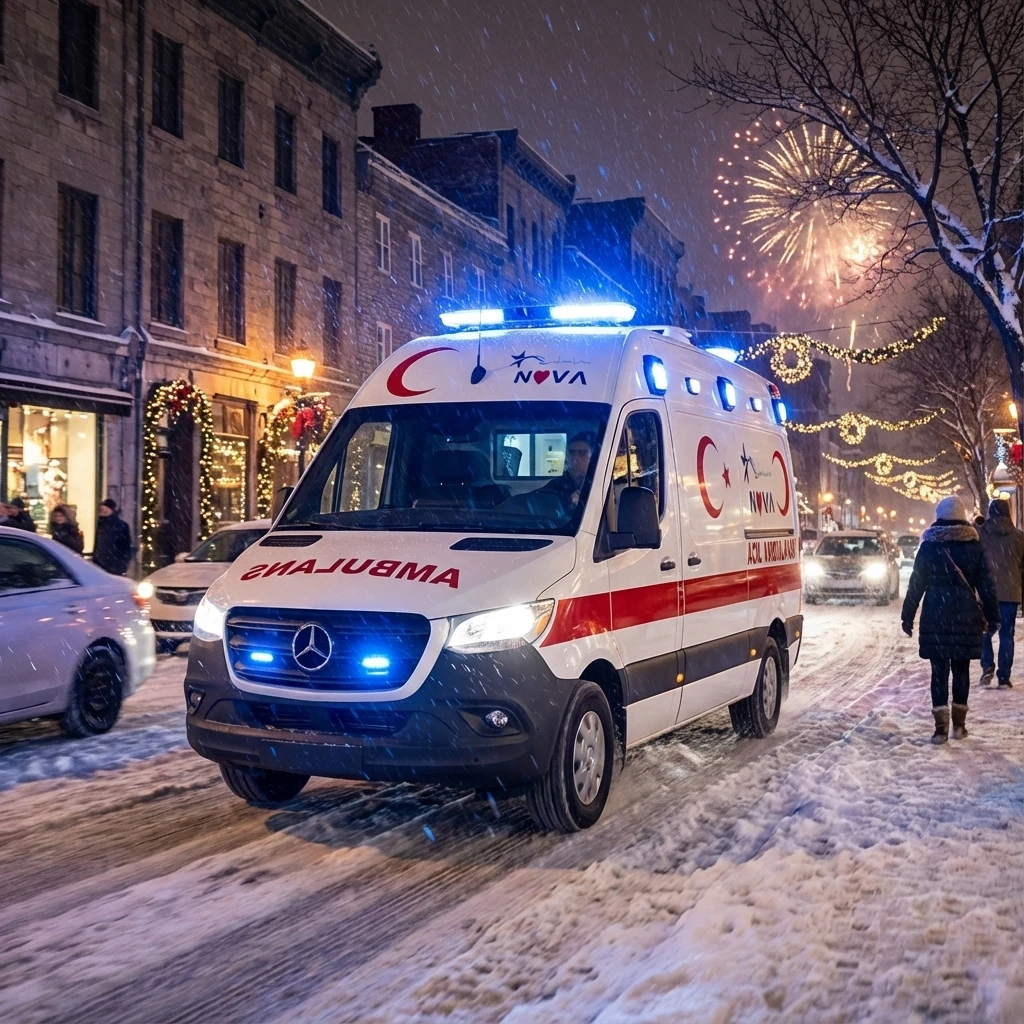
New Year's Eve, national holidays, religious festivals, and long weekends are times we look forward to spending with family and friends. Unfortunately, these same periods also see a sharp increase in emergency health needs. Heavy traffic, irregular eating, alcohol consumption, crowded social settings, and the disruption of daily routines all combine to create elevated risk [3] -- especially for people with chronic conditions.
Nova Ambulans remains fully operational 24 hours a day, 7 days a week, throughout every holiday period, providing emergency ambulance services and patient transport across Istanbul. This guide will help you prepare, recognize warning signs, and know exactly when and how to get professional help during festive times.
Why Do Health Risks Increase During Holidays?
1. Heavy Traffic and Long Journeys
Holiday visits and New Year's celebrations cause dramatic spikes in both urban and intercity traffic. More vehicles on the road means more accidents [3]. Fatigue from long drives, unfamiliar routes, and winter weather conditions compound the risk. For families with elderly or chronically ill members, this also means that reaching a hospital quickly can be more difficult than usual.
2. Overeating and Rich Foods
Holiday tables are filled with heavier, fattier, and saltier food than everyday meals. Excessive consumption can trigger:
- Cardiac events -- heart attacks, hypertensive crises [2]
- Diabetic emergencies -- blood sugar spikes or crashes in patients who deviate from their meal plans
- Gastrointestinal distress -- from mild indigestion to pancreatitis in severe cases
3. Alcohol Consumption
New Year's Eve in particular sees a significant increase in alcohol intake [1]. This can result in:
- Alcohol poisoning -- especially dangerous when combined with medications [1]
- Falls and trauma -- impaired coordination leads to injuries [3]
- Poor decision-making -- delayed recognition of symptoms and delayed calls for help
4. Disrupted Medication Routines
The excitement and schedule changes of holidays often cause chronic patients to:
- Miss medication doses -- insulin, blood pressure pills, anticoagulants, COPD inhalers
- Run out of prescriptions -- pharmacies may have limited holiday hours
- Change their eating and sleeping patterns -- which can destabilize otherwise well-managed conditions
These disruptions can lead to COPD exacerbations, diabetic crises, or heart failure episodes at times when getting to a doctor is harder than usual.
Pre-Holiday Health Preparation Checklist
Prevention is always easier than managing an emergency. Take these steps before the holiday begins:
For Chronic Patients
- Complete a doctor's visit before the holiday period -- review medications, refill prescriptions, and discuss any adjustments needed for diet changes
- Stock up on medications -- ensure you have at least one week's extra supply of all regular prescriptions
- Pack a personal health kit including:
- All current medications with dosage instructions
- Blood pressure monitor and/or blood glucose meter
- Recent epicrisis or medical summary
- Emergency contact card (doctor's number, hospital preference, family contacts)
- Set medication reminders on your phone -- holiday schedules can make it easy to forget regular doses
For Everyone
- Prepare an emergency kit for travel (see our emergency kit guide)
- Know the nearest hospitals at your holiday destination, including their emergency department hours
- Save emergency numbers: 112 (national emergency), Nova Ambulans (0216 339 00 39)
- Designate a sober driver for New Year's Eve or arrange alternative transportation in advance
- Keep health documents accessible -- identification, insurance card, medication list, allergy information
New Year's Eve: Specific Safety Tips
New Year's Eve is one of the busiest nights for ambulance services. Keep these tips in mind:
1. Control Alcohol Consumption
- Moderate your intake, or choose not to drink at all
- Never mix alcohol with medications -- this includes blood pressure pills, anticoagulants, antidepressants, and painkillers [1]
- If you plan to drive, do not drink anything -- there is no "safe" amount behind the wheel
- Watch for signs of alcohol poisoning in others: confusion, vomiting, slow breathing, unconsciousness
2. Be Cautious in Crowds
Crowded celebrations can trigger:
- Panic attacks in people prone to anxiety
- Cardiac events from the combination of stress, alcohol, and rich food [2]
- Crush injuries in very dense crowds
Choose calmer venues and know where the exits are. If you feel unwell, move to a quieter area immediately.
3. Fireworks and Burns
- Keep a safe distance from fireworks -- even "consumer-grade" products cause serious burns and eye injuries every year
- Never handle fireworks while intoxicated
- If someone is burned, cool the area with cool running water for at least 20 minutes [4] and seek medical attention for anything beyond a superficial burn
4. Cold Weather Exposure
New Year's celebrations often involve extended time outdoors. For tips on recognizing and responding to cold-weather emergencies, see our article on winter frostbite and hypothermia risk.
When to Call an Ambulance During Holidays
Do not dismiss symptoms as "holiday stress" or "too much food." Call 112 or Nova Ambulans (0216 339 00 39) immediately if you observe:
- Sudden, persistent chest pain -- especially with sweating, nausea, or radiating to the left arm, jaw, or back [2]
- Severe shortness of breath that does not improve with rest
- Sudden speech difficulty, facial drooping, or arm weakness (signs of stroke) [4]
- Loss of consciousness or altered mental status
- Severe headache unlike anything experienced before, or a seizure
- Serious trauma or uncontrollable bleeding
- Suspected poisoning -- alcohol, medication overdose, or carbon monoxide
Time is critical in these situations. Do not wait to see if it gets better. Holiday traffic delays mean emergency response may take longer than usual, so calling early is even more important.
Nova Ambulans 24/7 Holiday Service
Nova Ambulans does not take holidays. Throughout New Year's Eve, national holidays, religious festivals, and every weekend, fully equipped ambulances and experienced medical teams are on standby.
Services Available During Holidays
- Emergency Ambulance: Rapid response for sudden, acute emergencies with advanced life support equipment
- Patient Transport: Safe, supervised transfer for hospital visits, discharges, and facility changes
- Event Medical Coverage: On-site health teams for holiday events and large gatherings
Whether you need emergency care at 3 AM on New Year's morning or a planned hospital transfer during a long weekend, Nova Ambulans is a phone call away.
Conclusion: Prepare, Stay Aware, and Do Not Hesitate
The key to safe holidays is preparation: refilling prescriptions, packing health essentials, knowing emergency numbers, and understanding when a symptom requires professional evaluation. If something feels wrong, trust your instincts and call for help. A false alarm is always better than a delayed response.
Frequently Asked Questions
Are ambulance services available during holidays and New Year's Eve?
Yes. Nova Ambulans operates 24/7 without interruption throughout all holiday periods, including New Year's Eve, national holidays, and religious festivals. Fully equipped ambulances and medical teams remain on standby at all times.
Why is mixing alcohol with medication dangerous during holidays?
Alcohol can alter the effects of many medications, including blood thinners, blood pressure pills, and antidepressants. This interaction can cause dangerous blood pressure drops, excessive bleeding, or impaired consciousness — risks that increase during holiday celebrations.
What should chronic patients prepare before a holiday trip?
Complete a doctor's visit, stock at least one extra week of all medications, pack a personal health kit with monitoring devices, set phone reminders for medication times, and research the nearest hospital and emergency services at your destination.
When should I call an ambulance during a holiday gathering?
Call immediately for sudden persistent chest pain, severe shortness of breath, stroke symptoms (facial drooping, arm weakness, speech difficulty), loss of consciousness, serious trauma, or suspected poisoning. Do not dismiss symptoms as holiday stress.
Sonraki Adım: Ambulans Gerekir mi?
1 dakikalık lojistik kontrol listesi ile hızlı karar verin. Tıbbi veri paylaşmadan WhatsApp üzerinden fotoğraf, konum ve kat bilgisi gönderebilirsiniz.
- Asansör/sedye erişimi var mı?
- Başlangıç ve varış noktası net mi?
- Tahmini çıkış saati ve refakatçi hazır mı?
İlgili Yazılar
Ramazan'da Sağlık Riskleri: Kronik Hastalar İçin Acil Durum Rehberi
Ramazan orucunda diyabet, tansiyon ve kalp hastaları için sağlık riskleri, hipoglisemi belirtileri ve ne zaman ambulans çağrılır — uzman rehberi.
EğitimModern Ambulans Ekipmanları ve Ekip Standartları
Güncel ambulanslarda bulunması gereken temel ekipmanlar ve acil sağlık ekibinin sahip olması gereken yetkinlikler.
Hizmet BilgisiAmbulans Türleri: Kırmızı Şerit, Mavi Şerit, Yoğun Bakım ve Özel Donanımlı Ambulanslar
Türkiye'deki dört ambulans türü: kırmızı şeritli acil yardım, gri gövdeli mavi şeritli hasta nakil, yoğun bakım ve özel donanımlı ambulansların farkları, personel yapıları ve 2025 yönetmelik değişiklikleri.
Kaynaklar
- World Health Organization -- Alcohol and Health — World Health Organization
- American Heart Association -- Holiday Heart Syndrome — American Heart Association
- Centers for Disease Control and Prevention -- Holiday Safety — Centers for Disease Control and Prevention
- European Resuscitation Council (ERC) — European Resuscitation Council
Popüler Ambulans Konu Kümeleri
İlginizi çekebilir
- Diyaliz hasta nakli
- Yatalak / yoğun bakım nakli
- Havalimanı ambulans transferi
- Organizasyon ambulansı
- Özel ambulans ücretleri
- İstanbul'da ambulans kaç dakikada gelir?
- Hasta nakli için doğru ambulans nasıl seçilir?
- Ambulans beklerken: hasta yakınları rehberi
- Modern ambulans ekipmanları ve ekip standartları
- Kalp krizi belirtileri ve ilk müdahale
Tıbbi İnceleme ve Sorumluluk Reddi
Bu içerik Nova Ambulans Sağlık Kurulu tarafından tıbbi doğruluk açısından gözden geçirilmiştir. İnceleme politikası ve kurul üyeleri için Sağlık Kurulu sayfasını ziyaret edin.
Sağlık Kurulu sayfasına gitBu içerik yalnızca bilgilendirme amaçlıdır ve profesyonel tıbbi değerlendirmenin yerine geçmez. Acil durumda 112’yi veya 0216 339 00 39’u arayın.