
Chest Pain and Shortness of Breath in Cold Weather: When to Call 112 or Nova Ambulans
Cold weather can trigger chest pain and shortness of breath through vasoconstriction and bronchospasm. Learn the emergency warning signs, first aid steps, and when to call 112 or Nova Ambulans.
💡Özet & Önemli Notlar
- Cold air causes vasoconstriction and bronchospasm, which can trigger chest pain and breathing difficulty.
- Call 112 or Nova Ambulans immediately for chest pain lasting more than 5 minutes, cyanosis, or altered consciousness.
- While waiting for the ambulance, keep the patient warm, in a seated position, and stop all physical exertion.
- Heart disease, COPD, and asthma patients are at significantly higher risk during winter months.
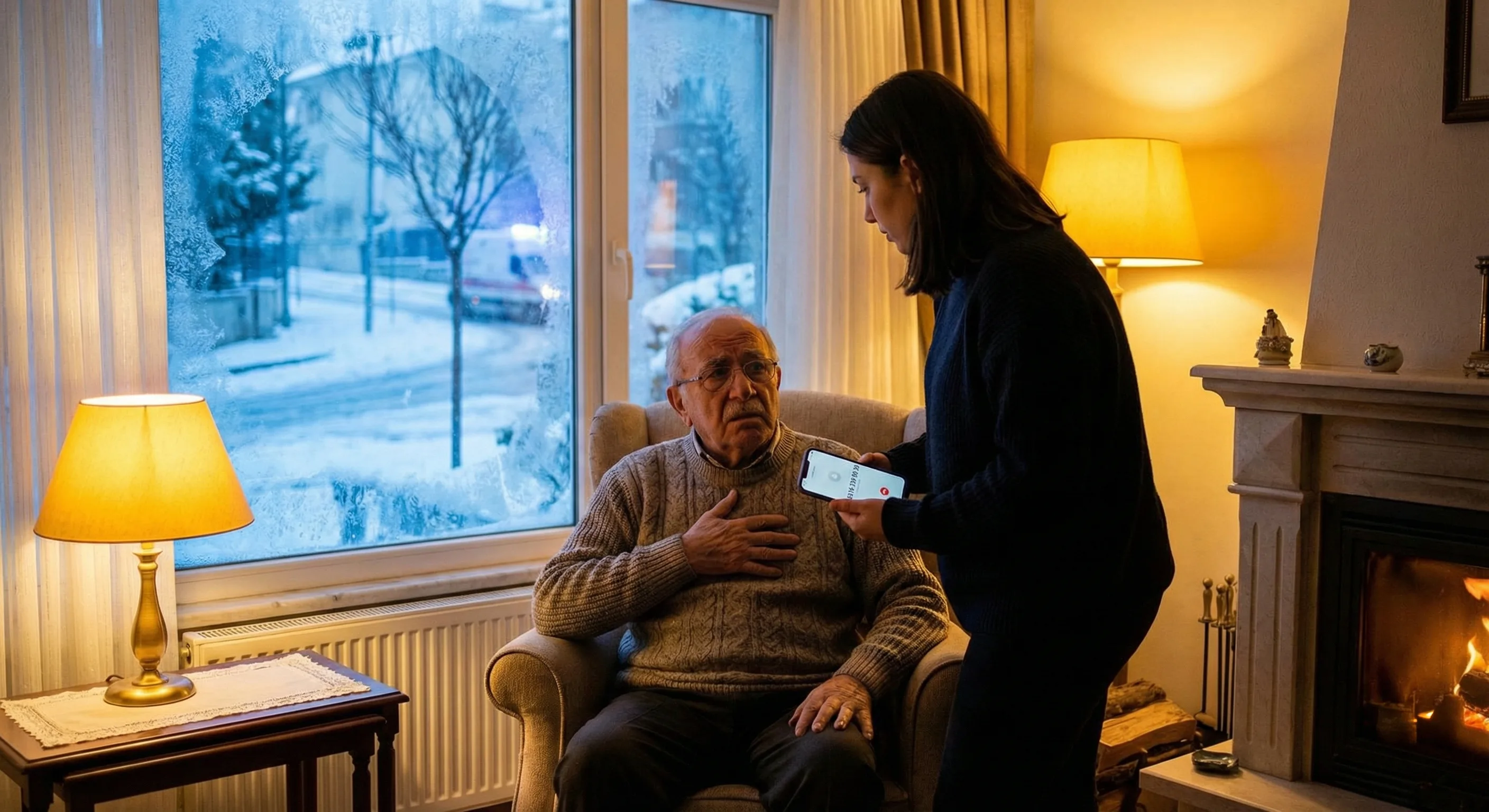
Winter months place extra stress on the heart and respiratory system, especially during cold, windy weather. Chest pain and shortness of breath that begin while walking outdoors, climbing stairs, or during sudden temperature changes can range from a mild chill to conditions requiring emergency evaluation, including angina, heart attack, coronary spasm, bronchospasm, and COPD or asthma exacerbations.
Research consistently shows that cardiovascular events increase substantially during winter. [1][3] This guide explains when to call 112, how to make the right triage decision, and what first aid steps to take while waiting for the ambulance.
Disclaimer: This content is for educational purposes and does not replace professional medical diagnosis or treatment.
Why Does Cold Weather Cause Chest Pain and Shortness of Breath?
Cold air triggers the body's defense mechanisms to conserve heat. In some individuals, these responses produce significant symptoms.
Vasoconstriction and Increased Cardiac Workload (Angina/Coronary Spasm)
In cold conditions, blood vessels constrict (vasoconstriction). [1] This can:
- Raise blood pressure
- Increase the heart's oxygen demand
- Trigger angina-like chest pain in those with coronary artery disease [1][3]
- In some cases, cause coronary spasm with severe chest pain
For detailed information on heart attack symptoms, see our dedicated guide.
Bronchospasm and Airway Narrowing (Asthma/COPD)
Cold, dry air irritates the airways and can cause bronchospasm (contraction and narrowing of the bronchi) [2], resulting in:
- Wheezing
- Chest tightness
- Shortness of breath
- Increased coughing
Asthma and COPD patients experience more frequent flare-ups during winter. Our guide on COPD and asthma attacks in winter covers this topic in detail.
Respiratory Infections and Pneumonia Risk
Viral infections increase in winter. Fever, fatigue, cough, and shortness of breath accompanied by chest pain may signal pneumonia or severe bronchitis.
Excessive Exertion and Sudden Temperature Changes
Leaving a warm home and walking briskly in cold air, shoveling snow, or other intense activities can strain both the heart and lungs, triggering symptoms.
When Is Chest Pain Considered an Emergency?
Chest pain can present as burning, pressure, tightness, heaviness, or stabbing. Cold-weather chest pain should always be taken seriously because it can be the first sign of life-threatening conditions including heart attack.
Important: When in doubt, calling 112 or Nova Ambulans (0216 339 00 39) is always the safest choice. Delayed intervention can cause irreversible damage to the heart muscle.
Emergency Warning Signs: When to Call 112 or Nova Ambulans
If any of the following are present, do not wait -- call 112 or Nova Ambulans (0216 339 00 39):
Chest Pain Red Flags
- Chest pain lasting more than 5 minutes, increasing in intensity, or continuing at rest [1][3]
- Chest pressure or tightness accompanied by:
- Radiating pain to the left arm, back, jaw, or upper abdomen
- Cold sweating, nausea, or vomiting
- Fainting, extreme weakness, or a sense of impending doom
- In someone with known angina or heart disease: pain that is unusually severe or lasts longer than usual
- New, unexplained chest pain (especially in people over 40 with hypertension, diabetes, high cholesterol, or a smoking history)
Shortness of Breath Red Flags
- Breathing difficulty severe enough to interrupt speech; inability to form complete sentences
- Cyanosis (bluish discoloration of lips) or marked pallor [1]
- Severe wheezing or a feeling of "I cannot breathe"
- Confusion, drowsiness, or agitation
- Shortness of breath that worsens rapidly even at rest
- In asthma/COPD patients:
- No improvement despite using a rescue inhaler [2]
- History of prior ICU admission or intubation for an attack
Situations That May Seem Non-Urgent but Can Be Critical
- Chest pain combined with shortness of breath
- Chest pain with palpitations and dizziness or near-fainting
- Coughing up blood, sudden sharp side pain, and shortness of breath (possible pulmonary embolism)
- Any of the above in pregnant women, elderly individuals, or those with serious chronic conditions
112 or Nova Ambulans: Both Handle Emergencies
Triage refers to prioritizing emergency situations. Both 112 and Nova Ambulans operate 24/7 with fully equipped emergency ambulances and professional crews. The key difference is hospital destination, not urgency level.
How to Choose
- 112: Dispatches the nearest state ambulance and transports to the nearest public hospital.
- Nova Ambulans (0216 339 00 39): Provides 24/7 emergency response and transports to the private hospital of your choice.
Both services handle life-threatening emergencies. Choose based on your hospital preference.
When Is a Planned Ambulance Transfer Appropriate?
For situations without acute emergency signs but requiring supervised medical transport:
- Post-discharge patient transport from hospital to home
- Stable COPD/asthma patients needing controlled transfer
- Planned appointments, imaging, or transfers to another facility
First Aid While Waiting for the Ambulance
The following steps represent general first aid guidance. Our until the ambulance arrives guide offers additional detail.
1) Safety and Proper Positioning
- Move the person to a warm, well-ventilated area (away from smoke, strong fumes, or stove exhaust).
- Loosen tight clothing.
- For shortness of breath: A seated position (back supported, leaning slightly forward) is usually most comfortable. [2]
- For dizziness or fainting tendency: Prevent falls; safely seat or lay them on their side.
2) Stop All Exertion and Provide Reassurance
- Do not make them walk or climb stairs.
- Panic worsens shortness of breath. Encourage slow, controlled breathing.
- Our guide on 5 tips to stay calm in emergencies can help manage anxiety.
3) Provide Accurate Information When Calling 112 or Nova Ambulans
When calling, share concise, clear information:
- Full address including floor, apartment, and building name
- When symptoms started (e.g., "10 minutes ago while walking in the cold")
- Primary symptoms: chest pain, shortness of breath, radiation, cyanosis
- Known conditions: heart disease, COPD, asthma; current medications
- Allergies, blood thinner use, and whether similar episodes have occurred before
4) Help with the Patient's Own Medications
- If the person has their own asthma/COPD rescue inhaler, help them use it according to their prescription.
- If they have a physician-prescribed "action plan" (number of puffs, timing), follow it.
- Do not administer medications that do not belong to the patient.
Note: For chest pain, giving aspirin at home carries individual risks (bleeding, allergy, alternative diagnoses). The safest approach is to follow guidance from 112 or Nova Ambulans.
5) Maintain Warmth Without Overheating
- Use blankets to reduce chilling.
- Avoid sudden heat exposure (very hot showers, steam rooms) -- these can strain the circulatory system.
6) Monitor: Consciousness, Breathing, Skin Color
Watch for changes until the ambulance arrives:
- Is shortness of breath increasing?
- Is there cyanosis?
- Is consciousness becoming cloudy?
- Is the pain intensity or duration changing?
If the person loses consciousness or stops breathing normally, follow phone guidance from 112 or Nova Ambulans. If you are trained, begin basic life support (CPR).
Conditions Commonly Associated with Cold-Weather Chest Pain
Stable and Unstable Angina
Chest pain that comes on while walking in the cold and eases with rest may be angina. However, if pain lasts longer than usual, occurs at rest, or intensifies, unstable angina or heart attack must be ruled out -- call 112 or Nova Ambulans (0216 339 00 39).
Coronary Spasm
Can cause sudden chest pain even at rest. Cold is a known trigger. [3] Requires medical evaluation.
Cold-Induced Bronchospasm
Wheezing and shortness of breath in cold, dry air can occur even in people without a prior asthma diagnosis. If severe, this is an emergency.
COPD Exacerbation
Increased cough, sputum production, and worsening shortness of breath may be triggered by infections or cold exposure. Oxygen levels can drop, requiring careful monitoring.
Risk Groups: Who Should Be Extra Cautious?
The following individuals face higher risk during cold weather:
- Those with coronary artery disease, stent, or bypass history
- Hypertension, diabetes, high cholesterol, or obesity
- Smokers
- Asthma and COPD patients
- Heart failure patients
- Elderly adults
- Those experiencing shortness of breath after a recent flu or COVID-19 infection
Winter Protection Tips to Reduce Flare-Ups
- Cover your mouth and nose with a scarf before going outdoors to warm the air you breathe. [2]
- Avoid sudden exertion in the cold (especially early morning hours).
- Asthma/COPD patients should not skip their maintenance medications and should carry their action plan.
- Ventilate indoor spaces regularly; avoid cigarette smoke.
- Stay well-hydrated; seek early medical advice for signs of infection.
Frequently Asked Questions
Q: Is chest pain in cold weather always a heart attack? A: No. Cold-weather chest pain can also be musculoskeletal, gastrointestinal, or respiratory in origin. However, every episode of chest pain should be taken seriously, especially if risk factors are present.
Q: How can I tell the difference between shortness of breath and a panic attack? A: Panic attacks can also cause severe shortness of breath, chest tightness, and a feeling of impending doom. However, assuming "it is just a panic attack" without evaluation is risky. If risk factors exist, calling 112 or Nova Ambulans (0216 339 00 39) is the safest approach.
Q: Should I use my inhaler more frequently in winter? A: Maintenance therapy for asthma/COPD should be continued as your doctor prescribed. If flare-ups increase in cold weather, consult your physician to review your treatment plan.
Q: Is it normal to feel chest tightness every morning in winter? A: Morning hours are already a higher-risk period for cardiovascular events. Recurring morning chest pressure warrants a cardiology evaluation.
Q: My elderly family member complains of shortness of breath in cold weather -- what should I do? A: In elderly individuals, shortness of breath may indicate heart failure, COPD exacerbation, or pneumonia. If the complaint persists or worsens, do not delay medical evaluation.
Sonraki Adım: Ambulans Gerekir mi?
1 dakikalık lojistik kontrol listesi ile hızlı karar verin. Tıbbi veri paylaşmadan WhatsApp üzerinden fotoğraf, konum ve kat bilgisi gönderebilirsiniz.
- Asansör/sedye erişimi var mı?
- Başlangıç ve varış noktası net mi?
- Tahmini çıkış saati ve refakatçi hazır mı?
İlgili Yazılar
Ramazan'da Sağlık Riskleri: Kronik Hastalar İçin Acil Durum Rehberi
Ramazan orucunda diyabet, tansiyon ve kalp hastaları için sağlık riskleri, hipoglisemi belirtileri ve ne zaman ambulans çağrılır — uzman rehberi.
EğitimModern Ambulans Ekipmanları ve Ekip Standartları
Güncel ambulanslarda bulunması gereken temel ekipmanlar ve acil sağlık ekibinin sahip olması gereken yetkinlikler.
Hizmet BilgisiAmbulans Türleri: Kırmızı Şerit, Mavi Şerit, Yoğun Bakım ve Özel Donanımlı Ambulanslar
Türkiye'deki dört ambulans türü: kırmızı şeritli acil yardım, gri gövdeli mavi şeritli hasta nakil, yoğun bakım ve özel donanımlı ambulansların farkları, personel yapıları ve 2025 yönetmelik değişiklikleri.
Kaynaklar
- American Heart Association (AHA) — American Heart Association
- European Respiratory Society (ERS) — ersnet.org
- European Society of Cardiology (ESC) — escardio.org
Popüler Ambulans Konu Kümeleri
İlginizi çekebilir
- Diyaliz hasta nakli
- Yatalak / yoğun bakım nakli
- Havalimanı ambulans transferi
- Organizasyon ambulansı
- Özel ambulans ücretleri
- İstanbul'da ambulans kaç dakikada gelir?
- Hasta nakli için doğru ambulans nasıl seçilir?
- Ambulans beklerken: hasta yakınları rehberi
- Modern ambulans ekipmanları ve ekip standartları
- Kalp krizi belirtileri ve ilk müdahale
Tıbbi İnceleme ve Sorumluluk Reddi
Bu içerik Nova Ambulans Sağlık Kurulu tarafından tıbbi doğruluk açısından gözden geçirilmiştir. İnceleme politikası ve kurul üyeleri için Sağlık Kurulu sayfasını ziyaret edin.
Sağlık Kurulu sayfasına gitBu içerik yalnızca bilgilendirme amaçlıdır ve profesyonel tıbbi değerlendirmenin yerine geçmez. Acil durumda 112’yi veya 0216 339 00 39’u arayın.