
Healthcare Sector Developments in 2025: Trends Shaping Emergency and Patient Transport
Key healthcare trends of 2025 including digital health, smart ambulances, AI-driven clinical systems, home care growth, and personalized medicine from an emergency services perspective.
💡Key Takeaways
- Digital Health: Telehealth and digital medical records have become standard infrastructure.
- Smart Ambulances: AI-optimized routing and integrated patient monitoring systems shorten response times.
- Home Care Growth: Out-of-hospital care services are expanding rapidly for chronic and elderly patients.
- Personalized Medicine: Genetic data and AI analytics are driving individualized treatment plans.
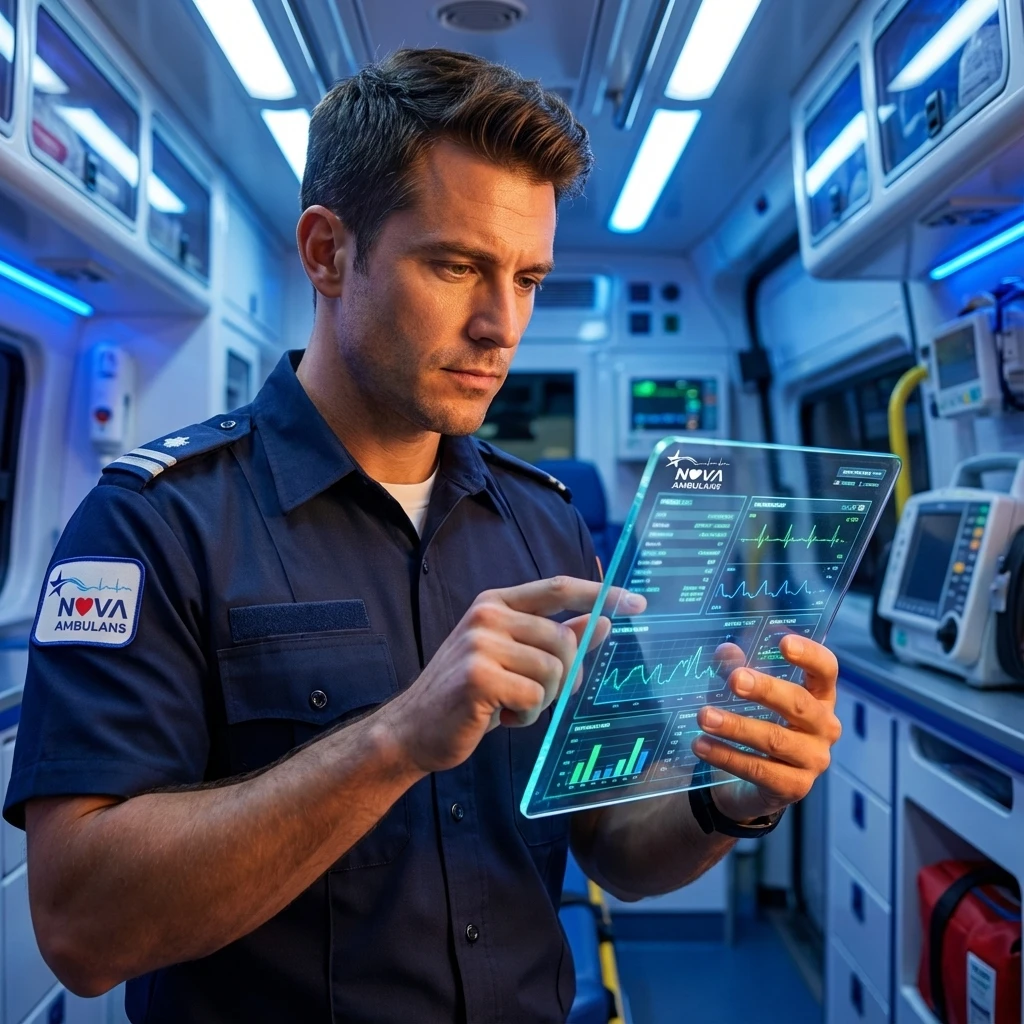
The year 2025 marked a pivotal transformation for the global healthcare sector [1]. Digital health solutions, ambulance technology, and care delivery models matured from experimental concepts into everyday realities. As a private ambulance and patient transport provider operating across Istanbul, Nova Ambulans witnesses these shifts firsthand on every call. In this article, we outline the most significant healthcare trends of 2025 and what they mean for emergency services and patient transport heading into 2026.
1. Key Healthcare Trends of 2025
1.1. The Digital Health Ecosystem Comes of Age
Digital health is no longer "the future" -- it is the present standard [2]. Telehealth platforms, e-prescriptions, and personal health wallets have become essential resources that support faster decision-making in emergencies. For ambulance crews, this means real-time access to a patient's medical history at the scene, reducing guesswork and enabling more targeted interventions.
1.2. Wearable Technology and Remote Monitoring
Wearable devices now provide continuous ECG readings, blood glucose tracking, and vital-sign monitoring [3]. More importantly, they can trigger automatic emergency alerts when abnormal readings are detected. In some cases, an ambulance call can be initiated before the patient even feels symptoms -- a game-changer for conditions like cardiac arrhythmias and diabetic emergencies.
1.3. AI-Powered Clinical Decision Systems
Artificial intelligence is accelerating triage prioritization and diagnostic imaging analysis across hospitals [4]. On the ambulance side, AI-driven route optimization and traffic-density forecasting have meaningfully reduced response times in congested cities like Istanbul, where every minute can make the difference between life and death.
2. Ambulance Technology: Where We Stand in 2025
2.1. The Smart Ambulance Era
Modern ambulances have evolved into mobile emergency care units [1]. Integrated monitors and in-vehicle communication systems enable live video consultations with specialist physicians while the patient is en route. This means critical treatment decisions -- such as whether to activate a catheterization lab -- can be made well before arrival at the hospital.
2.2. In-Vehicle Data and Location Management
Smart navigation systems calculate the fastest route in real time, while continuous data streaming ensures the receiving emergency department is briefed on the patient's condition before the ambulance arrives. This "pre-notification" workflow reduces door-to-treatment times significantly.
2.3. Digital Documentation in Ambulances
Tablet-based digital records have replaced paper forms, eliminating data loss and producing legible, integrated reports that flow directly into hospital information systems [2]. This improves continuity of care and reduces medical errors during handoffs.
3. New Models in Healthcare Delivery
3.1. Home Health and Care Services
Home care for chronic patients and the elderly has become standardized across many healthcare systems [3]. Nova Ambulans serves as a critical bridge in the home-to-hospital-to-home cycle, ensuring safe transport for patients who need regular medical appointments but face mobility challenges. Integrated coordination with home care services is a growing part of this model.
3.2. Strengthening Out-of-Hospital Emergency Services
The collaboration between public emergency services (like Turkey's 112 system) and private ambulance operators has created a more organized response capacity, particularly for mass events and disaster scenarios. This layered approach means faster coverage and better resource allocation.
4. Safety and Quality Standards
Data security and patient privacy sit at the center of the digitized healthcare system [2]. National and international accreditation processes are documenting service quality and building public trust. Nova Ambulans maintains full compliance with these standards, delivering reliable service around the clock.
5. Looking Ahead: From 2025 into 2026
The year 2025 demonstrated that technology's greatest impact is felt when it directly touches human life. As we move into 2026, we expect continued growth in AI-assisted diagnostics, further adoption of wearable health monitors, and deeper integration between ambulance services and hospital systems.
In Istanbul, Nova Ambulans remains at the forefront of this evolution -- combining a modern fleet, trained medical crews, and the latest technology to deliver care when it matters most.
Frequently Asked Questions
What technological advances are expected in emergency healthcare in 2026?
AI-powered triage systems, remote patient monitoring devices, and enhanced telemedicine capabilities in ambulances are among the most anticipated developments. These technologies aim to reduce response times and improve treatment quality on scene.
How is telemedicine being used in emergency situations?
Telemedicine allows ambulance crews to establish live video connections with specialist doctors before reaching the hospital, accelerating diagnosis and treatment decisions. This is particularly valuable during long-distance patient transfers.
How do digital health records affect ambulance services?
Digital health records enable emergency teams to instantly access a patient's medical history, allergies, and current medications. This real-time information supports faster and more accurate clinical decision-making during critical moments.
Health Security for Your Event
Professional ambulance and health team support for concerts, sports events, and organizations.
Average response time: 15 seconds
Related Articles
Emergency Health Protocols in Nursing Homes: A Comprehensive Framework
A practical guide to emergency health protocols for nursing homes and elderly care facilities -- risk analysis, triage codes, staff training, ambulance integration, and documentation.
Community ImpactHealth and Safety on TV and Film Sets: Why a Standby Ambulance Is Essential
The importance of on-set ambulance services for TV, film, and commercial productions -- covering legal requirements, common set risks, and how professional medical standby protects cast and crew.
EducationRamadan Fasting and Health Risks: Emergency Guide for Chronic Patients
A practical guide for diabetics, hypertension, and heart patients fasting during Ramadan — recognise dangerous symptoms and know when to call an ambulance.
Sources
- World Health Organization (WHO) — World Health Organization
- European Commission -- Digital Health — health.ec.europa.eu
- OECD -- Health at a Glance — oecd.org
- The Lancet Digital Health — thelancet.com
Popular Ambulance Topic Clusters
You may also like
- Dialysis patient transport
- Bedridden / ICU transport
- Airport ambulance transfer
- Event ambulance service
- Private ambulance fees
- Ambulance response time in Istanbul
- How to choose the right ambulance
- Guide for relatives waiting for ambulance
- Modern ambulance equipment and team standards
- Heart attack symptoms and first response
Medical Review & Disclaimer
This content has been medically reviewed for accuracy by the Nova Ambulans Medical Board. Visit the Medical Board page for members and policy.
Go to Medical Board pageThis content is for informational purposes only and does not replace professional medical evaluation. In emergencies, call 112 or +90 216 339 00 39.