
Winter Respiratory Infections in Enclosed Spaces: When to Visit the ER vs. When to Call an Ambulance
As winter respiratory infections rise in enclosed spaces, learn to distinguish cold from flu, bronchitis, and pneumonia. Understand oxygen saturation levels and when to call an ambulance.
💡Key Takeaways
- Pneumonia Signs: High fever, shortness of breath, and chest pain are emergency indicators.
- Oxygen Saturation: SpO2 at or below 91% is considered an emergency requiring ambulance transport.
- Elderly Alert: Confusion and falls may be the only sign of a serious respiratory infection.
- Ambulance Criteria: Call immediately for inability to speak, cyanosis, or dropping SpO2.
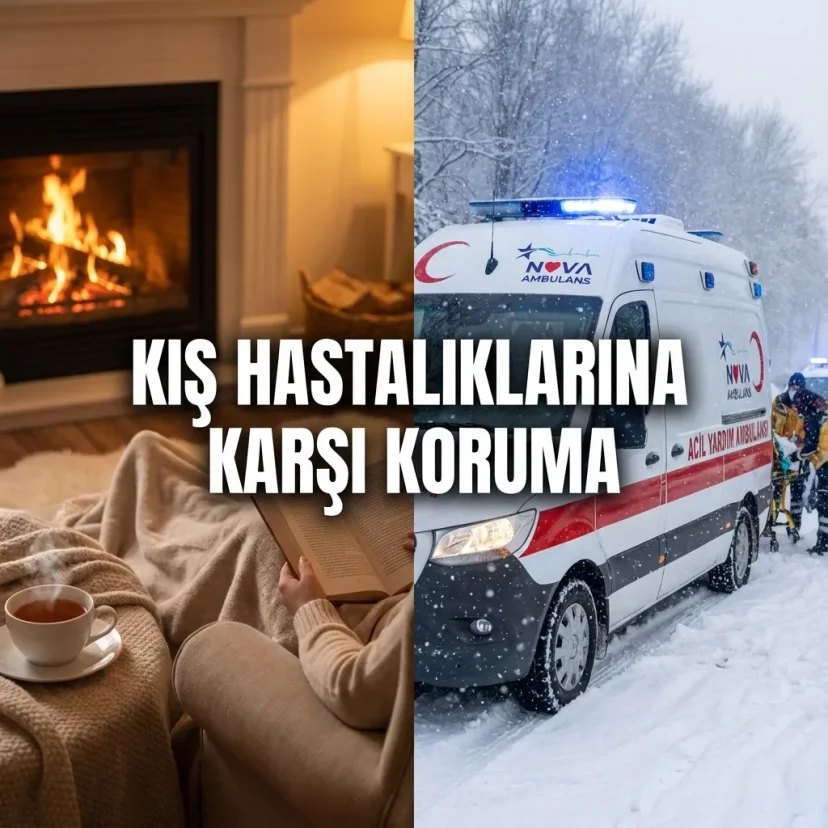
During winter, people spend more time in enclosed spaces with reduced ventilation, while viral circulation increases. The result is a significant rise in respiratory tract infections. [2] These range from a simple common cold to more serious conditions such as bronchitis and pneumonia. The critical question is: When should you go to the emergency room, and when should you call an ambulance?
This guide is designed to help you make decisions based on key indicators such as high fever, shortness of breath, and oxygen saturation (SpO2) levels. (Note: This content is for educational purposes; definitive diagnosis and treatment require physician evaluation.)
Why Do Respiratory Infections Increase in Enclosed Spaces During Winter?
Several key factors drive the winter surge in infections:
- Increased close contact: We spend more time in confined areas such as homes, schools, offices, and public transport.
- Reduced ventilation: Windows are opened less frequently; viruses and airborne particles linger longer indoors. [2]
- Low humidity and cold air: The protective barriers of the upper respiratory tract (mucous membranes) become more easily irritated. [1]
- Vulnerable populations: The elderly, those with chronic conditions, immunocompromised individuals, and young children are more susceptible to severe illness.
Common Conditions: Cold, Flu, Bronchitis, and Pneumonia
Winter respiratory infections may begin with similar symptoms, but their progression and risk levels differ significantly.
Common Cold and Influenza (Flu)
- Runny or congested nose, sore throat, sneezing
- Fatigue, muscle aches
- Fever: milder in colds; often higher in influenza
- Cough: more prominent and exhausting with the flu
Influenza can progress to pneumonia in some individuals (especially high-risk groups) or exacerbate existing chronic conditions. [3] See our detailed guide on flu season and when to call an ambulance.
Bronchitis
Bronchitis involves inflammation of the bronchial tubes, commonly developing after a viral infection. [1] Key symptoms include:
- Prolonged cough (sometimes lasting 2-3 weeks)
- Sputum (may be clear, yellowish, or greenish; color alone does not confirm bacterial infection)
- Burning sensation or discomfort in the chest
- Wheezing, breathlessness with exertion
In patients with underlying conditions such as asthma or COPD, bronchitis can worsen rapidly.
Pneumonia: Symptoms and Warning Signs
Pneumonia symptoms often start like "just a cold" but can deteriorate quickly. [3] Watch for:
- High fever (especially 38.5 C / 101.3 F and above) with chills
- Worsening, deepening cough with increased sputum
- Shortness of breath and rapid breathing [1]
- Chest pain (especially a stabbing sensation when inhaling)
- Marked fatigue, loss of appetite, and altered consciousness (particularly in the elderly)
Pneumonia is a condition where "waiting it out at home" can be risky. Timely medical evaluation can be lifesaving.
Home Monitoring: Which Situations Are Typically Not Emergencies?
The following situations can generally be managed with a same-day planned visit or home care (depending on the individual's risk profile):
- Mild to moderate sore throat, runny nose, and light cough
- Fever that is short-lived and controllable
- No shortness of breath; no difficulty speaking
- Ability to drink fluids; normal urine output
- No chest pain
- Oxygen saturation (if measured at home) remaining in the normal range
However, in patients with chronic conditions (COPD, heart failure), pregnancy, immunosuppression, or at the extremes of age (infants, elderly), the threshold is lower and earlier evaluation is warranted.
Oxygen Saturation (SpO2): What It Means and How to Interpret It at Home
Oxygen saturation (SpO2) measures the oxygenation of your blood and can be checked with a finger-clip pulse oximeter. [4]
A practical guideline:
- 95-100%: Generally considered normal for most healthy adults.
- 92-94%: Requires attention; depending on symptoms, age, and medical history, emergency evaluation may be needed.
- 91% and below: Especially when accompanied by shortness of breath or exhaustion, this should be treated as an emergency. [1]
Important notes:
- Oximeter readings can be inaccurate due to cold fingers, nail polish, movement, or poor circulation.
- For COPD patients, target values may differ; follow your physician's guidance.
When Should You Go to the Emergency Room?
The following situations generally warrant emergency room evaluation (whether an ambulance is needed is addressed in the next section):
Adult Warning Signs Requiring ER Visit
- Fever above 38.5 C (101.3 F) with worsening symptoms over 24-48 hours
- Severe sore throat with inability to swallow or take fluids
- New or increasing wheezing or chest tightness
- Chest pain, especially a stabbing sensation that worsens with breathing
- Marked fatigue or feeling faint upon standing
- Patients with diabetes, COPD, heart disease, or other chronic conditions who feel "unusually unwell"
- Home-measured SpO2 between 92-94% with worsening symptoms
Infections in the Elderly: Why Extra Vigilance Is Needed
Infections in the elderly sometimes present atypically -- without the classic fever and cough: [2]
- Sudden confusion, drowsiness, or disorientation
- Loss of appetite, falls, or pronounced weakness
- Sudden worsening of existing conditions (heart failure, COPD)
If an elderly family member seems to have "just a flu" but is deteriorating quickly, do not delay emergency evaluation.
When Should You Call an Ambulance? (Ambulance Criteria)
In some situations, transporting the patient in your own vehicle is both risky and can cause delays. The following ambulance criteria indicate that ambulance transport is safer.
1) Severe Shortness of Breath and Inability to Speak
- The person struggles to form sentences or can only speak in single words
- Cyanosis (blue lips), visible chest retractions, use of accessory breathing muscles
- Rapid, shallow breathing with increasing panic
2) Significant Drop in Oxygen Saturation
- Home-measured SpO2 at 91% or below
- SpO2 at 92-94% with a rapidly declining trend and accompanying shortness of breath or lightheadedness
3) Altered Consciousness or Fainting
- Difficulty waking the person, new-onset confusion
- Fainting, seizures, uncontrolled agitation
4) Very High Fever with Severe General Deterioration
- High fever combined with extreme fatigue, inability to take fluids, dehydration signs
- Rapid deterioration in immunocompromised patients (chemotherapy, advanced chronic disease)
5) Chest Pain with Serious Accompanying Symptoms
- Chest pain with shortness of breath, cold sweating, palpitations, or near-fainting
- Suspected pneumonia with significant respiratory distress
6) Respiratory Distress in Children
Respiratory distress in children can escalate rapidly. [3] The following signs may require ambulance evaluation:
- Rapid breathing with chest wall retractions
- Nasal flaring
- Cyanosis, inability to feed, persistent lethargy
- Barking cough with audible noise during inhalation (stridor)
- Rapid general deterioration accompanying fever
ER vs. Ambulance: A Quick Decision Summary
- ER (by your own transport): Shortness of breath is mild, consciousness is clear, saturation is normal or borderline but stable, no chest pain -- but fever and cough are worsening, or you belong to a risk group.
- Ambulance: Moderate to severe shortness of breath, SpO2 drop, altered consciousness, cyanosis, fainting, serious chest pain, or visible respiratory distress in a child.
If symptoms worsen on the way to the hospital in your own vehicle, intervention options are limited. For high-risk symptoms, an ambulance is the safer choice.
Safe First Steps at Home While Waiting for the Ambulance
- Place the person in an upright, seated position and loosen tight clothing.
- Ventilate the room, keep away from cigarette smoke.
- If conscious and able to swallow, offer small sips of fluid; do not force if there is a vomiting or aspiration risk.
- If an oximeter is available, monitor SpO2 and pulse; note any significant drops.
- In children, if fever and respiratory distress coexist, do not delay -- deterioration can be rapid.
- Prepare information: medication allergy list, chronic conditions, regular medications.
When Does Private Ambulance Transport Offer an Advantage?
For some patients, safe transport to the right hospital under the right conditions is as important as emergency response:
- Elderly patients with suspected infection and general deterioration
- Pneumonia/bronchitis cases that may require oxygen support
- Children with respiratory distress needing close monitoring during transport
- Patients with cardiac/COPD comorbidities experiencing sudden worsening
Nova Ambulans provides 24/7 service in Istanbul with appropriate equipment and monitoring during transport for these situations.
Conclusion: In Winter Infections, the Critical Threshold Is Breathing and Saturation
While winter respiratory infections run a mild course for most people, pneumonia symptoms, high fever, shortness of breath, and falling oxygen saturation should be taken seriously. Infections in the elderly can start with subtle signs, and respiratory distress in children can escalate quickly. When in doubt, seeking professional help without delay is always the safest approach.
Frequently Asked Questions
How often should enclosed spaces be ventilated in winter?
Open windows at least 3-4 times per day for 10-15 minutes each time, even in cold weather. Proper air circulation in offices, classrooms, and public transport significantly reduces airborne pathogen concentration and infection risk.
When should masks be worn in indoor settings?
Mask use is recommended when you have flu-like symptoms, when in crowded or poorly ventilated spaces, or when in close contact with high-risk individuals such as the elderly or those with chronic conditions.
When should I call an ambulance for a respiratory infection?
Call 112 or Nova Ambulans if breathing becomes severely labored, lips or fingernails turn blue, chest pain develops, there is persistent confusion or drowsiness, or high fever does not respond to treatment — especially in elderly patients and those with chronic lung conditions.
How can I tell if it's flu or COVID-19?
Both can present with fever, cough, and body aches. Loss of taste or smell is more specific to COVID-19. Because symptoms overlap significantly, the only reliable way to distinguish between them is through diagnostic testing.
Professional Emergency Support
24/7 emergency ambulance service across Istanbul. Fast response, fully equipped team.
Average response time: 15 seconds
Related Articles
Norovirus (Stomach Flu) in Winter: When to Call 112 or Nova Ambulans for Severe Vomiting and Diarrhea
A practical guide to norovirus symptoms, home first aid for dehydration, red flags that require an ambulance, and safe patient transport with infection control.
EducationFirst Aid in Winter Traffic Accidents: The First 10 Minutes That Save Lives
Scene safety on icy roads, how to call for an ambulance with accurate location info, spinal injury risks, hypothermia prevention, and winter car emergency kit essentials.
EducationWhat Is SKKM? Turkey's Health Command and Control Center Explained
SKKM (Sağlık Komuta Kontrol Merkezi) is Turkey's provincial ambulance coordination hub embedded in the 112 call center. Learn how it works with private ambulance services under the 2025 Ambulance Regulation.
Popular Ambulance Topic Clusters
You may also like
- Dialysis patient transport
- Bedridden / ICU transport
- Airport ambulance transfer
- Event ambulance service
- Private ambulance fees
- Ambulance response time in Istanbul
- How to choose the right ambulance
- Guide for relatives waiting for ambulance
- Modern ambulance equipment and team standards
- Heart attack symptoms and first response
Medical Review & Disclaimer
This content has been medically reviewed for accuracy by the Nova Ambulans Medical Board. Visit the Medical Board page for members and policy.
Go to Medical Board pageThis content is for informational purposes only and does not replace professional medical evaluation. In emergencies, call 112 or +90 216 339 00 39.