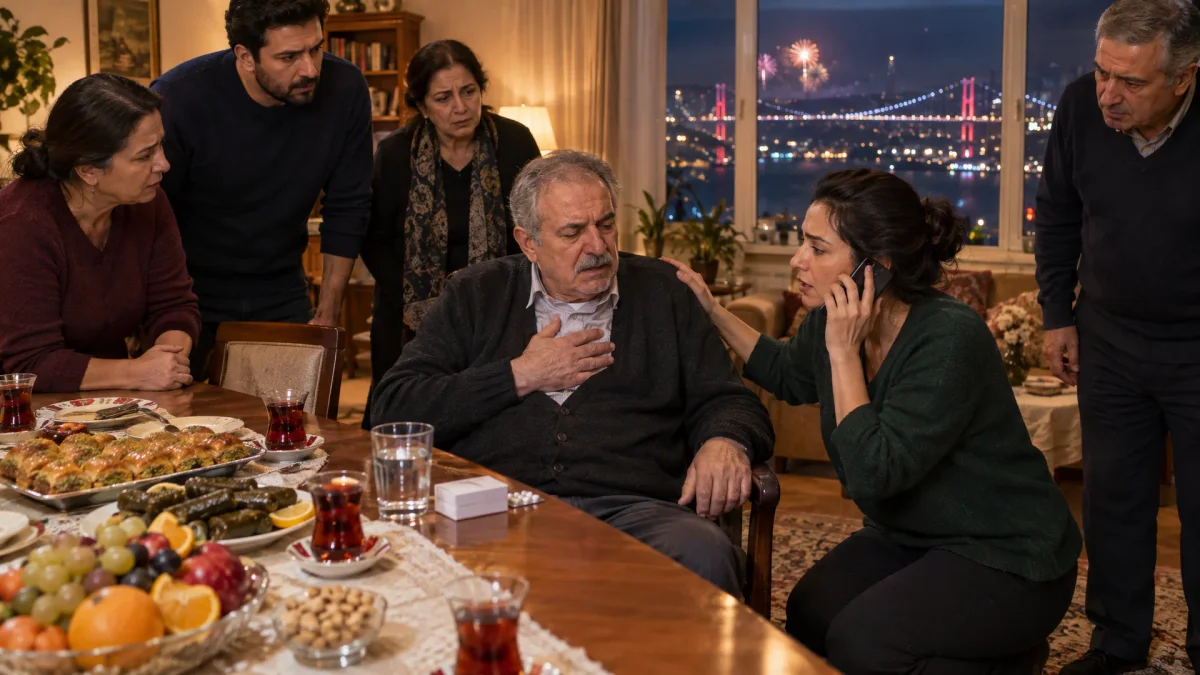
- Traffic and Travel: Holiday traffic significantly increases accident and trauma risk.
- Diet and Alcohol: Overeating and excess alcohol consumption can trigger acute health crises.
- Chronic Patients: Disrupted medication routines during holidays can lead to dangerous flare-ups.
- 24/7 Service: Nova Ambulans operates without interruption throughout all holiday periods.
New Year's Eve, national holidays, religious festivals, and long weekends are times we look forward to spending with family and friends. Unfortunately, these same periods also see a sharp increase in emergency health needs. The World Health Organization (WHO) reports that "approximately 1.19 million people die each year as a result of road traffic crashes" globally, and that "delays of minutes can make the difference between life and death in post-crash care" [5]. Heavy traffic, irregular eating, alcohol consumption, crowded social settings, and the disruption of daily routines all combine to create elevated risk [3] -- especially for people with chronic conditions.
Nova Ambulans remains fully operational 24 hours a day, 7 days a week, throughout every holiday period, providing emergency ambulance services and patient transport across Istanbul. This guide will help you prepare, recognize warning signs, and know exactly when and how to get professional help during festive times.
Why Do Health Risks Increase During Holidays?
1. Heavy Traffic and Long Journeys
Holiday visits and New Year's celebrations cause dramatic spikes in both urban and intercity traffic. More vehicles on the road means more accidents [3]. Fatigue from long drives, unfamiliar routes, and winter weather conditions compound the risk. For families with elderly or chronically ill members, this also means that reaching a hospital quickly can be more difficult than usual.
2. Overeating and Rich Foods — and Holiday Heart Syndrome
Festive tables are filled with heavier, fattier, and saltier food than everyday meals. Excessive consumption can trigger:
- Cardiac events — heart attacks, hypertensive crises, and Holiday Heart Syndrome — a clinical picture first described by Philip O. Ettinger and colleagues in the American Heart Journal in 1978 — in which a short binge of alcohol can precipitate atrial fibrillation even in otherwise healthy people [9]. The American Heart Association (AHA) also publishes patient guidance on this condition [2]
- Diabetic emergencies — blood sugar spikes or crashes in patients who deviate from their meal plans
- Gastrointestinal distress — from mild indigestion to pancreatitis in severe cases
Palpitations, dizziness, or shortness of breath after a heavy festive meal — even if transient — warrant a clinical check.
3. Alcohol Consumption
New Year's Eve in particular sees a significant increase in alcohol intake [1]. This can result in:
- Alcohol poisoning -- especially dangerous when combined with medications [1]
- Falls and trauma -- impaired coordination leads to injuries [3]
- Poor decision-making -- delayed recognition of symptoms and delayed calls for help
4. Disrupted Medication Routines
The excitement and schedule changes of holidays often cause chronic patients to:
- Miss medication doses -- insulin, blood pressure pills, anticoagulants, Chronic Obstructive Pulmonary Disease (COPD) inhalers
- Run out of prescriptions -- pharmacies may have limited holiday hours
- Change their eating and sleeping patterns -- which can destabilize otherwise well-managed conditions
These disruptions can lead to Chronic Obstructive Pulmonary Disease (COPD) exacerbations, diabetic crises, or heart failure episodes at times when getting to a doctor is harder than usual.
Pre-Holiday Health Preparation Checklist
Prevention is always easier than managing an emergency. Take these steps before the holiday begins:
For Chronic Patients
- Complete a doctor's visit before the holiday period -- review medications, refill prescriptions, and discuss any adjustments needed for diet changes
- Stock up on medications -- ensure you have at least one week's extra supply of all regular prescriptions
- Pack a personal health kit including:
- All current medications with dosage instructions
- Blood pressure monitor and/or blood glucose meter
- Recent epicrisis or medical summary
- Emergency contact card (doctor's number, hospital preference, family contacts)
- Set medication reminders on your phone -- holiday schedules can make it easy to forget regular doses
For Everyone
- Prepare an emergency kit for travel (see our emergency kit guide)
- Know the nearest hospitals at your holiday destination, including their emergency department hours
- Save emergency numbers: 112 (national emergency), Nova Ambulans (0216 339 00 39)
- Designate a sober driver for New Year's Eve or arrange alternative transportation in advance
- Keep health documents accessible -- identification, insurance card, medication list, allergy information
New Year's Eve: Specific Safety Tips
New Year's Eve is one of the busiest nights for ambulance services. Keep these tips in mind:
1. Control Alcohol Consumption
- Moderate your intake, or choose not to drink at all
- Never mix alcohol with medications -- this includes blood pressure pills, anticoagulants, antidepressants, and painkillers [1]
- If you plan to drive, do not drink anything -- there is no "safe" amount behind the wheel
- Watch for signs of alcohol poisoning in others: confusion, vomiting, slow breathing, unconsciousness
2. Be Cautious in Crowds
Crowded celebrations can trigger:
- Panic attacks in people prone to anxiety
- Cardiac events from the combination of stress, alcohol, and rich food [2]
- Crush injuries in very dense crowds
Choose calmer venues and know where the exits are. If you feel unwell, move to a quieter area immediately.
3. Fireworks and Burns
- Keep a safe distance from fireworks -- even "consumer-grade" products cause serious burns and eye injuries every year
- Never handle fireworks while intoxicated
- If someone is burned, cool the area with cool running water for at least 20 minutes [4] and seek medical attention for anything beyond a superficial burn
4. Cold Weather Exposure
New Year's celebrations often involve extended time outdoors. For tips on recognizing and responding to cold-weather emergencies, see our article on winter frostbite and hypothermia risk.
Istanbul New Year's Eve Peak Window: 23:00–04:00
Istanbul emergency departments see their busiest stretch of the year on New Year's Eve and the early hours of January 1st. Alcohol-related trauma, firework injuries, and cardiac presentations peak at the same time. Published emergency-department data likewise show New Year injuries clustering within the first two hours after midnight [10]. In our operational experience, the load tops out between 23:00 and 04:00, which is exactly when E-5 and TEM motorways slow — extending ambulance arrival times. Practical implications:
- If chest pain or shortness of breath appears, decide and call before 22:00, not when symptoms become unmistakable.
- When you call, name your preferred private hospital to the operator; dispatch routes to the next on-duty centre with capacity if your first choice is full.
- The morning of January 1st is, for most hospitals, the easiest window for planned discharges and inter-facility transfers.
Ramadan, Bayram, and Diabetes — Glucose Management
The most metabolically fragile period of the calendar is the transition from the long Ramadan fasting day to the Eid (bayram) table. A patient who has fasted for many hours and then sits down to a heavy holiday meal faces simultaneous risk of postprandial hyperglycaemia and, two to four hours later, reactive hypoglycaemia. The IDF Diabetes and Ramadan recommendations and Turkish Diabetes Society guidance for the first day of Eid suggest:
- Starting with a small breakfast and spreading the main meal across 1–2 hours,
- Reviewing insulin doses with the treating physician for the fast-to-bayram transition,
- Eating dessert 1–2 hours after the meal and pairing it with a walk [4].
Hypoglycaemia signs (tremor, cold sweat, confusion) call for 15–20 g of fast-absorbed sugar (juice, glucose tablets); if consciousness is lost, request an ambulance without delay.
When to Call an Ambulance During Holidays
Do not dismiss symptoms as "holiday stress" or "too much food." Call 112 or Nova Ambulans (0216 339 00 39) immediately if you observe:
- Sudden, persistent chest pain -- especially with sweating, nausea, or radiating to the left arm, jaw, or back [2]
- Severe shortness of breath that does not improve with rest
- Sudden speech difficulty, facial drooping, or arm weakness (signs of stroke) [4]
- Loss of consciousness or altered mental status
- Severe headache unlike anything experienced before, or a seizure
- Serious trauma or uncontrollable bleeding
- Suspected poisoning -- alcohol, medication overdose, or carbon monoxide
Time is critical in these situations. Do not wait to see if it gets better. Holiday traffic delays mean emergency response may take longer than usual, so calling early is even more important.
Nova Ambulans 24/7 Holiday Service
Nova Ambulans does not take holidays. Throughout New Year's Eve, national holidays, religious festivals, and every weekend, fully equipped ambulances and experienced medical teams are on standby.
Services Available During Holidays
- Emergency Ambulance: Rapid response for sudden, acute emergencies with advanced life support equipment
- Patient Transport: Safe, supervised transfer for hospital visits, discharges, and facility changes
- Event Medical Coverage: On-site health teams for holiday events and large gatherings
Whether you need emergency care at 3 AM on New Year's morning or a planned hospital transfer during a long weekend, Nova Ambulans is a phone call away.
Frequently Asked Questions
Are ambulance services available during holidays and New Year's Eve?
Yes. Nova Ambulans operates 24/7 without interruption throughout all holiday periods, including New Year's Eve, national holidays, and religious festivals. Fully equipped ambulances and medical teams remain on standby at all times.
Why is mixing alcohol with medication dangerous during holidays?
Alcohol can alter the effects of many medications, including blood thinners, blood pressure pills, and antidepressants. This interaction can cause dangerous blood pressure drops, excessive bleeding, or impaired consciousness — risks that increase during holiday celebrations.
What should chronic patients prepare before a holiday trip?
Complete a doctor's visit, stock at least one extra week of all medications, pack a personal health kit with monitoring devices, set phone reminders for medication times, and research the nearest hospital and emergency services at your destination.
When should I call an ambulance during a holiday gathering?
Call immediately for sudden persistent chest pain, severe shortness of breath, stroke symptoms (facial drooping, arm weakness, speech difficulty), loss of consciousness, serious trauma, or suspected poisoning. Do not dismiss symptoms as holiday stress.
Rapid Emergency Support
24/7 emergency ambulance service across Istanbul. Fast response, fully equipped team.
Average response time: 15 seconds
Related Articles
What Is ASOS? How to Log In to Turkey's ASOS System: Address and Steps
The Emergency Health Automation System (Acil Sağlık Otomasyon Sistemi, ASOS) is Turkey's central digital platform for ambulance services. Learn how to log in at asos.saglik.gov.tr, who sets up user permissions, how the system records cases and coordinates Health Command and Control Center (SKKM) dispatch, and how it protects patient data under the 2025 Ambulance Regulation.
EducationWinter Emergency Health Guide: Risk Map and Decision Tree
Map of the most common winter emergencies — respiratory crises, cardiac events, trauma, hypothermia, carbon monoxide and viral infections — in a single decision tree.
EducationSepsis Symptoms: Flu or Sepsis? How to Spot It at Home and When to Call 112
Sepsis is an emergency in which the body responds to an infection in an extreme, uncontrolled way, and it can worsen within hours. If someone with a fever or an infection becomes confused, breathes very fast, has pale or blotchy skin, a rash that does not fade when pressed, or a very high or very low temperature, call 112 without waiting. Until the ambulance arrives, do not leave them alone, give them nothing by mouth and check their consciousness every 2-3 minutes.
Popular Ambulance Topic Clusters
You may also like
- Private ambulance pricing
- Istanbul private ambulance
- Intercity patient transport
- Doctor-accompanied ambulance
- Dialysis patient transport
- How intercity patient transport works
- Ambulance response time in Istanbul
- Home-to-hospital patient transport
- Modern ambulance equipment and team standards
- Heart attack symptoms and first response
This content is informational only and does not replace professional medical evaluation. In emergencies, call 112 or +90 216 339 00 39.
