
Ramadan Fasting and Health Risks: Emergency Guide for Chronic Patients
A practical guide for diabetics, hypertension, and heart patients fasting during Ramadan — recognise dangerous symptoms and know when to call an ambulance.
💡Key Takeaways
- Diabetic patients must consult their endocrinologist or internist before fasting during Ramadan.
- If blood sugar drops below 70 mg/dL, or you experience confusion or loss of consciousness, break your fast immediately and call 112 or Nova Ambulans.
- Blood pressure and cardiac medications must only be rescheduled to suhoor/iftar timing under direct medical guidance — never adjust them yourself.
- Prolonged dehydration during fasting raises cardiovascular risk; a pre-Ramadan check-up with your doctor is essential.
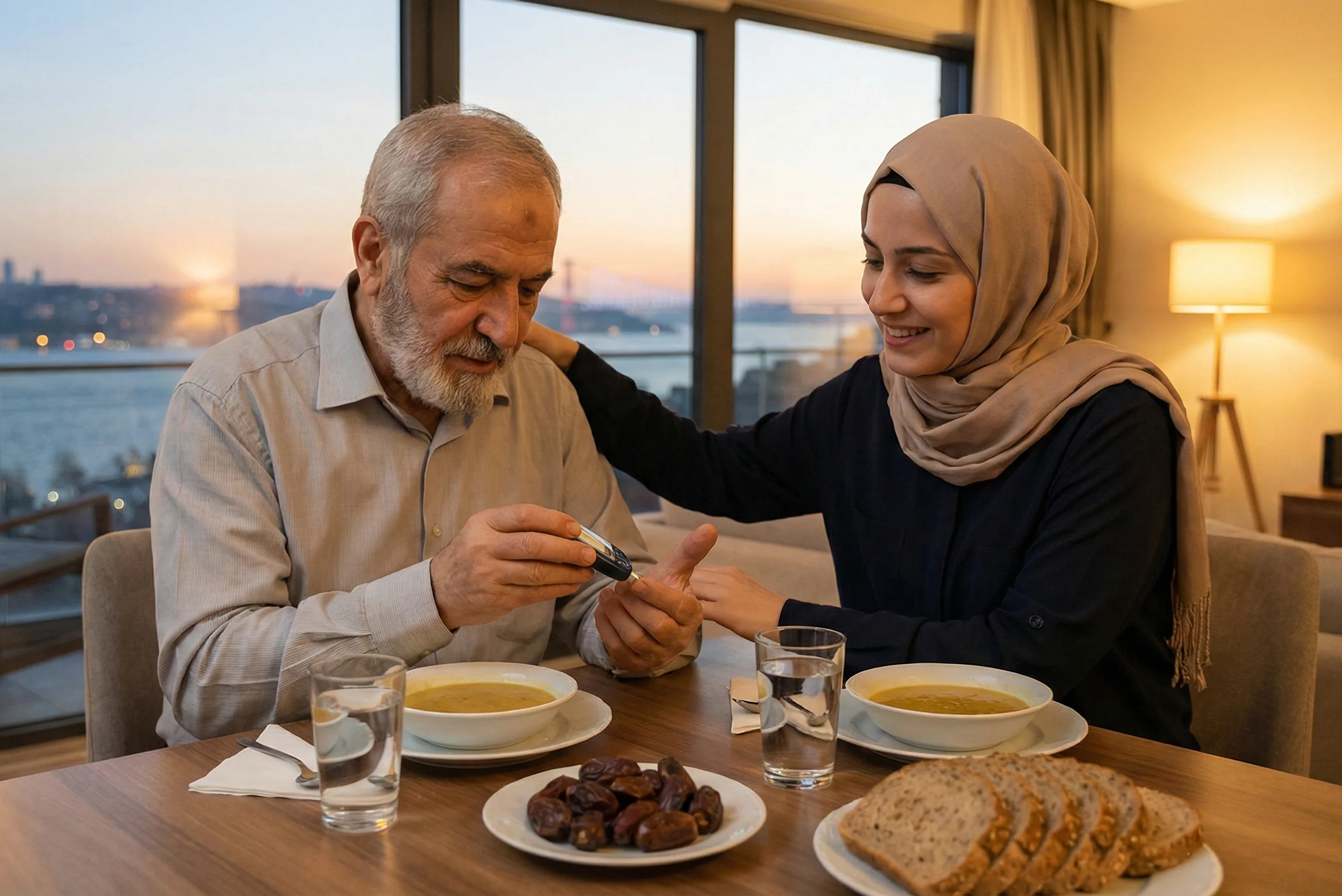
Ramadan is a deeply meaningful month for millions of people in Turkey and across the world. However, for individuals living with diabetes, hypertension, heart disease, or kidney disease, extended fasting can introduce serious health risks that require careful medical planning.
The International Diabetes Federation estimates that a significant proportion of the world's 150 million Muslim diabetic patients choose to fast during Ramadan [1]. In 2026, Ramadan falls during the winter-spring transition, which means shorter fasting hours — but the absence of food and water for 14–17 hours still creates physiological challenges that chronic patients must not underestimate.
This guide explains what physiological changes fasting triggers, which symptoms require emergency attention, and when to call 112 or Nova Ambulans (0216 339 00 39) without delay.
Disclaimer: This content is for educational purposes only and does not replace professional medical advice. If you have a chronic condition, consult your doctor before fasting.
How Ramadan Fasting Affects the Body
During the fasting hours, the body undergoes several interrelated changes:
- Blood sugar fluctuations: In patients using insulin or medications that stimulate insulin secretion, prolonged fasting can dangerously lower blood glucose (hypoglycaemia) or allow it to rise out of control (hyperglycaemia).
- Dehydration and electrolyte imbalance: Cutting off water intake can rapidly create problems for anyone with reduced kidney function or those taking diuretic medications.
- Disrupted medication metabolism: Medications designed to be taken twice daily cannot simply be condensed into one dose without clinical supervision.
- Increased cardiovascular load: Combined dehydration and fasting can raise blood viscosity, placing extra strain on the heart and circulatory system [3].
Diabetes Patients and Ramadan Fasting
The most common question among diabetic patients is: "Can I fast safely?" The answer depends heavily on the type of diabetes and current treatment. The IDF-DAR Practical Guidelines categorise patients into high, moderate, and low risk groups to guide this decision [2].
Type 1 Diabetes
Due to complete insulin dependence and the volatility of blood glucose levels, Type 1 diabetic patients face very high risk when fasting. These patients should not fast without explicit approval from their endocrinologist [1][2].
Type 2 Diabetes
Patients managing Type 2 diabetes with lifestyle changes alone, or with low-hypoglycaemia-risk medications such as metformin, may fast with lower risk. However, patients on insulin or sulphonylureas (e.g. glibenclamide, gliclazide) must work with their doctor to restructure medication doses and timing before Ramadan begins [2].
Monitoring Blood Sugar While Fasting
Testing blood glucose with a fingerprick device during fasting does not break the fast, according to both medical authorities and most religious scholars [1]. Recommended monitoring and action thresholds:
- Check blood glucose at least 2–4 times per day during the fasting period.
- If glucose falls below 70 mg/dL — break your fast and seek medical attention.
- If glucose exceeds 300 mg/dL, especially with nausea or vomiting — seek emergency care immediately.
- For severe hypoglycaemia symptoms (confusion, shaking, loss of consciousness) — break your fast at once; this is also a religious obligation.
Hypoglycaemia Symptoms and Emergency Response
Hypoglycaemia can become life-threatening within minutes, particularly in patients on insulin or sulphonylureas. Key warning signs include [1]:
- Sudden profuse sweating and trembling
- Racing or pounding heartbeat
- Severe dizziness or headache
- Difficulty concentrating, drowsiness
- Blurred vision, tingling around the mouth
- Confusion or loss of consciousness
Critical: If the patient loses consciousness, cannot swallow, or fails to improve within 15 minutes of receiving sugar, call 112 or Nova Ambulans (0216 339 00 39) immediately. The ambulance team can administer intravenous glucose on the spot.
For step-by-step guidance on what to do while waiting for help, see our guide for relatives waiting for the ambulance.
Hypertension (High Blood Pressure) Patients and Ramadan
Hypertension is one of the most prevalent chronic conditions in Turkey. Extended dehydration combined with disrupted medication timing can cause blood pressure to spike or drop unpredictably [3].
Rescheduling Medication — Only With Your Doctor
Once-daily medications can often be safely moved to suhoor or iftar timing, but this decision must not be made without your doctor's guidance. Compressing twice-daily medications into a single dose without supervision risks overdose or inadequate blood pressure control.
Stay Ahead of Dehydration
- The fluid loss between suhoor and iftar raises the risk of hypertensive episodes.
- Drink plenty of water after iftar and again at suhoor.
- Avoid high-sodium foods (pickles, processed soups, cured meats) that exacerbate fluid retention.
Emergency Warning Signs
The following symptoms may indicate a hypertensive crisis — call 112 or Nova Ambulans immediately:
- Severe headache + blurred vision + facial flushing
- Measured blood pressure above 180/110 mmHg with any accompanying symptom
- Chest pain or shortness of breath alongside elevated blood pressure → see our chest pain and shortness of breath guide and call 112 without delay
Heart Patients and Ramadan: A High-Risk Combination
Cardiac patients require careful individualised evaluation before Ramadan fasting [3]. Prolonged fasting and fluid restriction may:
- Increase blood viscosity, raising the risk of clot formation.
- Trigger electrolyte imbalances (especially low potassium) that can destabilise heart rhythm.
Patients with unstable angina, a heart attack in the past 3 months, or advanced heart failure are generally advised not to fast [3]. Be familiar with the early warning signs in our heart attack symptoms guide.
Cardiac Emergencies — Call 112 or Nova Ambulans Now
- Chest pressure, tightening, or burning lasting more than 5 minutes
- Pain radiating to the left arm, jaw, back, or upper abdomen
- Sudden shortness of breath + cold sweating + nausea
- Palpitations + dizziness + feeling of impending blackout
Important: Do not wait through these symptoms because you are fasting. Religious teaching also permits breaking the fast under conditions of genuine medical necessity.
Kidney Disease Patients and Prolonged Dehydration
Individuals with chronic kidney disease or a history of kidney stones face elevated risk during extended fasting periods:
- Dehydration concentrates urine, significantly raising the risk of kidney stone formation [1].
- In patients with already compromised kidney function, electrolyte disturbances can escalate quickly.
- Dialysis patients should generally not fast. For regular medical transport needs, explore our dialysis patient transport service.
Emergency indicators:
- Severe flank or back pain (kidney stone crisis)
- Markedly reduced urine output and dark-coloured urine
- High fever accompanied by back pain (possible kidney infection)
Suhoor and Iftar Nutrition: Key Principles for Chronic Patients
For patients managing chronic illness, what and how you eat at suhoor and iftar directly affects medication efficacy — not just energy balance.
At suhoor:
- Choose slow-digesting carbohydrates: wholegrain bread, oats, legumes.
- Drink plenty of water; aim to cover a large proportion of your daily fluid needs at suhoor.
- Diabetic patients should plan carbohydrate intake in advance with their doctor or dietitian.
At iftar:
- Start with a few dates and water, then a light soup — this gradually wakes the digestive system and blunts the post-fast glucose spike.
- Limit high-glycaemic-index foods (white bread, sugary desserts).
- Heart and blood pressure patients should avoid heavily salted foods.
When to Call an Ambulance During Ramadan
If any of the following situations arise, call 112 or Nova Ambulans (0216 339 00 39) without delay:
| Situation | Emergency Sign |
|---|---|
| Hypoglycaemia | Loss of consciousness; no improvement 15 min after sugar |
| Hyperglycaemia | Blood glucose >400 mg/dL + vomiting + difficulty breathing |
| Heart attack | Chest pain + radiation to arm + cold sweating |
| Hypertensive crisis | BP >180/110 mmHg + severe headache + visual disturbance |
| Kidney crisis | Severe flank pain + blood in urine + high fever |
| Severe dehydration | Confusion + very little urine + rapid pulse |
| Arrhythmia | Rapid, slow, or irregular pulse + chest tightness |
Our 5 tips to stay calm in emergencies guide can help you and your family act clearly and quickly under pressure.
Important: While waiting for the ambulance, keep the patient calm, seated or semi-reclined. Do not give any medication that has not been prescribed by their doctor.
Nova Ambulans: 24/7 Support Throughout Ramadan
Nova Ambulans continues its 24/7 emergency ambulance and planned patient transport service throughout the month of Ramadan without interruption. Whether you need a urgent emergency response or regular medical transport — for dialysis, chemotherapy, or specialist appointments — call us at 0216 339 00 39.
Frequently Asked Questions (FAQ)
Q: I have diabetes. Can I fast safely during Ramadan? A: It depends on your diabetes type, medications, and overall health status. A consultation with your endocrinologist or internist before Ramadan is essential. Patients at high hypoglycaemia risk — including most Type 1 diabetics and insulin-dependent Type 2 patients — are generally advised not to fast [1][2].
Q: Does using insulin or testing blood sugar break the fast? A: Testing blood glucose with a fingerprick does not break the fast according to the majority of religious and medical authorities. Insulin is a medical necessity and most scholarly opinions permit its use without invalidating the fast. Always discuss timing and dose adjustments with your doctor [2].
Q: How far in advance should I see my doctor before Ramadan? A: Book your appointment at least 2–4 weeks before Ramadan begins. This gives your doctor enough time to restructure medications, conduct a risk assessment, and provide you with clear fasting guidelines.
Q: What should I do if someone with diabetes collapses during fasting? A: Break their fast immediately — offer fruit juice or a few sugar cubes if they are conscious and can swallow safely. If there is no improvement within 15 minutes, or if the person is unconscious, call 112 or Nova Ambulans (0216 339 00 39) at once. The medical team can administer intravenous glucose [1].
Q: Should I change the timing of my blood pressure medication myself? A: No. Changing the timing of antihypertensive medications without medical guidance can cause either overdose or inadequate blood pressure control. Always make this change in consultation with your prescribing doctor.
Q: My relative has heart failure and wants to fast. What are the risks? A: Advanced heart failure, recent myocardial infarction, or unstable angina are generally considered contraindications for fasting without cardiologist approval [3]. Please ensure your relative has a pre-Ramadan cardiac review.
You may also like: Diabetes and Emergencies: Hypoglycaemia, Hyperglycaemia and When to Call an Ambulance
Next Step: Do You Need an Ambulance?
Make a quick decision with a 1-minute logistics checklist. You can share photo, location, and floor details via WhatsApp without sending medical data.
- Is there elevator/stretcher access?
- Are pickup and destination details clear?
- Are departure time and companion readiness confirmed?
Related Articles
Emergency Health During Holidays: New Year's Eve, National Holidays, and Long Weekends
Why health risks increase during holidays, a preparation checklist for chronic patients, New Year's Eve safety tips, and when to call an ambulance during festive periods.
EducationCalling an Ambulance During Heavy Snow: Location Sharing, Safe Waiting, and Transport Planning
How to call an ambulance during heavy snowfall and road closures: accurate location sharing, 112 and Nova Ambulans options, safe waiting tips, and intercity transport in winter.
EducationChest Pain and Shortness of Breath in Cold Weather: When to Call 112 or Nova Ambulans
Cold weather can trigger chest pain and shortness of breath through vasoconstriction and bronchospasm. Learn the emergency warning signs, first aid steps, and when to call 112 or Nova Ambulans.
Sources
- Diabetes and Fasting — International Diabetes Federation — International Diabetes Federation
- IDF-DAR Practical Guidelines — Diabetes and Ramadan — International Diabetes Federation
- Diabetes — American Heart Association — American Heart Association
Popular Ambulance Topic Clusters
You may also like
- Dialysis patient transport
- Bedridden / ICU transport
- Airport ambulance transfer
- Event ambulance service
- Private ambulance fees
- Ambulance response time in Istanbul
- How to choose the right ambulance
- Guide for relatives waiting for ambulance
- Modern ambulance equipment and team standards
- Heart attack symptoms and first response
Medical Review & Disclaimer
This content has been medically reviewed for accuracy by the Nova Ambulans Medical Board. Visit the Medical Board page for members and policy.
Go to Medical Board pageThis content is for informational purposes only and does not replace professional medical evaluation. In emergencies, call 112 or +90 216 339 00 39.