
Carbon Monoxide Poisoning in Winter: Symptoms, First Aid, and When to Call an Ambulance
Carbon monoxide (CO) poisoning symptoms are often mistaken for the flu. Learn the warning signs, step-by-step first aid, prevention tips, and when to call 112 or Nova Ambulans.
💡Key Takeaways
- CO Symptoms: Headache, nausea, and dizziness are often mistaken for the flu -- think CO.
- First Aid: Ventilate the area and move the person to fresh air immediately, then call 112 or Nova Ambulans.
- Risk Groups: Infants, the elderly, pregnant women, and those with chronic illness are affected faster.
- Prevention: Regular chimney maintenance, boiler servicing, and CO alarms save lives.
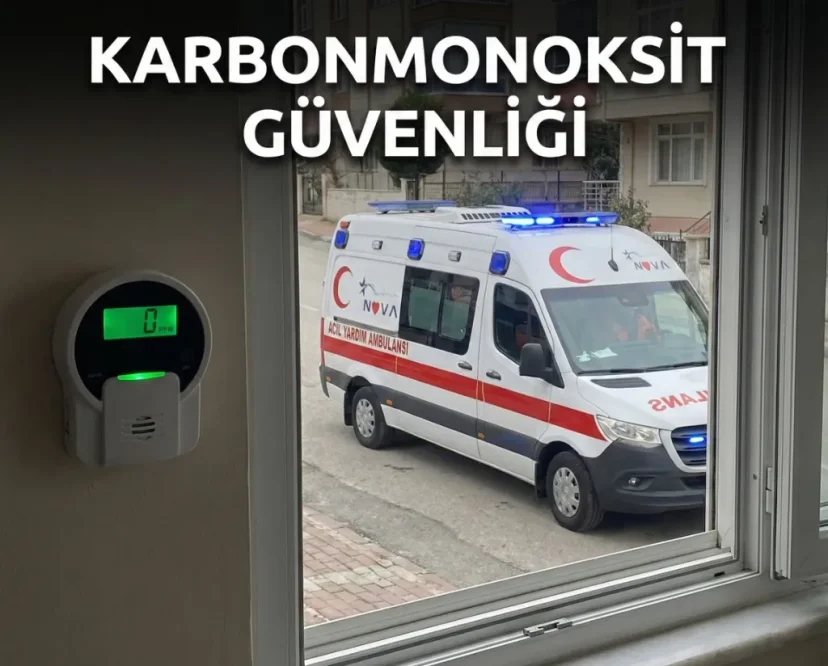
During winter, the increased use of stoves, boilers, water heaters, and similar heating devices -- combined with chimney blockages, poor ventilation, and equipment malfunctions -- raises the risk of carbon monoxide poisoning. Carbon monoxide (CO) is a colorless, odorless, and non-irritating gas, making it one of the most difficult poisons to detect. [1][2] This guide walks you through CO symptoms, practical first aid steps you can apply at home, and clear criteria for when to call 112 or an ambulance.
What Is Carbon Monoxide (CO) and Why Is It Dangerous?
Carbon monoxide forms when fuels such as natural gas, coal, wood, and gasoline undergo incomplete combustion. When inhaled, CO passes from the lungs into the bloodstream and binds to hemoglobin far more strongly than oxygen, disrupting oxygen delivery to tissues throughout the body. [1] This is why CO exposure can cause headache and nausea within minutes, progressing to loss of consciousness and life-threatening complications.
CO poisoning in winter commonly occurs in these scenarios:
- Stove poisoning: Improper ignition, leaving the stove lit overnight, or using low-quality coal
- Chimney blockage or reverse draft (caused by wind, bird nests, soot buildup, or lack of maintenance)
- Boiler or water heater leaks or combustion problems
- Generators or motor-powered devices running in enclosed spaces
- Running a car engine in a closed garage or parking area
Why Is CO Poisoning More Common in Winter?
In winter, homes are kept sealed to retain heat. Windows stay closed for extended periods, ventilation grilles are blocked, and chimneys go uncleaned. These conditions cause indoor CO levels to rise. The danger is especially acute at night, when household members are asleep and CO accumulates to hazardous concentrations unnoticed.
Carbon Monoxide Poisoning Symptoms
CO poisoning symptoms are frequently mistaken for the flu, which delays recognition. [2] The following complaints should raise suspicion of CO exposure, especially if multiple people in the same household develop symptoms simultaneously.
Early Symptoms
- Headache (the most common symptom) [1]
- Dizziness and lightheadedness
- Nausea and vomiting (headache and nausea often occur together)
- Fatigue, weakness, and drowsiness
- Shortness of breath (especially in those with heart or lung disease)
- Palpitations and chest tightness
Moderate to Severe Symptoms
- Difficulty concentrating, confusion (mental fog)
- Loss of balance, difficulty walking
- Visual disturbances
- Loss of consciousness
- Seizures, fainting
- Cherry-red or unusually flushed skin (though this sign may be subtle or absent) [1] and severe respiratory distress
Who Is at Higher Risk?
- Infants and children
- Elderly adults
- Pregnant women
- Those with heart disease, COPD, asthma, or other chronic conditions [1][2]
- People who are asleep when exposure occurs (nighttime stove/boiler scenarios)