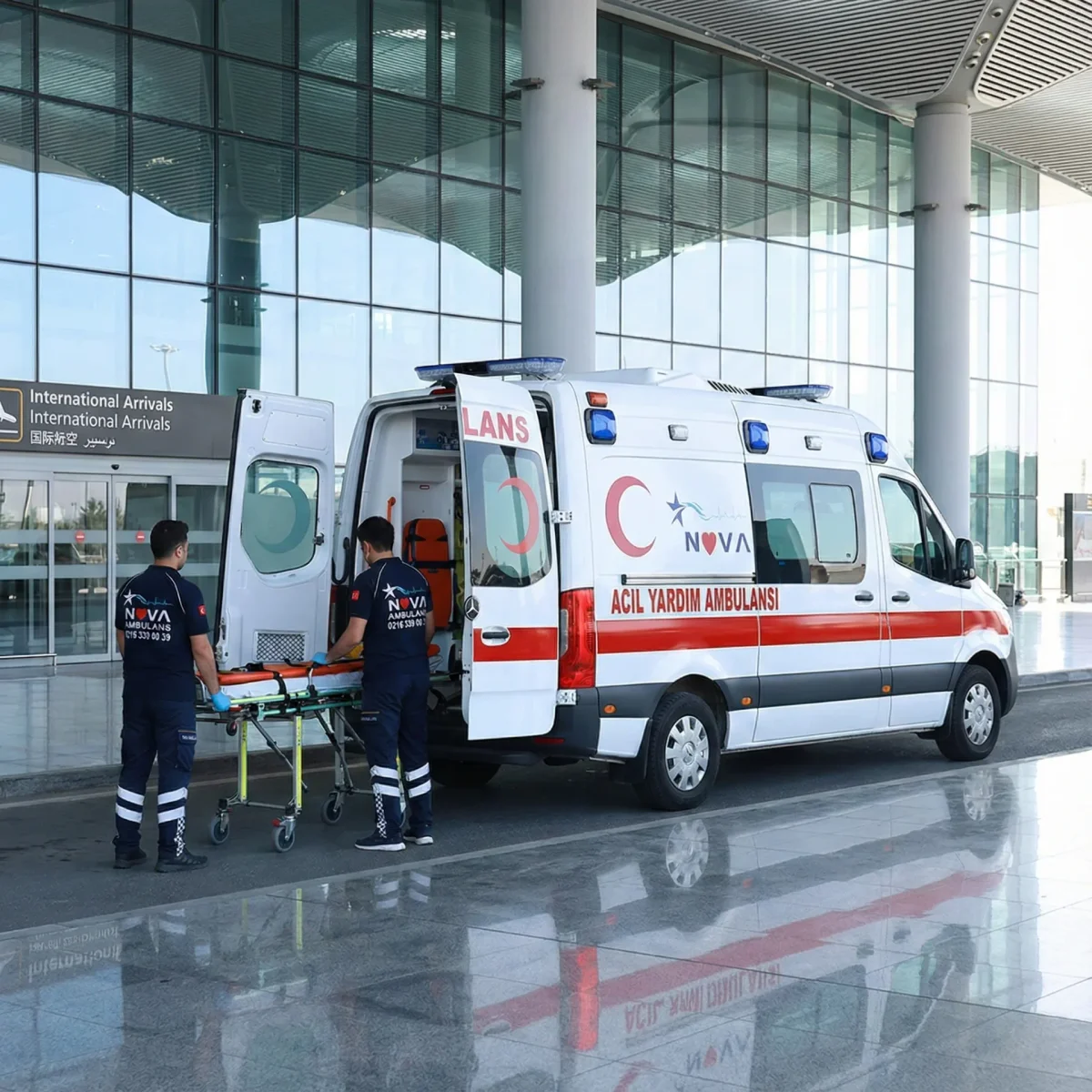
- Under the Ministry of Health regulation, a patient-transport ambulance may not be used for event medical coverage; only an emergency (acil yardım) ambulance is permitted.
- An emergency ambulance is staffed by a team of at least three: a physician, paramedic (AABT), or module-trained emergency medical technician (ATT), together with another health-care staffer and a driver.
- Attendance, physical-risk level, venue conditions, and alcohol use directly shape the medical plan.
- Law No. 6331 on Occupational Health and Safety obliges organizers acting as employers to take every measure to protect their workers.
Many organizers ask the same question: is an ambulance legally mandatory for an event? In practice, requirements vary by event type, participant volume, risk exposure, and local authority expectations. But the regulation sets one clear rule: a patient-transport ambulance may not be used for event medical coverage; only an emergency (acil yardım) ambulance is permitted. [1]
For İstanbul events, the safest approach is to treat medical planning as part of the event design from day one, not as a last-minute checklist item.
The Core Rule in the Regulation
Under the T.C. Ministry of Health Ambulance Services Regulation, an ambulance assigned to provide medical coverage at an event must be of emergency (acil yardım) ambulance grade. [1]
What Does This Rule Mean?
- A patient-transport ambulance cannot be used for event medical coverage. This is a firm provision of the regulation.
- An emergency ambulance is staffed by a team of at least three people: at least one physician, or a paramedic (Ambulance and Emergency Care Technician, AABT), or a Ministry-approved module-trained Emergency Medical Technician (ATT), together with another health-care staffer and a driver. [1]
- The ambulance must carry a ventilator, monitor, defibrillator, and oxygen system as standard.
- The ambulance parking spot, entry/exit route, and intervention point should be defined in advance for the event venue.
Why Can't a Patient-Transport Ambulance Be Used?
Patient-transport ambulances are designed for the planned transfer of stable patients. Their team structure and equipment level are inadequate for the acute emergencies that can arise at events (cardiac arrest, severe trauma, anaphylaxis). [1] This is why the regulation permits only an emergency ambulance at events.
Which Events Require an Ambulance on Standby?
Not every event triggers an automatic ambulance requirement. However, a medical plan and ambulance standby are strongly recommended — or required by local authorities — under the following conditions.
High-Risk Factors
- High attendance or dense crowd flow
- High physical-activity events (sports, races, stage performances)
- Outdoor and climate conditions (heatstroke, hypothermia risk)
- Festivals with alcohol or food consumption
- Events with many children or elderly participants
- Pyrotechnics, stage machinery, or structures requiring height work
Risk Assessment by Event Type
| Event Type | Risk Level | Ambulance Recommendation | Additional Requirement |
|---|---|---|---|
| Concert / Festival | High | Minimum 1 emergency ambulance | Doctor-led team recommended |
| Sports organization | High | 1–2 ambulances (by attendance) | Trauma response capacity |
| Corporate meeting (indoor) | Low | A fixed medical point may suffice | First-aid team |
| Wedding / Private event | Low–Medium | Depends on risk assessment | Decide by venue distance |
| Fair / Exhibition | Medium | 1 ambulance + fixed medical point | Crowd management plan |
| Marathon / Race | High | Multiple ambulances along the route | Heatstroke/dehydration protocol |
| Outdoor festival | High | Minimum 2 ambulances | Weather plan required |
How to Build an Event Medical Plan
A comprehensive event medical plan is an integral part of the organization's safety infrastructure. [4]
Components of the Medical Plan
- Risk analysis: Assessment of participant profile, event type, venue conditions, and environmental factors.
- Ambulance count and type: The number of ambulances required by the risk analysis and compliance with the emergency-ambulance requirement. [1]
- Team structure: Determining the number of physicians, paramedics, Emergency Medical Technicians (ATT), and first responders.
- Fixed medical point: Setting up an infirmary/first-response point in the event area.
- Communication plan: Radio/phone coordination between teams and the 112 link. [3]
- Evacuation route: The ambulance exit route from the venue and the nearest hospitals.
- Medication and supply plan: Event-specific extra supplies (cooling for heatstroke, splints for sports, etc.).
Venue Logistics in İstanbul
İstanbul's heavy traffic and complex urban layout directly affect event medical planning:
- Indoor venues (malls, congress centers): Ambulance parking and elevator access must be planned in advance.
- Open areas (parks, coast, stadiums): Ground conditions and ambulance entry capacity must be assessed.
- Historic venues: Narrow streets and vehicle restrictions may require alternative evacuation plans.
- Traffic density: If event hours coincide with peak traffic, the ambulance positioning time at the venue should be extended.
When Is a Doctor-Led Ambulance Required?
A doctor-led ambulance is not mandatory at every event. However, a doctor-led team should be chosen in the following situations:
Event Profiles Requiring a Doctor
- Large organizations with 5,000+ participants
- High physical risk: Extreme sports, water sports, motorsports
- Special populations: Elderly-care events, disabled-sports organizations
- Long-duration events: Festivals lasting more than 8 hours, multi-day organizations
- High alcohol consumption: Concerts, festivals, night events
- Pyrotechnic/mechanical risk: Fireworks displays, stage mechanisms
In a doctor-led ambulance, the physician can perform advanced on-scene medical intervention (intubation, IV medication, sedation management) and make pre-hospital clinical decisions. [1]
Law No. 6331 on OHS and Organizer Responsibility
Law No. 6331 on Occupational Health and Safety (Article 4) obliges organizers acting as employers to protect their workers' occupational health and safety and to take every necessary measure. [2]
Points to Watch Under OHS
- Staff working at the event (stage crew, security, technical team) are, depending on their contract type, generally counted as "workers" (çalışan); their status under Law No. 6331 depends on the contract type.
- The employer is obliged to take precautions against work-accident risk and to ensure emergency-response capacity. [2]
- Conducting and recording a risk assessment is mandatory under OHS rules.
- If a work accident occurs, it is critical that the employer can document that the necessary measures were taken.
Event Medical Plan Checklist
You can use the following checklist when building your organization's medical plan:
| Checkpoint | Completed? |
|---|---|
| Has a risk analysis been done? | Yes / No |
| Has the ambulance type been determined? (Emergency ambulance is mandatory) | Yes / No |
| Has the team structure and count been planned? | Yes / No |
| Has the fixed medical-point location been set? | Yes / No |
| Has the ambulance parking and exit route been planned? | Yes / No |
| Have the nearest hospitals and distances been identified? | Yes / No |
| Is the communication plan (radio/phone) ready? | Yes / No |
| Has a written contract been drawn up? | Yes / No |
| Has the OHS risk assessment been completed? | Yes / No |
| Has an emergency evacuation scenario been created? | Yes / No |
Written Contract Requirements
A written contract between the event organizer and the ambulance service provider is mandatory from both a legal and an operational standpoint.
Items the Contract Should Include
- Scope and duration of service (including ambulance standby time)
- Ambulance type and count (the emergency-ambulance requirement should be stated)
- Team structure (numbers of physicians, paramedics, Emergency Medical Technicians (ATT))
- Intervention protocol and limits of responsibility
- Fees and payment terms
- Cancellation/change policy
- Insurance and liability coverage
Frequently Asked Questions
Is an ambulance mandatory for small events too?
There is usually no legal ambulance requirement for low-attendance indoor events. The regulation does not define a specific attendance threshold; however, if risk factors are present (physical activity, age profile, alcohol), at least a fixed medical point and a first-aid team are recommended.
Can I use a patient-transport ambulance at an event?
No. The regulation explicitly prohibits this. Only an emergency (acil yardım) ambulance may be used for event medical coverage. Organizers and service providers who fail to comply may face administrative sanctions. [1]
How much does an event ambulance cost?
The cost varies by event duration, number of ambulances, team structure (doctor-led or not), and venue conditions. Nova Ambulans provides a tailored quote based on the event details.
Is a municipal ambulance enough?
Municipal ambulances are public vehicles assigned to emergency health services. They are not allocated for private events. For event medical coverage, you must contract a licensed private ambulance service provider. [1]
112 will come anyway during the event, so why is a separate ambulance needed?
The average response time of the 112 emergency call system varies by location and demand. A team already on standby at the event area, by contrast, can begin intervention immediately without waiting for 112 to reach the scene, because it is physically positioned at the location. In addition, 112 does not make event-specific allocations; delays can occur due to other emergency calls at the same time. [3]
What is my legal responsibility as an organizer?
The organizer is responsible for participant safety and for taking the necessary medical measures. Adverse outcomes caused by a lack of medical coverage can give rise to civil and criminal liability. A written risk assessment and medical plan are critical documents for legal protection. [2]
Related Posts
- Ambulance and Medical Team for Concerts — Medical team planning for concert and festival organizations.
- Outdoor Events Health and Ambulance Planning — A medical plan that accounts for climate and environmental factors at outdoor events.
- Ambulance Rental Service — Hourly and daily ambulance rental for organizations and events.
To evaluate your event profile, call Nova Ambulans at 0216 339 00 39.
References
Intercity Ambulance Transfer Service
Safe and fast intercity patient transport across Turkey. ICU support included.
Average response time: 15 seconds
Related Articles
Ambulance and Medical Team Selection for Concerts
How to choose an ambulance and medical team for concerts and festivals: regulations, risk assessment by concert format, team structure, health plan elements, provider selection criteria, and backstage OHS.
Service UtilityThe History of Ambulance Services in Turkey: From Hilâl-i Ahmer to 077 Hızır Acil and 112 (2026)
A sourced, chronological history of ambulance services in Turkey — from the battlefield medical transport of Hilâl-i Ahmer (founded 1868), to 077 Hızır Acil, the country's first modern ambulance service opened in Ankara on 9 October 1985, through the 112 emergency system, UMKE, air and sea ambulances, and the licensed private-ambulance sector regulated by the 2025 ordinance — built on primary sources and Official Gazette dates, clarifying the public vs private division of labour.
Service UtilitySummer Vacation Ambulance Services in Türkiye: Health Safety in Holiday Regions (2026)
Planning intercity private patient transport at the end of summer vacation, the line between 112 emergency services and private ambulance providers in holiday regions, bystander step-by-step decisions in drowning and heatstroke — with the verbatim text of Türkiye's Ministry of Health 8 January 2025 and 24 June 2025 ambulance regulations, the Turkish Red Crescent First Aid Pocket Book 2025 protocols, the Turkish Statistical Institute's 2025 tourism figures, and the 13-year Sinop coastal drowning series.
- Regulation on Ambulances and Emergency Health Vehicles and Ambulance Services (RG-8/1/2025-32776)T.C. Sağlık Bakanlığı ↗
- Law No. 6331 on Occupational Health and SafetyT.C. Çalışma ve Sosyal Güvenlik Bakanlığı ↗
- Directorate General of Emergency Health Services — 112 Emergency Health ServicesT.C. Sağlık Bakanlığı ↗
- Emergency and Critical CareWorld Health Organization (WHO) ↗
Popular Ambulance Topic Clusters
You may also like
- Private ambulance pricing
- Istanbul private ambulance
- Intercity patient transport
- Doctor-accompanied ambulance
- Dialysis patient transport
- How intercity patient transport works
- Ambulance response time in Istanbul
- Home-to-hospital patient transport
- Modern ambulance equipment and team standards
- Heart attack symptoms and first response
This content is informational only and does not replace professional medical evaluation. In emergencies, call 112 or +90 216 339 00 39.
