
Winter Burn Accidents at Home: First Aid Steps and When to Call an Ambulance
How to administer first aid for stove, heater, and hot water burns in winter. Burn degrees, step-by-step treatment, common myths, and when to call an ambulance.
💡Key Takeaways
- Cool the burn under cool running water for at least 20 minutes.
- Never apply toothpaste, yogurt, butter, or home remedies -- they cause infection.
- Do not pop blisters; they act as a natural protective barrier.
- Call an ambulance for large-area burns, facial/genital burns, or if the patient is a child or elderly.
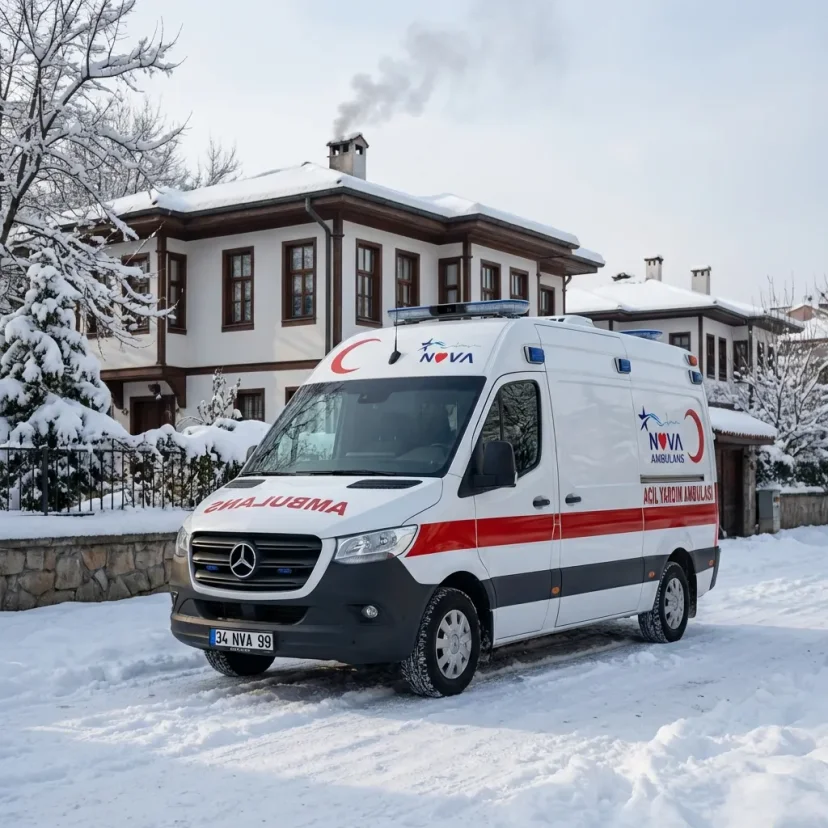
As temperatures drop, the need for indoor heating brings a sharp increase in household burn injuries. [1] Stoves, electric heaters, and hot water are the most common culprits during winter months. What may start as "a small moment of carelessness" can lead to permanent scarring or life-threatening complications when treated incorrectly.
At Nova Ambulans, we emphasize the importance of correct first aid for burn injuries encountered at home. Here is what you need to know about winter burn risks and the right steps to take.
Why Is Winter the "Burn Season"?
As the weather gets colder, risk factors multiply inside our living spaces:
- Stoves: Contact with hot metal surfaces or flare-ups.
- Electric heaters: Tipping over or igniting nearby fabrics and objects.
- Hot beverages and liquids: Spilled tea, soup, or hot water cause scalding injuries, especially in children.
Understanding Burn Severity (Burn Degrees)
Not all burns are the same. Assessing the severity before acting is essential: [2]
First-Degree Burn (Superficial)
Redness, mild swelling, and pain on the skin surface. Similar to sunburn. Usually treatable at home.
Second-Degree Burn (Blistering)
Fluid-filled blisters form on the skin. Pain is intense. Infection risk is significant.
Third-Degree Burn (Deep)
The skin may appear charred, white, or brown. Because nerve endings are destroyed, pain may not be felt. This is extremely dangerous and requires immediate medical intervention.
Step-by-Step Burn First Aid
Stay calm and follow these steps if a burn occurs:
1. Stop the Burning Process
First, ensure the person is moved away from the heat source. If clothing has caught fire, use the "Stop, Drop, and Roll" technique. [3]
2. Cool the Burn (The Most Important Step)
Hold the burned area under gently running cool tap water (not ice-cold) for at least 20 minutes. [1] This prevents heat from penetrating deeper tissues and limits the damage.
Warning: Never apply ice directly to the skin. Ice can cause a "cold burn" (frostbite) that worsens the injury. [1]