
Emergency Health Protocols in Nursing Homes: A Comprehensive Framework
A practical guide to emergency health protocols for nursing homes and elderly care facilities -- risk analysis, triage codes, staff training, ambulance integration, and documentation.
💡Key Takeaways
- Risk Analysis: Every facility must develop an emergency plan tailored to its specific resident profile.
- Triage Codes: Clear Red, Yellow, and Green code definitions are critical for appropriate response.
- Staff Training: Regular BLS (Basic Life Support) and emergency response training is mandatory.
- Ambulance Integration: Facilities need defined protocols for when to call 112 versus a private ambulance.
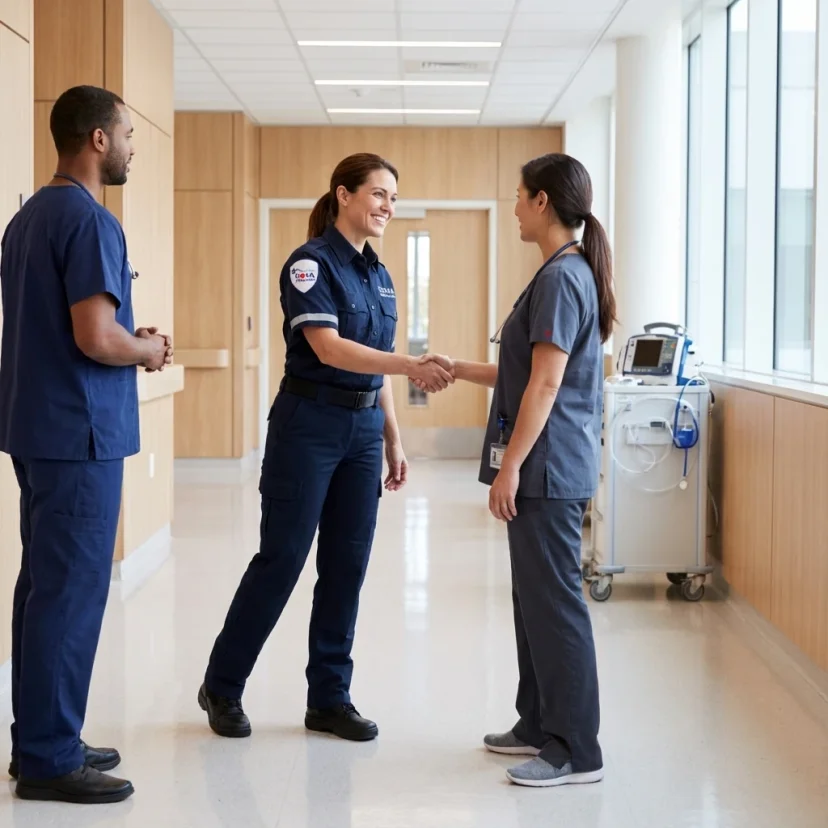
Nursing homes and elderly care facilities serve one of the most medically vulnerable populations. Residents typically have multiple chronic conditions, reduced mobility, and limited physiological reserves [1][2], meaning that emergencies escalate faster and carry higher mortality risk than in the general population. Effective emergency health protocols are not optional -- they are a fundamental measure of institutional quality and resident safety.
Nova Ambulans works with nursing homes and senior living centers across Istanbul, supporting protocol development, staff training, and providing reliable ambulance services for both planned transfers and acute emergencies. This article offers an actionable framework that facility administrators and healthcare managers can adapt to their specific context.
Geriatric Risk Profile: Understanding the Landscape
The most common emergencies in elderly care facilities include:
- Cardiovascular events -- heart attacks, acute heart failure, arrhythmias [3][5]
- Neurological emergencies -- strokes (ischemic and hemorrhagic), seizures
- Respiratory crises -- COPD exacerbations, pneumonia, aspiration events
- Falls and trauma -- hip fractures, head injuries, vertebral compression fractures [2]
- Metabolic emergencies -- diabetic crises, severe dehydration, electrolyte imbalances
- Infections -- urinary tract infections progressing to sepsis, norovirus outbreaks [2]
According to leading geriatric research, intervention within the first 10 minutes of a cardiac or neurological event significantly improves outcomes [3][4]. Every nursing home protocol must be built around this time-critical reality.
Institutional Risk Assessment
Before writing protocols, each facility should conduct a thorough risk assessment covering:
- Resident profile: Average age, prevalence of chronic conditions, cognitive status distribution, mobility levels
- Building structure: Number of floors, elevator capacity (stretcher-compatible?), corridor widths, emergency exit accessibility
- Distance to hospitals: Travel time to the nearest public hospital, nearest private hospital, and nearest stroke/cardiac center
- Staffing levels: Number of medical and non-medical staff on each shift, especially overnight and weekends
This assessment forms the foundation of every protocol decision that follows.
Standard Emergency Protocol Framework
1. Emergency Classification (Triage Codes)
Every staff member must be able to classify an event within seconds:
-
Red Code -- Life-threatening emergencies requiring immediate action
- Loss of consciousness, cardiac arrest, respiratory failure
- Suspected stroke (facial drooping, arm weakness, speech difficulty) [3]
- Severe hemorrhage, anaphylaxis, choking
- Response: Begin BLS immediately, call 112 or Nova Ambulans, activate internal emergency chain
-
Yellow Code -- Urgent but currently stable situations
- High fever with altered mental status
- Chest pain without loss of consciousness
- Moderate breathing difficulty responsive to oxygen
- Falls with suspected fracture but stable vital signs
- Response: Stabilize, monitor closely, contact physician, arrange transport (112 or private ambulance depending on severity trend)
-
Green Code -- Non-urgent, can tolerate a delay
- Minor cuts requiring wound care
- Low-grade fever without other alarming symptoms
- Mild musculoskeletal pain after a minor incident
- Response: Standard nursing care, physician notification during regular hours, documentation
2. Emergency Response Chain
A clearly defined chain of command prevents confusion during a crisis:
- Detection: Any staff member identifies an abnormal situation
- Initial assessment (ABC): Airway, Breathing, Circulation check by the nearest trained person
- Internal communication: Alert the on-duty nurse or physician using a standardized code call (intercom, walkie-talkie, or dedicated emergency app)
- First response: Begin appropriate intervention (BLS, oxygen administration, positioning)
- External communication: Call 112 or the contracted private ambulance service
- Documentation: Start recording timeline, interventions, and vital signs from the moment of detection
- Family notification: Contact the resident's emergency contact according to the facility's communication policy
- Handover: Provide a complete verbal and written briefing to the arriving ambulance team
Equipment and Infrastructure Requirements
Every nursing home should maintain, at minimum: