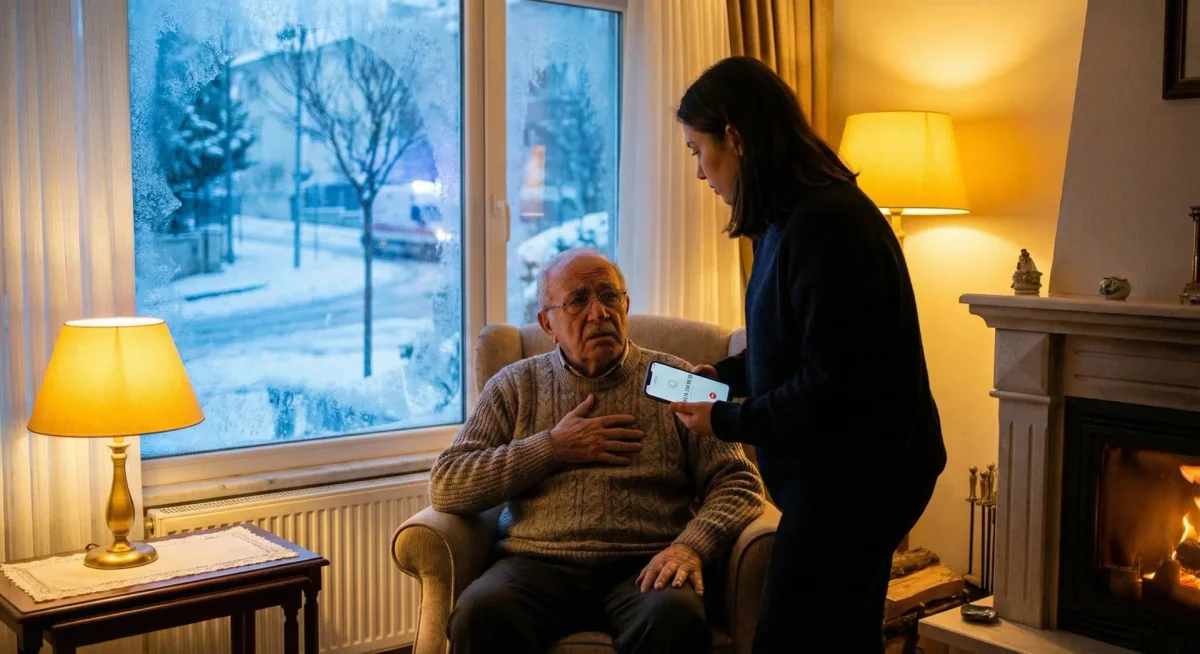
- Breathing difficulty severe enough to interrupt speech; inability to form complete sentences
- Cyanosis (bluish discoloration of lips) or marked pallor [1]Source: American Heart Association (AHA) — American Heart Association
- Severe wheezing or a feeling of "I cannot breathe"
- Confusion, drowsiness, or agitation
- Shortness of breath that worsens rapidly even at rest
- In asthma/COPD patients:
- No improvement despite using a rescue inhaler [2]Source: European Respiratory Society (ERS) — ersnet.org
- History of prior ICU admission or intubation for an attack
Situations That May Seem Non-Urgent but Can Be Critical
- Chest pain combined with shortness of breath
- Chest pain with palpitations and dizziness or near-fainting
- Coughing up blood, sudden sharp side pain, and shortness of breath (possible pulmonary embolism)
- Any of the above in pregnant women, elderly individuals, or those with serious chronic conditions
112 or Nova Ambulans: Both Handle Emergencies
Triage refers to prioritizing emergency situations. Both 112 and Nova Ambulans operate 24/7 with fully equipped emergency ambulances and professional crews. The key difference is hospital destination, not urgency level.
How to Choose
- 112: Dispatches the nearest state ambulance and transports to the nearest public hospital.
- Nova Ambulans (0216 339 00 39): Provides 24/7 emergency response and transports to the private hospital of your choice.
Both services handle life-threatening emergencies. Choose based on your hospital preference.
When Is a Planned Ambulance Transfer Appropriate?
For situations without acute emergency signs but requiring supervised medical transport:
- Post-discharge patient transport from hospital to home
- Stable COPD/asthma patients needing controlled transfer
- Planned appointments, imaging, or transfers to another facility
First Aid While Waiting for the Ambulance
The following steps represent general first aid guidance. Our until the ambulance arrives guide offers additional detail.
1) Safety and Proper Positioning
- Move the person to a warm, well-ventilated area (away from smoke, strong fumes, or stove exhaust).
- Loosen tight clothing.
- For shortness of breath: A seated position (back supported, leaning slightly forward) is usually most comfortable. [2]Source: European Respiratory Society (ERS) — ersnet.org
- For dizziness or fainting tendency: Prevent falls; safely seat or lay them on their side.
2) Stop All Exertion and Provide Reassurance
- Do not make them walk or climb stairs.
- Panic worsens shortness of breath. Encourage slow, controlled breathing.
- Our guide on 5 tips to stay calm in emergencies can help manage anxiety.
3) Provide Accurate Information When Calling 112 or Nova Ambulans
When calling, share concise, clear information:
- Full address including floor, apartment, and building name
- When symptoms started (e.g., "10 minutes ago while walking in the cold")
- Primary symptoms: chest pain, shortness of breath, radiation, cyanosis
- Known conditions: heart disease, COPD, asthma; current medications
- Allergies, blood thinner use, and whether similar episodes have occurred before
4) Help with the Patient's Own Medications
- If the person has their own asthma/COPD rescue inhaler, help them use it according to their prescription.
- If they have a physician-prescribed "action plan" (number of puffs, timing), follow it.
- Do not administer medications that do not belong to the patient.
Note: For chest pain, giving aspirin at home carries individual risks (bleeding, allergy, alternative diagnoses). The safest approach is to follow guidance from 112 or Nova Ambulans.
5) Maintain Warmth Without Overheating
- Use blankets to reduce chilling.
- Avoid sudden heat exposure (very hot showers, steam rooms) -- these can strain the circulatory system.
6) Monitor: Consciousness, Breathing, Skin Color
Watch for changes until the ambulance arrives:
- Is shortness of breath increasing?
- Is there cyanosis?
- Is consciousness becoming cloudy?
- Is the pain intensity or duration changing?
If the person loses consciousness or stops breathing normally, follow phone guidance from 112 or Nova Ambulans. If you are trained, begin basic life support (CPR).
Conditions Commonly Associated with Cold-Weather Chest Pain
Stable and Unstable Angina
Chest pain that comes on while walking in the cold and eases with rest may be angina. However, if pain lasts longer than usual, occurs at rest, or intensifies, unstable angina or heart attack must be ruled out -- call 112 or Nova Ambulans (0216 339 00 39).
Coronary Spasm
Can cause sudden chest pain even at rest. Cold is a known trigger. [3]Source: European Society of Cardiology (ESC) — escardio.org Requires medical evaluation.
Cold-Induced Bronchospasm
Wheezing and shortness of breath in cold, dry air can occur even in people without a prior asthma diagnosis. If severe, this is an emergency.
COPD Exacerbation
Increased cough, sputum production, and worsening shortness of breath may be triggered by infections or cold exposure. Oxygen levels can drop, requiring careful monitoring.
Risk Groups: Who Should Be Extra Cautious?
The following individuals face higher risk during cold weather:
- Those with coronary artery disease, stent, or bypass history
- Hypertension, diabetes, high cholesterol, or obesity
- Smokers
- Asthma and COPD patients
- Heart failure patients
- Elderly adults
- Those experiencing shortness of breath after a recent flu or COVID-19 infection
Winter Protection Tips to Reduce Flare-Ups
- Cover your mouth and nose with a scarf before going outdoors to warm the air you breathe. [2]Source: European Respiratory Society (ERS) — ersnet.org
- Avoid sudden exertion in the cold (especially early morning hours).
- Asthma/COPD patients should not skip their maintenance medications and should carry their action plan.
- Ventilate indoor spaces regularly; avoid cigarette smoke.
- Stay well-hydrated; seek early medical advice for signs of infection.
Frequently Asked Questions
Q: Is chest pain in cold weather always a heart attack?
A: No. Cold-weather chest pain can also be musculoskeletal, gastrointestinal, or respiratory in origin. However, every episode of chest pain should be taken seriously, especially if risk factors are present.
Q: How can I tell the difference between shortness of breath and a panic attack?
A: Panic attacks can also cause severe shortness of breath, chest tightness, and a feeling of impending doom. However, assuming "it is just a panic attack" without evaluation is risky. If risk factors exist, calling 112 or Nova Ambulans (0216 339 00 39) is the safest approach.
Q: Should I use my inhaler more frequently in winter?
A: Maintenance therapy for asthma/COPD should be continued as your doctor prescribed. If flare-ups increase in cold weather, consult your physician to review your treatment plan.
Q: Is it normal to feel chest tightness every morning in winter?
A: Morning hours are already a higher-risk period for cardiovascular events. Recurring morning chest pressure warrants a cardiology evaluation.
Q: My elderly family member complains of shortness of breath in cold weather -- what should I do?
A: In elderly individuals, shortness of breath may indicate heart failure, COPD exacerbation, or pneumonia. If the complaint persists or worsens, do not delay medical evaluation.