- Common symptoms are nausea, vomiting, diarrhea and abdominal pain; onset after 6 hours signals liver danger.
- Turkish Red Crescent and Ministry of Health 2025 guides forbid inducing vomiting and giving food or drink.
- After eating foraged or unknown mushrooms, call 112 at once if any symptom appears.
- Symptom-free people, including a child who ate a garden mushroom, still need hospital assessment; call 112 and explain.
- The National Poison Information Center (UZEM) on 114 advises but never replaces 112; do not leave hospital early.
The 30-Second Answer
Mushroom poisoning usually begins with nausea, vomiting, diarrhea and abdominal pain; with some species, dizziness, sweating, blurred vision and a metallic taste appear in the first two hours, and severe cases bring hallucinations, altered consciousness and coma [2][3]. If this happens, do not induce vomiting and give nothing by mouth [1][2]. The decision rule below is for foraged mushrooms and mushrooms of unknown origin; mushrooms growing in a garden or park and loose mushrooms sold at a market stall as "brought in from the village" belong to this group too:
- If there are symptoms: whatever hour they began, and even if vomiting and diarrhea have eased, call 112 at once. The Turkish Ministry of Health's 2025 first aid book lists poisoning and severe or repeated vomiting or diarrhea among the situations in which calling 112 is recommended [2].
- If there are no symptoms: the person still needs hospital assessment, and that includes a child who ate a mushroom in a garden or park. Call 112 and say that the mushrooms were eaten: the same book asks for 112 to be called whenever the situation could get worse or you are unsure [2]. If you go to the hospital by your own means, have someone who did not eat the mushrooms drive.
- The National Poison Information Center (UZEM) on 114 gives advice by phone about the poison and what to do; it is called in addition to 112, never instead of it [1][2].
- A private ambulance is an option when there is no car or no one to take a symptom-free person to the hospital; for a patient whose symptoms have begun, it does not replace 112.
Symptom-free hours are no reassurance: according to a recent review, in amatoxin poisoning (amatoxin is a mushroom toxin that damages the liver) the symptom-free interval averages eight to ten hours, and the absence of early symptoms does not rule out a significant toxin load [10]. Nor is it reassuring when vomiting and diarrhea ease: with amatoxin, gut symptoms can subside for a while as liver and kidney damage continues [10]. Write down the time of the meal and the time of the first symptom. In the national data for 2018-2023, 8.9% of cases (2,715 people) were hospitalized; among them the 90-day mortality rate was 6.6% (178 people) and 35 patients underwent liver transplantation [5]. Poisoning is not expected from labeled, packaged cultivated mushrooms bought at a supermarket [3]; even so, call 112 for severe or repeated vomiting or diarrhea [2]. The details are in the Frequently Asked Questions.
Caution. In the first hours you cannot tell a mild case from a fatal one by its symptoms; both can begin with nausea and vomiting. According to a recent review, a delay of more than 6 hours is more consistently linked to illness that damages the liver and kidneys, but early-onset illness is not harmless by default [10]. That call belongs to a hospital, not a kitchen.
If a Child Ate a Mushroom in a Garden or Park
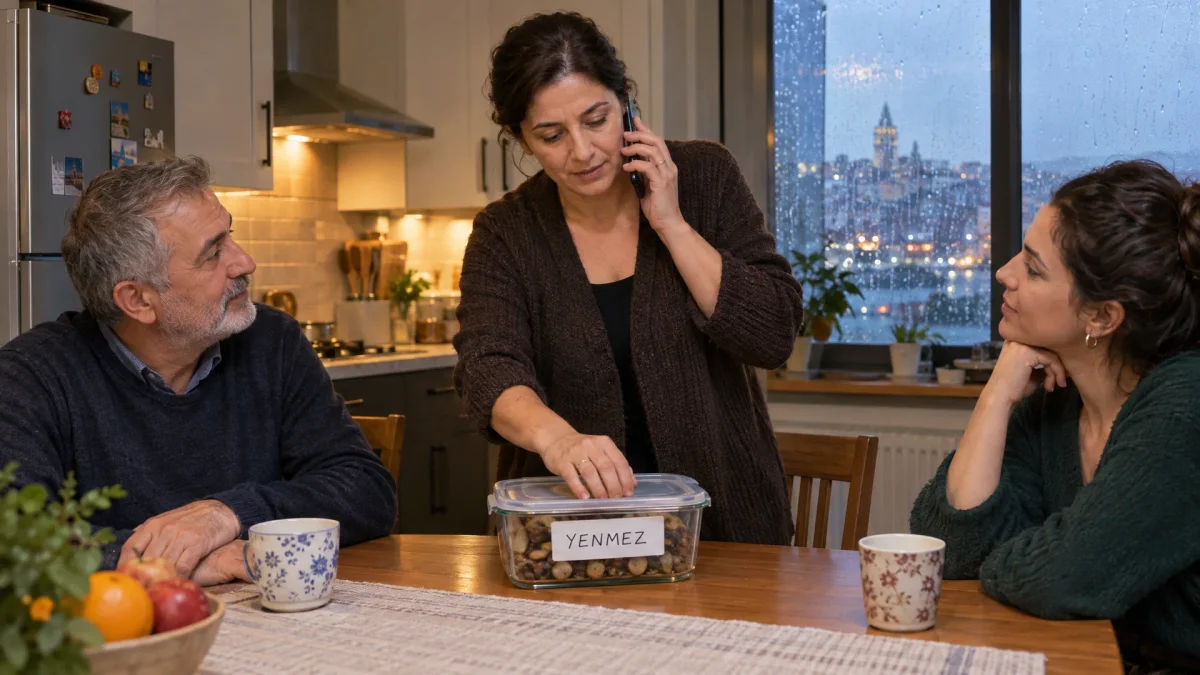
If a young child has put in their mouth or eaten a mushroom of unknown species growing in a garden or park and has no complaints at all, do not wait. According to the Ministry of Health book, it is not possible to tell poisonous wild mushrooms from non-poisonous ones [2], and the symptom-free phase can last for hours [10].
- Take out any pieces you can see in the mouth [2]; do not push your finger toward the throat, which can push pieces deeper or trigger gagging. Do not try to induce vomiting, and give no food or drink [1][2].
- Call 112, say that the child ate a mushroom, and make sure the child is assessed at a hospital; if you go by your own means, have an adult who did not eat the mushrooms drive. You can call the National Poison Information Center (UZEM) on 114 for advice on the way.
- Put the leftover piece, or one of the mushrooms growing in the same spot, in a lidded container and take it with you, but do not delay leaving to do so; having the eaten mushroom examined by experts helps with the diagnosis [3].
- If vomiting, diarrhea, unusual drowsiness or any other symptom begins, call 112 without delay.
First Aid at the Scene: the Red Crescent and Ministry 2025 Steps
The Turkish Red Crescent First Aid Pocket Book 2025 and the Ministry of Health First Aid Training Book (May 2025) set out the same core steps for mushroom poisoning [1][2]. In the list below, steps 2, 3, 5, 6, 7 and 8 come from the mushroom sections of these two sources; steps 1 and 4 come from the Ministry of Health book's general first aid steps for a poisoned patient [2]. Step 9 is Nova Ambulans' editorial recommendation. Carry out steps 2-8 while you wait for the ambulance.
- Call 112 or have someone call it. If anyone who ate foraged mushrooms or mushrooms of unknown origin has nausea, vomiting, diarrhea, abdominal pain, dizziness, blurred vision or any other symptom, call at once, whatever hour the symptoms began; if there are no symptoms, still call and explain the situation (step 9) [2]. Say how many people ate the mushrooms and when the first symptom began.
- Assess the person's consciousness. Call out, tap the shoulder gently, and see whether they respond.
- If they are alert, let them take a comfortable position. Do not force them to lie down; let them sit if they prefer.
- If they are unconscious but breathing normally, place them in the recovery position [2]. Turn them onto their side, tilt the head back, and make sure the mouth points toward the ground so that vomit does not enter the airway. Stay with them and watch their breathing.
- Never induce vomiting. Both 2025 sources use the same wording on this point [1][2]. Fingers down the throat and salt water fall under the same ban.
- Give no food or drink. No milk, no yogurt, no ayran, and nothing said to "settle the stomach".
- Assess vital signs. If vital signs are absent (they do not respond and are not breathing normally), tell 112 (call at once if you have not called yet) and begin Basic Life Support (BLS) if needed [1][2]. Chest compressions and rescue breaths are set out step by step in our Basic Life Support (BLS) guide.
- Call the National Poison Information Center (UZEM) on 114 for advice [1][2]. This call is an additional source of advice on top of 112, not a substitute for it.
- Have everyone who ate the mushrooms but has no symptoms, children included, assessed at a hospital. Call 112 and explain the situation; if you go by your own means, have someone who did not eat the mushrooms drive. If any symptom begins on the way or in the hours that follow, call 112 without delay.
Hospital assessment for people without symptoms, that is step nine, is not in either book; it is Nova Ambulans' editorial recommendation. According to the Ministry of Health book, it is not possible to tell poisonous wild mushrooms from non-poisonous ones [2], so you cannot know at home whether the mushrooms contained amatoxin. According to a recent review, the symptom-free interval with amatoxin averages eight to ten hours and the absence of early symptoms does not rule out a significant toxin load; the review recommends starting treatment promptly even in symptom-free people with a credible history of amatoxin exposure [10].
The basis for the 112 decision sits on different pages of the two books. The mushroom section of the Red Crescent pocket book ties calling 112 to the absence of vital signs [1], and the mushroom section of the Ministry of Health book gives the same step (p. 170). The same Ministry book's general first aid steps for a poisoned patient, however, say "call or have someone call 112" with no condition attached (p. 169), and its section on calling for help recommends calling 112 for poisoning, for severe or repeated vomiting or diarrhea and for blurred vision, and says 112 should be called if the answer to whether the situation could get worse is "yes" or uncertain (p. 24) [2]. The rule above rests on those general criteria: for someone whose symptoms have begun, 112 is their direct application; and because the situation of someone still in the symptom-free phase could get worse, calling 112 for them is consistent with the same criteria. The Çanakkale Provincial Health Directorate likewise asks people who ate the mushrooms to go "immediately to the nearest health facility" once symptoms appear [3].
In the Ministry of Health book's definition, the recovery position means turning an unconscious person who is breathing normally onto their side, and the book lists it among the first aid steps for a poisoned patient [2]. The book's technique, in short: lay the person on their back on the floor and kneel beside them on the side you will turn them toward; place the arm nearest you at a right angle to the body, forearm bent upward with the palm facing up; bring the other arm across the chest and hold the back of that hand against the cheek nearest you with one hand; bend the far leg at the knee with the foot staying on the ground, and pull on that knee toward you to roll the person onto their side; leave the upper leg with the hip and knee at right angles; tilt the head back to keep the airway open, and make sure the mouth slopes toward the ground [2]. According to the book, that slope prevents choking on blood or vomit; do not leave the person alone, keep watching their breathing, and begin Basic Life Support (BLS) if they stop breathing [2]. For the other steps to take while you wait, see our guide on what to do until the ambulance arrives.
When you set off, take what is left of the mushrooms that were eaten, but do not delay leaving to collect it. The Red Crescent and Ministry of Health books ask you to identify the poisonous substance if you can and tell the health team, without putting yourself in danger to do so [1][2]; according to the Çanakkale information note, having the eaten mushroom examined by experts helps with the diagnosis [3]. A recent review notes that laboratory genetic methods can identify the mushroom species even from degraded material such as stomach contents or food remnants, but that their role in emergency treatment decisions has not yet been established [10]. The sources give no detail on how to store a sample; Nova Ambulans' practical suggestion is this: if raw mushrooms are left, put a piece in a lidded container, otherwise set aside part of the cooked dish, write "do not eat" on it, and hand it to the 112 crew or the emergency department.
112, 114 or a Private Ambulance?
These numbers are often confused, yet they do different jobs: 112 sends an ambulance and transports the patient; the National Poison Information Center (UZEM) on 114 gives advice by phone about the poison and what to do [2]. According to the Ministry of Health book, ambulances can get the patient to the hospital faster than a private vehicle [2]. The table below is for foraged mushrooms and mushrooms of unknown origin. The rows for people with symptoms rest on that book's 112 criteria [2]; hospital assessment for people without symptoms is Nova Ambulans' editorial recommendation, based on current knowledge of the symptom-free interval [10], and calling 112 for them is consistent with the same book's "call 112 if uncertain" criterion [2].
| Situation | What you do |
|---|---|
| Anyone who ate the mushrooms has any symptom: nausea, vomiting, diarrhea, abdominal pain, dizziness, blurred vision, sweating or another complaint (whatever hour it began, and even if vomiting and diarrhea have eased) | Call 112; you can also call the National Poison Information Center (UZEM) on 114 for advice |
| A change in consciousness, speech or behavior (confusion, unusual drowsiness, difficulty speaking, hallucinations), fainting, a seizure, breathing difficulty, unrelenting or repeated vomiting, bloody diarrhea, severe abdominal pain, yellowing of the skin or eyes | Call 112 without delay and report the sign |
| Unconscious but breathing normally | Call 112; place the person in the recovery position |
| Unresponsive and not breathing normally (vital signs absent) | Call or have someone call 112; begin Basic Life Support (BLS) |
| No symptoms, but they ate the mushrooms: someone who shared the meal, or a child who ate a mushroom in a garden or park (older adults and pregnant women included) | Needs hospital assessment: call 112 and explain the situation; if you go by your own means, have someone who did not eat the mushrooms drive; you can call the National Poison Information Center (UZEM) on 114 on the way; call 112 if symptoms begin |
| No symptoms, but no car or no one to take them to the hospital | Call 112; you can also call a private ambulance if you prefer; call 112 if symptoms begin while you wait |
| You are not sure what to do | Call 112 |
If in doubt, call 112. A private ambulance is an option when there is no car or no one to take a symptom-free person to the hospital; for a patient whose symptoms have begun, it does not replace 112. Poisoning is not expected from labeled, packaged cultivated mushrooms bought at a supermarket [3]; even so, for severe or repeated vomiting or diarrhea, fainting or a change in consciousness, call 112 under the Ministry of Health book's criteria [2].
The National Poison Information Center (UZEM) advises health workers, physicians first among them, and the public on line 114, 24 hours a day, 7 days a week; in 2024 the center received a total of 354,921 calls [4]. Have these ready when you call: where the mushrooms were foraged, the time of the meal, the time of the first symptom, how many people ate, and the patient's age and chronic conditions. The same line handles suspected medication poisoning.
When Do Symptoms Start, and Why Does the Hour Matter?
In mushroom poisoning, the first critical information is two times: when the meal was eaten and when the first symptom began. The information note from the Ministry of Health Çanakkale Provincial Health Directorate splits symptoms by timing: those that begin within 2 hours of eating and, with some species, those that begin 6 hours later [3]. A recent review likewise states that a delay of more than 6 hours is more consistently linked to illness that damages the liver and kidneys; according to the review, the delay is a guiding sign rather than a definitive predictor [10].
| Early onset (first hours) | Late onset (after 6 hours) | |
|---|---|---|
| Typical findings | Dizziness, abdominal pain, muscle aches, difficulty speaking, drowsiness, low blood pressure, blurred vision, flushing of the face and neck, metallic taste, nausea, vomiting, sweating [3] | Nausea, vomiting, diarrhea, fever, palpitations, abdominal pain; liver and kidney dysfunction [3] |
| Following days | Mostly gastrointestinal illness that resolves on its own; with some species, early illness can also be severe [10] | Liver and kidney disorders can develop on days 4-6 [3] |
| Likely toxin | Toxins that irritate the gut or act on the nervous system | Amatoxin: a toxin that stops protein production in liver cells [10] |
| Decision | Call 112 | Call 112; tell the 112 crew and the emergency department that symptoms began more than 6 hours after the meal |
The danger of late-onset illness lies in two quiet phases. The first is the symptom-free stretch after the meal: according to the recent review, with amatoxin this delay averages eight to ten hours, rarely stretches to 24-36 hours, and patients often do not connect later symptoms with mushrooms eaten a day or two earlier [10]. The second is the phase of apparent recovery: vomiting and diarrhea ease for a while, but the liver and kidney damage continues; leaving the hospital early during this phase has been documented as a contributing factor in preventable deaths [10]. The Çanakkale note also states that liver and kidney disorders can develop over the following days (days 4-6) [3]. Do not skip the hospital, or leave it early, because the complaints have eased.
Drawing on earlier literature, the introduction of Türkiye's national study names the amatoxin-containing Amanita phalloides (death cap) as the main culprit in the country [5]. The background section of a 2026 pilot study of nine patients in China likewise cites earlier publications putting the mortality of amatoxin poisoning at 10-30% overall and above 50% in those who develop acute liver failure [9].
The practical conclusion Nova Ambulans draws from these findings is this: if symptoms began more than 6 hours after the meal, treat that as a possible sign of amatoxin poisoning, which damages the liver, make sure to tell the 112 crew and the emergency department, and do not leave the hospital early even if vomiting and diarrhea ease. The 6-hour mark is not a reassurance; six symptom-free hours after the meal do not show that someone is safe either, because the symptom-free interval with amatoxin averages eight to ten hours [10]. Even in honey mushroom (Armillaria) poisoning, which usually starts early and resolves on its own, symptoms in an 18-case series from the US state of Wisconsin began, in the 15 patients who developed symptoms, between 0.25 and 7.5 hours after eating (median, the middle value when the cases are lined up in order, 3.5 hours); the authors note that onset beyond 6 hours can make it harder to tell apart from amatoxin-containing species [8]. Early-onset illness is not harmless by default either: according to the recent review, the severe illness some species cause can begin within 30 minutes to 2 hours of the meal and can be life-threatening, particularly in older adults and children, because of narrowed airways, excessive secretions and failing circulation [10]. So the 112 decision does not depend on the hour of onset: whatever hour the symptoms begin, call 112.
Everyone at the Table Needs Assessment
Mushroom poisoning is rarely a single-person event. The meal is shared, each person eats a different amount, and symptoms begin at different hours. According to the recent review, the absence of early symptoms does not rule out a significant toxin load and should not delay treatment; the review recommends starting treatment promptly even in symptom-free people with a credible history of amatoxin exposure [10].
Nova Ambulans' practical recommendation is this: whoever was at that table should be assessed at a hospital, however well they feel. Someone saying "I'm fine" may still be in the symptom-free phase. When you call 112 for someone whose symptoms have begun, also say how many people ate the mushrooms and who has no symptoms yet. If the symptom-free people go to the hospital by their own means, have someone who did not eat the mushrooms drive: according to the Çanakkale information note, dizziness, blurred vision and drowsiness can begin within the first 2 hours after eating [3], and they are dangerous behind the wheel. Do not throw out the leftovers in the fridge and do not let anyone eat them; put them in a closed container labeled "do not eat" and take them to the hospital. If no raw mushrooms are left, that dish is the mushroom sample you still have; having the eaten mushroom examined by experts helps with the diagnosis [3].
Why Are Children and Older Adults at Higher Risk?
In the Council of Forensic Medicine autopsy study of 32 fatal cases from 2013 to 2022, those who died ranged in age from 2 to 82 years, and the distribution clustered at both ends: children and older adults [6]. The national data, for their part, link death to older age: patients who died were significantly older than survivors (mean 63.3 versus 45.7 years) [5]. In the same data, people aged 18 or younger made up 10.97% of all cases; no child-specific mortality rate is reported, but 4 of the 35 patients who received a liver transplant were children (aged 6, 7, 9 and 12) [5]. The recent review also stresses that some severe early-onset illness can be life-threatening particularly in older adults and children [10].
The rule for everyone applies to these groups too: 112 at once if there are symptoms; the hospital if there are none, and call 112 and explain for that as well. The difference is that not brushing off any sign matters even more here:
- A child who has eaten foraged mushrooms, or a mushroom growing in a garden or park, needs hospital assessment without waiting, symptoms or not, because the symptom-free phase can last for hours [10]. What to do is set out in the section "If a Child Ate a Mushroom in a Garden or Park" above; if any symptom begins in the child, call 112.
- In older adults, the mean age of those who died in the national data was markedly higher [5]; do not put off calling 112 even if the symptoms look mild.
- For pregnancy our sources hold no separate data; if a pregnant woman has eaten foraged mushrooms, the rule for everyone applies to her as well: 112 at once if there are symptoms; straight to the hospital if there are none, and call 112 and explain for that as well.
Private Car or Ambulance?
Many families think of getting in the car and driving to the nearest emergency department. For a patient whose symptoms have begun, the Ministry of Health book's answer is 112: it lists poisoning and severe or repeated vomiting or diarrhea among the situations in which calling 112 is recommended, and notes that ambulances can get the patient to the hospital faster than a private vehicle [2].
How a patient looks in the first hours can mislead. A 2026 study of 425 adults who presented to the emergency department of Kayseri City Hospital with mushroom poisoning between May 2018 and December 2023 found that their vital signs were stable on arrival and that 75% had arrived by ambulance; the authors read this as many patients with stable blood pressure and pulse (hemodynamically stable) using ambulances more often than necessary [7]. In the same study, by the Poisoning Severity Score, 70.3% of cases were mild, 21.9% moderate, 7.3% severe and 0.5% fatal; stable vital signs on arrival did not rule out a severe or fatal course, even if only in a minority [7]. The authors themselves write that mushroom poisoning should be carefully evaluated in emergency departments, regardless of the initial symptoms [7]. So base the transport decision on the Ministry of Health book's criteria, not on how the patient looks at that moment.
The reasons to go by ambulance are the problems that can arise on the way:
- A change in consciousness, speech or behavior, or fainting: the recovery position and an open airway may be needed on the way.
- Ongoing vomiting: in a moving car it is hard to manage the risk of vomit entering the windpipe (aspiration).
- A seizure or breathing difficulty: airway and breathing support may be needed on the way.
- Symptoms that began more than 6 hours after the meal, or bloody diarrhea, severe abdominal pain, or yellowing of the skin or eyes: late onset is linked to illness that damages the liver and kidneys [10], and bloody diarrhea, severe abdominal pain and yellowing also point to a severe picture. This patient needs monitoring throughout the journey.
A private car is an option only for people with no symptoms at all; for them too, calling 112 first and explaining the situation is consistent with the Ministry of Health book's "call 112 if uncertain" criterion [2]. If you go by your own means, have someone who did not eat the mushrooms drive; if symptoms begin on the way, pull over somewhere safe and call 112. If there is no car or no one to take them, call 112; you can also call a private ambulance if you prefer.
For a patient progressing to liver failure, a second journey may come up: from the emergency department to a center that performs liver transplants. In the autopsy series of fatal cases, 47% required mechanical ventilation (being placed on a breathing machine) and 19% were evaluated for liver transplantation [6]. The inter-hospital transfer of such a patient is planned together with the hospital team.
"The Silver Spoon Turns Black" and Other False Beliefs
Folk methods for telling mushrooms apart feel reassuring, but none of them works. The Ministry of Health Çanakkale Provincial Health Directorate lists them as "common beliefs with no scientific value" [3]:
| Common belief | Reality |
|---|---|
| "A silver spoon turns black when cooked with a poisonous mushroom" | No scientific value; the color of the spoon does not show whether a mushroom is poisonous [3] |
| "Mushrooms eaten with yogurt do not poison you" | No scientific value; yogurt or ayran does not prevent poisoning [3] |
| "Boiling in vinegar and salt water draws the poison out" | No scientific value; cooking does not prevent poisoning [2][3] |
| "Dried mushrooms do not poison you" | A poisonous mushroom eaten fresh, dried or canned, raw or cooked, can cause poisoning that ends in death [3] |
| "Mushrooms growing in meadows or on trees are not poisonous" | No scientific value [3] |
| "A mushroom that does not change color when picked is not poisonous" | No scientific value [3] |
| "Snails do not eat poisonous mushrooms" | No scientific value [3] |
The Ministry of Health's May 2025 First Aid Training Book settles the question in two sentences: "It is not possible to distinguish poisonous wild mushrooms from non-poisonous ones. Cooking mushrooms does not prevent poisoning." [2] Even with the honey mushroom, which is considered edible, illness in the Wisconsin series occurred "despite reported cooking" [8].
Only one protection is reliable, in the words of the Çanakkale Provincial Health Directorate: preferring labeled, cultivated mushrooms over mushrooms growing in natural areas [3]. On cultivated mushrooms the same source is unambiguous: they contain no toxic substances, so poisoning from them is not possible [3]. Choose packaged products labeled as cultivated mushrooms; dried or foraged wild mushrooms are not cultivated mushrooms even in a package, just like loose mushrooms sold at a market stall as "brought in from the village".
Why Autumn? Türkiye's Mushroom Poisoning Calendar
Mushroom poisoning in Türkiye is not spread evenly across the year. A study drawn from the Turkish Ministry of Health national electronic database recorded 30,459 mushroom-poisoning cases between 2018 and 2023, with cases concentrated in May, June, October and November [5]. The same study reports a 130% increase in cases in the first half of 2023, correlated with increased rainfall [5]. The Çanakkale Provincial Health Directorate likewise notes that mushroom poisonings occur mainly in seasons with heavy rainfall [3].
Geography is not random either. Cases concentrate in the Black Sea (29.2%), Marmara (22%) and Central Anatolia (20.4%) regions; in 2022 the highest rates per 100,000 population were recorded in Tokat (49.8), Bolu (47.4), Yozgat (44.0) and Kastamonu (41.3) [5]. In the Council of Forensic Medicine autopsy study, 81% of the deaths occurred in rural areas and 53% in autumn [6]. A similar calendar shows up in another country: in 25 years of Wisconsin Poison Center records, 78% of 18 honey mushroom (Armillaria) cases fell between late September and mid-October [8].
Istanbul Is Not Exempt
Istanbul has two links to mushroom poisoning. First, there are woods and meadows within the city limits where mushrooms can be foraged. Second, mushrooms come from the home province: dried or fresh wild mushrooms brought from the Black Sea region or Central Anatolia carry the same risk at an Istanbul table, and the belief that dried mushrooms do not poison you has no scientific value [3]. The Marmara region alone accounts for 22% of national cases [5].
In the autopsy series, 81% of deaths occurred in rural areas [6]. In the city the hospital is closer, but that only helps if help is called at once: if vomiting begins at midnight, call 112 rather than waiting for morning.
Calling Nova Ambulans After a Shared Mushroom Meal
If someone at the table has symptoms, the number to call is 112; calling a private ambulance, including through the call and WhatsApp buttons on this page, does not replace 112. If there is no car or no one to take symptom-free people who need hospital assessment, such as those from the table or a child who ate a mushroom, you can call Nova Ambulans on 0216 339 00 39 as well as 112; for this non-emergency transfer, details of our home-to-hospital transfer service are on a separate page. Have three facts ready when you call: the time of the meal, how many people ate the mushrooms, and the time of the first symptom, if any. Those facts answer the first questions the emergency department will ask. Bring the mushroom sample you set aside from the meal as well; having the eaten mushroom examined by experts helps with the diagnosis [3]. If anyone develops symptoms while you wait or on the way, call 112.
Frequently Asked Questions
What are the symptoms of mushroom poisoning, and when do they start?
The most common symptoms are nausea, vomiting, diarrhea and abdominal pain; severe cases can bring hallucinations, altered consciousness and coma [2][3]. According to the Ministry of Health Çanakkale Provincial Health Directorate, some species cause symptoms within the first 2 hours (dizziness, sweating, blurred vision, a metallic taste), while others cause them 6 hours later, and liver and kidney disorders can develop over the following days (days 4-6) [3]. Symptoms that begin after six hours raise suspicion of amatoxin, which damages the liver; because the symptom-free interval with amatoxin averages eight to ten hours, the first symptom-free hours are no reassurance either [10]. If any symptom begins after eating foraged mushrooms or mushrooms of unknown origin, call 112, whatever hour it began [2]. Write down the time of the meal and the time of the first symptom, and tell the 112 crew.
Should I make the person vomit after mushroom poisoning?
No. The Turkish Red Crescent First Aid Pocket Book 2025 and the Ministry of Health First Aid Training Book (May 2025) use the same words: never induce vomiting [1][2]. Both books also say to give no food or drink, which includes milk, yogurt, ayran and salt water [1][2]. If the person is alert, keep them in a comfortable position; if they are unconscious but breathing normally, place them in the recovery position; watch their vital signs and call 112: the Ministry of Health book lists poisoning among the situations in which calling 112 is recommended [2]. You can also call the National Poison Information Center (UZEM) on 114 for advice [1][2].
Should I call 112 or the 114 National Poison Information Center?
They do different jobs, and one does not replace the other. 112 sends an ambulance and transports the patient; the National Poison Information Center (UZEM) on 114 gives advice by phone about the poison and what to do [2]. If foraged mushrooms or mushrooms of unknown origin were eaten, call 112: the Ministry of Health First Aid Training Book (May 2025) lists poisoning and severe or repeated vomiting or diarrhea among the situations in which calling 112 is recommended, and asks for 112 to be called whenever the situation could get worse or you are unsure [2]. That applies to people who have no symptoms yet as well. You can also call 114 for advice, and 114 is also the line to call if you are unsure about mild stomach upset after labeled cultivated mushrooms. The National Poison Information Center (UZEM) advises health workers, physicians first among them, and the public 24 hours a day, 7 days a week [4].
What should someone who ate the mushrooms but has no symptoms, such as a child who ate one in the garden, do?
They need hospital assessment; this is Nova Ambulans' editorial recommendation. According to a recent review, with amatoxin the symptom-free interval averages eight to ten hours and rarely stretches to 24-36 hours; the absence of early symptoms does not rule out a significant toxin load and should not delay treatment [10]. Assume the symptom-free person has not yet developed symptoms rather than that they are safe. Call 112 and say that the mushrooms were eaten; the Ministry of Health book asks for 112 to be called when the situation could get worse or you are unsure [2]. If you go to the hospital by your own means, have someone who did not eat the mushrooms drive; if there is no car or no one to take them, a private ambulance is also an option. If any symptom begins on the way or in the hours that follow, call 112 without delay.
Can cultivated supermarket mushrooms poison you?
Poisoning is not expected from packaged products labeled as cultivated mushrooms. In the words of the Çanakkale Provincial Health Directorate, cultivated mushrooms contain no toxic substances, so poisoning from them is not possible [3]. The same source adds that raw cultivated mushrooms can carry microorganisms that cause very mild stomach and bowel complaints [3]. Even so, for severe or repeated vomiting or diarrhea, fainting, or a change in consciousness, call 112 under the Ministry of Health book's criteria [2]; if you are unsure about a mild complaint, call the National Poison Information Center (UZEM) on 114 for advice [4]. Dried or foraged wild mushrooms are not cultivated mushrooms even when they come in a package; a poisonous mushroom poisons whether fresh, dried or canned [3]. Loose mushrooms sold at a market stall as "brought in from the village" are not cultivated mushrooms either.
Rapid Emergency Support
24/7 emergency ambulance service across Istanbul. Fast response, fully equipped team.
Average response time: 15 seconds
Related Articles
Bee, Wasp, and Hornet Sting First Aid: When a Sting Reaction Needs 112
Step-by-step first aid for honeybee, wasp, and hornet stings — the bystander's 30-second stinger-scrape technique (credit-card scrape, never tweezers), local vs large-local vs systemic reaction decision tree, when to call Türkiye's 112 emergency line, adrenaline auto-injector application to the outer thigh, and what to do until the ambulance arrives — with verbatim protocols from Türk Kızılay Cep Kitabı 2025, T.C. Sağlık Bakanlığı May 2025 First-Aid Training Manual, the Turkish National Society of Allergy and Clinical Immunology (AİİAD), the Society of Pediatric Allergy and Asthma Academy (CAAAD), the 2025 Katran cohort of 194 526 patients at Istanbul Süreyyapaşa Hospital, the 2021 Öziş Baba cohort of 7 904 Trabzon schoolchildren, the American Academy of Allergy, Asthma & Immunology (AAAAI) and the McMurray 2026 Hymenoptera venom anaphylaxis review.
EducationAsthma Attack First Aid: Step-by-Step Bystander Decisions and the 112 Chain
What a bystander does in the first five minutes of an adult asthma attack — the "5-minute rule" from the Turkish Ministry of Health's May 2025 First Aid Training Book, the mild/moderate/severe/life-threatening classification of the Global Initiative for Asthma (GINA) 2025 Summary Guide, correct metered-dose inhaler and spacer technique, differences for children, pregnant patients and the elderly, and Istanbul-specific triggers.
EducationTick Bite First Aid: Correct Removal Technique and the Crimean-Congo Haemorrhagic Fever (CCHF) Decision
When a tick attaches to the skin, the bystander’s step-by-step response: gloved, fine-tipped tweezers gripping the tick’s head as close to the skin as possible with steady upward traction, no alcohol, petrol, nail polish, matches or lit cigarettes, saving the removed tick in a labelled sealed plastic bag, a 14-day watch schedule for Crimean-Congo Haemorrhagic Fever (CCHF), the 112 decision when a fever, severe muscle pain, bleeding or profound weakness appears, and safe transfer to an infectious-diseases clinic — with primary sources from the Turkish Red Crescent 2025 First-Aid Pocket Book, the Turkish Ministry of Health May 2025 First-Aid Training Manual, the Turkish Red Crescent Esenyurt First-Aid Training Centre 2024 verbatim protocol, the Turkish Ministry of Health CCHF Scientific Council bulletin, Karanfil et al. 2026 (n=7,776 national surveillance), Güllü et al. 2025 (n=1,103 18-hospital cohort), the World Health Organization (WHO) 2025 fact sheet, the European Centre for Disease Prevention and Control (ECDC) factsheet, and Norman et al. 2025 European review.
Popular Ambulance Topic Clusters
You may also like
- Private ambulance pricing
- Istanbul private ambulance
- Intercity patient transport
- Doctor-accompanied ambulance
- Dialysis patient transport
- How intercity patient transport works
- Ambulance response time in Istanbul
- Home-to-hospital patient transport
- Modern ambulance equipment and team standards
- Heart attack symptoms and first response
This content is informational only and does not replace professional medical evaluation. In emergencies, call 112 or +90 216 339 00 39.
