Concussion Symptoms After a Fall or Head Injury: Bystander Guide (2026)
After a fall or head injury, concussion symptoms bystanders must recognize, step-by-step first aid, the CDC HEADS UP danger signs that require calling 112 immediately, age-specific notes for children and elderly patients, and the recovery timeline — grounded in Türk Kızılay 2025 First-Aid Pocket Book pp.19-20 and 47-48, T.C. Ministry of Health May 2025 First-Aid Training Book Chapter X.A and VII.B, Gazi University Pediatric Emergency PECARN application review, Turkish Neurosurgery 2025 national survey (n=1,875 neurosurgeons), JAMA April 2026 pediatric concussion systematic review, and CDC HEADS UP with WHO falls data.
- Medical review
- Nova Ambulans Sağlık Kurulu (Medical Board)Prepared with input from the Medical Board. AI-assisted draft.
- Published
- Last reviewed
- Reading time
- 33 min
Key takeaways
- Correct sequence: **do not move the patient**, keep head-neck-spine aligned, call 112 Emergency Health Services, if unconscious but breathing place in recovery position, give nothing by mouth including water. This sequence matches verbatim between Türk Kızılay 2025 First-Aid Pocket Book pp.19-20 and 47-48 and T.C. Ministry of Health (SB) May 2025 First-Aid Training Book Chapter X.A pp.130-133 and Chapter VII.B pp.91-95.
- SB May 2025 Chapter X.A p.132 warning summarizes a YMYL-critical rule: **"A patient who appears to recover spontaneously and rapidly after a head impact may still have serious brain injury. Ensure the patient is taken to a healthcare facility."** This single sentence is the clinical basis for preventing subdural and epidural hematomas often missed in Türkiye under the "he recovered, it was minor" assumption.
- Call 112 immediately for these danger signs — the Centers for Disease Control and Prevention (CDC) HEADS UP verbatim list: loss of consciousness longer than one minute; repeated vomiting; seizure or convulsion; inability to wake up or stay awake; worsening headache that does not go away; one pupil larger than the other or double vision; arm/leg weakness, numbness, or coordination loss; slurred speech; inability to recognize people or places, excessive restlessness, or behavior change.
- Loss of consciousness is **not** a defining feature of concussion: the Gazi University Faculty of Medicine Pediatric Emergency review by Tomar Güneysu and Derinöz Güleryüz reports loss of consciousness in only **8-19%** of concussion cases; the most common symptom is headache (65-93%). The JAMA April 2026 systematic review (Shah et al., screening of 7,110 studies) ranks mental fog (likelihood ratio 11.8-12.0), noise sensitivity (LR 6.9), nausea (LR 6.7) and light sensitivity (LR 6.4) as the strongest on-scene signs supporting the diagnosis.
- A Turkish clinical-practice reality worth knowing: the national survey by Civlan et al. published in Turkish Neurosurgery in 2025 (n=1,875 neurosurgeons, 208 respondents) showed that in Türkiye's tertiary hospitals the initial computed tomography (CT) decision for head-trauma children is made by **emergency medicine physicians**; in other words, correct neurosurgical preparation depends on the **early emergency chain** — the 112 call, the correct destination hospital selection, and correct on-scene history.
In this article (16 sections)
- Quick Answer
- Türkiye and Global Picture: What Scale is Head Trauma?
- What is Concussion? How is it Different from Head Trauma?
- Symptoms — What to Watch, When to Worry
- Danger Signs Requiring Immediate 112 Call — Verbatim List
- Consciousness Assessment — AVPU Scale
- Step-by-Step On-Scene First Aid
- What Not to Do — Top 8 Most Common Mistakes
- Concussion in Children — The PECARN Clinical Decision Rule
- Head Trauma in the Elderly — Anticoagulants and Insidious Intracranial Hemorrhage
- Summer Concussion Pattern
- Istanbul Neurosurgery and Pediatric Emergency On-Call Chain
- Recovery, Return-to-Play, and Post-Concussion Syndrome
- When Bleeding, Shock, and Neck Injury Occur Together
- Nova Ambulans Head Trauma and Neurological Transport — Available 24/7
- Sources
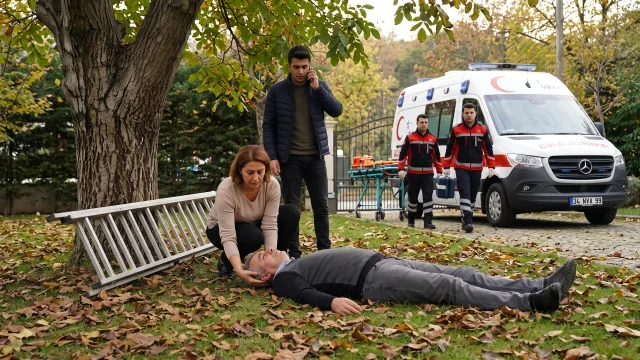
Example scenario (fictional): A seven-year-old girl on a scooter in a residential playground loses her balance, falls backward, is stunned for a few seconds and then cries; no visible bleeding, no arm deformity — but within the next 20 minutes she vomits once and tells her mother, "my head is spinning, the light hurts my eyes." Her mother reflexively says "get up, sweetheart, it will pass" and lifts the child to her feet. This single action is the maneuver verbatim warned against in the Türk Kızılay 2025 First-Aid Pocket Book and the T.C. Ministry of Health (SB) May 2025 First-Aid Training Book Chapter X.A: a patient with a head injury is assumed to have a neck and spine injury until proven otherwise, and is kept fixed in the position they are found 12. The correct three actions: do not move the patient, keep head-neck-spine aligned, call 112 Emergency Health Services. This guide sits at the intersection of two official Turkish protocols, the pediatric minor head trauma review by Tomar Güneysu and Derinöz Güleryüz from the Gazi University Faculty of Medicine Pediatric Emergency Department, the April 2026 JAMA systematic review, the 2025 Turkish national neurosurgery survey published in Turkish Neurosurgery, and the Centers for Disease Control and Prevention (CDC) HEADS UP danger-signs list; it clarifies what the bystander must do in the first 15 minutes, which symptom cannot delay a 112 call, and how the recovering patient must be observed at home for 24-48 hours.
Quick Answer
After a fall or head injury, the bystander's first three tasks are as follows. One: do not move the patient. Keep the head, neck and spine aligned; do not lift, sit, or turn them. SB May 2025 First-Aid Training Book Chapter X.A p.132 states directly: "If the patient has loss of consciousness due to head injury, always consider that a neck injury may accompany it." 2 Two: call 112 Emergency Health Services or have someone call; the address, patient's age, mechanism of injury (fall height or direction of impact), state of consciousness, and visible symptoms are critical information for the Health Command Control Center (SKKM) operator. Three: if the patient is unconscious but breathing, place them in the recovery position (rescue, healing, stable side posture) — keeping head, neck and spine aligned during the turn. Give the patient nothing by mouth including water (nil per os, NPO) — for the possibility of surgery.
Which symptoms mean call 112 IMMEDIATELY? The Centers for Disease Control and Prevention (CDC) HEADS UP danger-signs list, verbatim: (a) loss of consciousness longer than one minute or inability to wake up; (b) repeated vomiting; (c) seizure, convulsion, or epileptic-type movements; (d) worsening headache that does not go away; (e) one pupil larger than the other or double vision; (f) slurred speech, arm/leg weakness, numbness, or coordination loss; (g) inability to recognize people, excessive restlessness or behavior change 8. To these SB May 2025 Chapter X.A p.131 head-injury findings add: (h) clear fluid or blood from the ear or nose; (i) skull deformity or depression; (j) bruising behind the ear (Battle's sign) or around both eyes (raccoon eyes) 2. Patients using anticoagulants (aspirin, clopidogrel, warfarin, apixaban, rivaroxaban, dabigatran) and infants younger than 2 have an even lower threshold — in those groups any finding after a fall warrants a 112 call. If the patient is unconscious but breathing, our step-by-step recovery position guide refreshes the technique.
Türkiye and Global Picture: What Scale is Head Trauma?
Head trauma is one of the most common causes of childhood mortality worldwide. The Gazi University Faculty of Medicine Pediatric Emergency review published in Türkiye Klinikleri in 2022 gives the picture clearly: "Trauma is the most common cause of mortality in children, and head trauma is the most common cause of death in developed countries." 5 The World Health Organization (WHO) Falls Fact Sheet dated 26 April 2021 gives a broader scale: worldwide, 684,000 people die from falls each year, more than 80% of these deaths occur in low- and middle-income countries; 37.3 million falls each year are severe enough to require medical attention; adults over 60 have the highest fatal-fall rate; U.S. data show 20-30% of elderly fallers suffer moderate-to-severe injury (bruising, hip fracture, head trauma) 9. These numbers establish that head trauma is a universal health burden for children and the elderly; the bystander's correct first-aid knowledge draws its power from this context.
At the Türkiye scale, the T.C. Turkish Statistical Institute (TÜİK) News Bulletin 54195 dated 19 June 2025 gives the national frame: total deaths in Türkiye in 2024 were 489,361 and deaths from external causes (traffic accidents, falls, drowning, poisoning) constituted 3.6% of total deaths 4. This statistic does not give head trauma as a direct sub-item; however head trauma is one of the dominant mechanisms of external-cause deaths, and multiplies the likelihood of a fall resulting in head injury.
For concussion epidemiology, the combined picture from the Gazi review and the JAMA 2026 study is as follows. By WHO estimate, 6 out of every 1,000 people are affected by concussion each year 5. The JAMA April 2026 systematic review (Shah et al., Harvard Medical School Boston Children's Hospital) reports 1.1-1.9 million pediatric concussions annually as U.S. data 7. 30-50% of concussions are sport-related and cause more than 100,000 emergency department visits per year in school-age children in the U.S. 5. 70-90% of pediatric head traumas are mild Traumatic Brain Injury (TBI) — Glasgow Coma Scale (GCS) score 13-15 5. In turn, 3-5% of cases have clinically significant intracranial TBI and less than 1% require emergency surgery 5. That is, most of every hundred fallen children are in the low-risk group — but "most" is not the bystander's job to distinguish on-scene; that distinction is the job of the CDC HEADS UP danger-signs list and the PECARN clinical decision rule.
Türkiye-specific clinical-practice reality: the national neurosurgery survey by Civlan et al. published in Turkish Neurosurgery in 2025 provides a hospital-level map. Of the 1,875 members of the Turkish Neurosurgical Society surveyed between January and February 2024, 208 physicians responded (11.1%); 66.3% of respondents worked in tertiary-level healthcare institutions. Critical finding: in these tertiary hospitals the initial computed tomography (CT) decision for head-trauma children and adults is made by emergency medicine physicians; this decision is nearly independent of years of experience 6. This Türkiye-specific workflow produces the following operational conclusion: correct neurosurgical preparation depends on the early emergency chain — the 112 call, the correct trauma-center destination planning, correct on-scene history reporting. In other words, the bystander's few minutes of correct information are valuable for the rest of the chain.
What is Concussion? How is it Different from Head Trauma?
Colloquially, "concussion" and "head trauma" are often used interchangeably; however the Türk Kızılay 2025 First-Aid Pocket Book, SB May 2025 First-Aid Training Book, and the Gazi University concussion review make a clear distinction 125.
Head trauma is the general umbrella term: it covers scalp, skull bone, facial injuries, and every kind of physical damage to the brain tissue inside the head. SB May 2025 Chapter X.A p.130 gives the classification: "Head injuries include scalp, skull, and facial injuries. A patient with a head injury may also have spinal cord injury (neck and spine injuries)." 2 Head trauma may be mild (only a scalp abrasion) or severe (skull fracture + intracranial hemorrhage).
Traumatic Brain Injury (TBI) is the subcategory in which brain tissue is functionally or structurally affected after head trauma. It is divided into three groups by Glasgow Coma Scale (GCS) score: mild TBI (GCS 13-15), moderate TBI (GCS 9-12), severe TBI (GCS 3-8) 5. The Gazi review reports that mild TBI constitutes 70-90% of pediatric head traumas 5.
Concussion is a subset of mild TBI. The American Academy of Neurology definition quoted in the Gazi review, verbatim: concussion is "a clinical syndrome of biomechanically induced changes in brain function that may affect consciousness and orientation." 5 It occurs from a direct blow to the head or from force applied to another part of the body transmitted to the head. Its most critical feature: it causes functional impairment rather than structural damage; therefore CT scans are normal 5. Physiologically, it starts with a hyperacute ionic flux period in which potassium efflux and glutamate release across neuronal cell membranes are disrupted; this is followed by intracellular calcium accumulation, mitochondrial dysfunction, and an acute hyperglycolysis period; approximately seven days of subacute neuronal depression follows 5. This is why it matters: concussion is invisible on MRI and CT but disrupts brain function for weeks.
Diagnosis is clinical. The Gazi review and JAMA 2026 systematic review both state clearly: "Concussion is a clinical diagnosis" and "currently serum biomarkers are not recommended for clinical diagnosis or treatment" 57. That is, concussion is not diagnosed by blood test or CT; it is diagnosed by history, physical examination, and neurological assessment. The Sport Concussion Assessment Tool 6 (SCAT6) is a sport concussion assessment tool for clinician use 7.
So what is CT ordered for? Not for concussion itself, but to rule out severe TBI that might lie behind it — subdural hematoma, epidural hematoma, cerebral contusion, skull fracture. The PECARN algorithm (below) standardizes when CT is required. Unnecessary CT creates radiation-related cancer risk in children: the Gazi review reports a 1 in 1,500 cancer-death rate for a one-year-old child after radiation exposure from a brain CT 5. This is why it matters: in pediatrics CT is not a "cautious reflex" but a request managed by a clinical decision tool.
Symptoms — What to Watch, When to Worry
Concussion symptoms are not specific; they affect multiple systems and may develop hours or days after the event. SB May 2025 Chapter X.A p.131 lists head-injury signs and symptoms as follows: scalp or facial wound, swelling and bleeding; headache; dizziness; consciousness change; disorientation of place and time; memory loss; nausea, vomiting; nose or ear bleeding; skull deformity; discoloration and/or bruising behind the ear and around the eyes; unequal pupils; coma 2. The Gazi review refines this general list for concussion: headache is the most common symptom (65-93% of cases), followed by fatigue, dizziness, and the feeling of mental slowness 5.
The JAMA April 2026 systematic review (Shah et al., 23 studies from 7,110 screened abstracts) measured diagnostic accuracy. The signs that most increase the likelihood of concussion diagnosis (high likelihood ratio, LR): mental fog (LR 11.8-12.0; specificity 0.96), noise sensitivity (LR 6.9), nausea (LR 6.7), light sensitivity (LR 6.4) 7. On physical examination: abnormal near-point convergence (inability to focus both eyes on a near target; LR 7.0), abnormal smooth pursuits (jerky eye movements when tracking a target; LR 6.5), and saccade abnormality (inaccurate eye movements between two targets; LR 4.8) 7. Critical nuance: none of these findings have a sensitivity greater than 40% — so their "absence" does not rule out concussion, but their "presence" is a strong sign. The most interesting finding: the absence of headache is the strongest sign for decreasing the likelihood of concussion (LR 0.20; sensitivity 0.74) 7. In other words, after the report "my head does not hurt," the likelihood of concussion decreases — but does not reach zero.
Loss of consciousness is not a defining feature of concussion. This is the most widespread misunderstanding in Türkiye. The Gazi review is clear: "Loss of consciousness is seen in only 8-19% of cases and is not a defining feature." 5 More than 80% of patients never lose consciousness; yet concussion is present. Therefore the sentence "they didn't faint, it's nothing" is the basic rationale for missed concussion cases in Türkiye. The correct approach: independent of whether loss of consciousness occurred, any patient with any symptom after head trauma should be taken to a healthcare facility for evaluation.
Age-specific signs. The Centers for Disease Control and Prevention (CDC) HEADS UP guide differentiates symptom profiles by age group 8:
- 0-4 years infant/toddler. Signs: excessive crying and irritability, extra need for comfort, refusal to nurse or eat, sleep pattern change, decreased interest in play, clumsiness, vomiting right after the head impact (with no other cause), appearing dazed and confused. Infants cannot say "my head hurts"; parents watch for behavior-change clues.
- 5-17 years school-age and adolescent. Signs: appearing dazed, stunned, or confused; difficulty concentrating; slowed speech or slowed responses; clumsiness; vomiting right after the head impact; mood and behavior change; drop in school-sport performance; light and noise annoyance.
- Adult. Signs: headache, dizziness, concentration difficulty, forgetfulness, light/noise sensitivity, nausea, fatigue, restlessness, sleep disturbance, drop in work performance.
- Elderly. Signs: increased confusion, memory problems, imbalance, increased fall frequency, difficulty with daily activities. Can be confused with dementia in the elderly — sudden cognitive change after a fall always requires evaluation.
Danger Signs Requiring Immediate 112 Call — Verbatim List
If any of the following signs appear after a fall or head injury, 112 Emergency Health Services must be called immediately, without waiting for symptoms to progress. The list is the union of the Centers for Disease Control and Prevention (CDC) HEADS UP verbatim danger-signs list 8 with SB May 2025 Chapter X.A p.131 head-injury findings 2:
- Loss of consciousness longer than one minute — inability to wake up, keep awake, or open the eyes.
- Repeated vomiting — vomiting again after one or two episodes; especially projectile vomiting is a high-risk sign.
- Seizure, convulsion, or epileptic-type movements — involuntary muscle contractions.
- Worsening headache that does not go away — unresponsive to paracetamol, worsening over hours.
- Slurred speech — inability to find words.
- Weakness, numbness, coordination loss in arm or leg — one side weaker than the other is a stroke alarm.
- One pupil larger than the other, double vision, or marked vision impairment.
- Inability to recognize people, disorientation to person-place-time, excessive restlessness, agitation, behavior change.
- Clear fluid or blood from the ear or nose — sign of basilar skull fracture (could be cerebrospinal fluid leak).
- Bruising behind the ear (Battle's sign) or around both eyes (raccoon eyes) — basilar skull fracture signs.
- Skull deformity, depression, or palpable skull fracture.
- Bulging fontanelle in infants — firm swelling on top of the head in infants under 18 months.
To these are added low-threshold reasons to call: the patient is an infant under 2 and not behaving normally, is lethargic, or is not feeding; the patient is over 65 and has any finding after the fall; the patient uses anticoagulant/antiplatelet medication (aspirin, clopidogrel, warfarin, apixaban, rivaroxaban, dabigatran); the patient has a known bleeding disorder (hemophilia, von Willebrand disease); there is a multi-trauma mechanism (traffic accident, fall from height, sport collision); a fall from higher than 1.5 meters (over age 2) or higher than 0.9 meters (under age 2) 5. In these groups, "looks fine" is not on its own a reason to delay the 112 call.
SB May 2025's most critical sentence must be remembered again: "A patient who appears to recover spontaneously and rapidly after a head impact may still have serious brain injury. Ensure the patient is taken to a healthcare facility." 2 This sentence is the clinical rationale for preventing patients in Türkiye who are sent home with "a little shaken, got up, fine" and returned to the emergency department 6-12 hours later with subdural hematoma. Our ambulance call and case reporting process guide compiles what to tell the SKKM operator item by item.
Consciousness Assessment — AVPU Scale
For the bystander to assess consciousness practically, the T.C. SB May 2025 Chapter VII.B p.93 uses the Turkish adaptation USAY of the international AVPU scale 2. It has four levels:
- A — Alert. The patient is awake and speaking normally with you. Gives reasonable answers to your questions. Person-place-time orientation is intact.
- V — Voice. The patient is not awake, but responds to your questions. SB warning: "Pay attention to whether the answers are correct in terms of recognizing people, knowing the place and time." 2
- P — Pain. The patient is not awake; but when a stimulus that will cause pain is applied (pressure to the glabella between the eyebrows, pressure to the sternum, or a firm pinch to the shoulder) they grimace and try to withdraw the area where pain is applied.
- U — Unresponsive. Consciousness is completely closed; no response to voice or pain.
After a head injury, if the patient is in V, P, or U category, 112 must always be called. Even in A category — even if the patient is fully awake and speaking — if any of the CDC HEADS UP danger signs are present, 112 is called 8. AVPU is not a single fixed value; it can deteriorate over hours, so it is reassessed every 10-15 minutes on-scene and during transport. If the level worsens (for example, starts at A and drops to V), the situation is worsening — this information is critical for the hospital physician.
In hospital the clinician uses the Glasgow Coma Scale (GCS); scored 3-15: eye-opening, verbal, and motor response combined. GCS 13-15 mild TBI, GCS 9-12 moderate TBI, GCS 3-8 severe TBI 5. AVPU is for the bystander; GCS is for the clinician. But the two are consistent: A ~ GCS 15, V ~ GCS 13-14, P ~ GCS 8-9, U ~ GCS ≤5.
Step-by-Step On-Scene First Aid
The sequence below is the verbatim combination of Türk Kızılay 2025 First-Aid Pocket Book pp.47-48 with SB May 2025 First-Aid Training Book Chapter X.A pp.131-132 12.
- Make the scene safe. Before starting intervention in a traffic accident, near an electrical line, in a fire zone, or in a collapsed structure, make the environment safe for you, the patient, and bystanders. Leave the patient where they are unless there is a second danger (approaching vehicle, falling object from above).
- Check the patient's consciousness and vital signs. Call the patient's name and shake them gently by the shoulder. If there is no response, apply the AVPU scale. Check for breathing (chest movement, air heard-felt from the mouth-nose area). Breathing is a more reliable indicator than pulse.
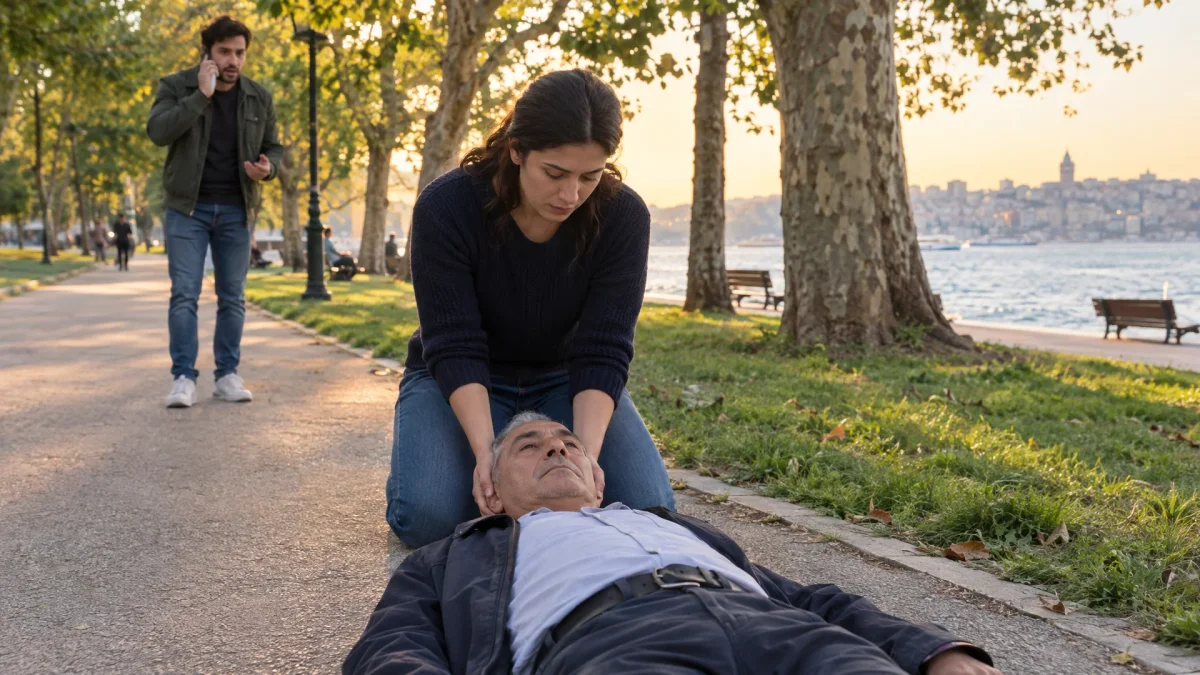
- Call 112 or have someone call. If alone, call 112 and put the phone on speaker; if someone else is on-scene, ask them to call. Tell the SKKM operator: address (neighborhood, street, door number, district for Istanbul), event mechanism (fall height, direction of impact, vehicle speed), patient's age and sex, state of consciousness (A/V/P/U), visible injury sites, anticoagulant use or known serious medical history, whether there was "rapid recovery then deterioration." Do not hang up until the operator tells you the next step.
- Keep head, neck, and spine aligned. SB May 2025 Chapter X.A p.132 is clear: "Remember that a neck injury may accompany a head injury. Turn the patient to the side by supporting the head and neck carefully without moving them, keeping the head, neck, and spine at the same level during the turn." 2 Provide manual head-neck stabilization with your hands: one hand on the sides of the head, the other under the nape. This manual support is maintained until the 112 team applies a cervical collar.
- Ensure airway patency. If there is vomit, food, or blood in the mouth, wipe it with your finger or a clean cloth. In case of suspected neck injury, avoid the head-tilt maneuver; instead the jaw-thrust maneuver is applied — hold the corners of the jaw with both hands and push the jaw upward, without turning the neck.
- If the patient is conscious (A/V) and there is no spinal suspicion: rest supine with the head and shoulders slightly elevated. Remember that vomiting may occur due to head injury; if vomiting starts, turn to the side keeping head-neck-spine aligned and prevent aspiration 2.
- If the patient is unconscious (P/U) but breathing: keeping head-neck-spine aligned (SB May 2025 p.132), place in recovery position (rescue, healing, stable side posture). If spinal suspicion is high, do not attempt alone — this maneuver is the "log-roll" technique and is ideally performed with a team of at least 4 people; the Türk Kızılay 2025 Pocket Book p.63 describes this technique 1. If you are alone, airway protection is the priority — if you must turn the patient, take care to rotate head-neck-spine as one unit. Our step-by-step recovery position guide contains the full version of the technique.
- If breathing stops, begin Basic Life Support (BLS). Chest compressions (30 compressions to 2 rescue breaths at 100-120 per minute; 5-6 cm depth on the sternum). Suspicion of neck injury does not delay BLS — use the jaw-thrust maneuver for airway instead of head-tilt-chin-lift 2. Our Basic Life Support (CPR) step-by-step guide contains the full version of the protocol; our automated external defibrillator (AED) guide describes integration when a device is available.
- If there is external bleeding, apply direct pressure to the bleeding site. SB May 2025 Chapter X.A p.132 warning: "When applying direct pressure to scalp bleeding, do not apply excessive force due to the risk of skull bone fracture." 2 That is, pressure is applied but not to the skull if fracture is suspected — pressure is applied around the wound.
- If there is fluid or blood from the ear, gently secure a clean cloth over the ear; do not plug it. Türk Kızılay 2025 Pocket Book and SB May 2025 Chapter X.A p.132 are clear: "Do not try to stop the flow of blood or fluid from the ear or nose." 12 This flow may be a sign of basilar skull fracture — cerebrospinal fluid (CSF) leakage should continue to flow; plugging increases intracranial pressure.
- Keep the patient warm. Cover with a blanket or jacket — hypothermia worsens bleeding and shock.
- Give nothing by mouth (nil per os, NPO). No water, tea, food, or painkiller. This is based on two rationales: (a) the hospital may require the patient to be fasting for possible computed tomography (CT), MRI, or surgical intervention; (b) if consciousness deteriorates and there is content in the mouth, aspiration risk is a fatal complication.
- Do not leave the patient and observe. Reassess AVPU/USAY every 10-15 minutes. If the level worsens (A→V, V→P, P→U) inform SKKM. Monitor pulse, breathing, skin color, pupil size.
What Not to Do — Top 8 Most Common Mistakes
The following eight items are common errors directly warned against in the Türk Kızılay 2025 and SB May 2025 protocols 12:
- Lifting the patient to their feet or sitting them up. Because of suspected neck-spine injury, keep the patient fixed in the position they are found. Türk Kızılay 2025 Pocket Book p.47 is clear: "Those with suspected spinal injury should not be moved and should not be allowed to move unless there is danger." 1
- Assumption of "recovered, not important." SB May 2025 Chapter X.A p.132: "A patient who appears to recover spontaneously and rapidly after a head impact may still have serious brain injury." 2 Insidious subdural and epidural hematomas can clinically manifest 6-24 hours later; the first hours are misleading.
- Plugging ear or nasal flow. SB warning: "Do not try to stop the flow of blood or fluid from the ear or nose." 2 Cerebrospinal fluid leakage should continue to flow.
- Applying excessive force to severe scalp bleeding. SB May 2025 warning: "When applying direct pressure to scalp bleeding, do not apply excessive force due to the risk of skull bone fracture." 2 With suspected fracture, apply pressure around the wound, not on the fracture end.
- Head-tilt maneuver when neck injury is suspected. This maneuver can cause additional injury to the neck vertebrae. The correct maneuver: jaw-thrust — push the corners of the jaw upward with both hands without turning the neck.
- Giving the patient water, tea, or painkiller. There is a risk of aspiration and a requirement for fasting before possible surgery. Paracetamol is preferred for pain in hospital; aspirin and non-steroidal anti-inflammatory drugs (ibuprofen, naproxen) are not recommended in the acute period due to bleeding risk 5.
- Taking the head-injured patient to the hospital in your own vehicle. During transport consciousness may deteriorate, seizure may develop, vomiting may block the airway by aspiration. The 112 ambulance offers correct positioning, en-route monitoring, and correct destination selection; as shown by the Turkish Neurosurgery 2025 national survey, correct destination selection (tertiary hospital with neurosurgery, neuroradiology, pediatrics services) is critical for mortality 6.
- Assuming the child recovered because they fell asleep. After concussion, the child's real level of consciousness must be assessed when awakened. If they do not recognize familiar people in a minute, give strange responses, they must be reassessed in the hospital. The old CDC recommendation of awakening every 2 hours during 24-48 hour home observation is still recommended by some hospitals; the current approach is to bring the patient immediately to the hospital when there is worsening in symptoms (vomiting, inability to wake up, increased restlessness).
Concussion in Children — The PECARN Clinical Decision Rule
The most evidence-based algorithm nationally and internationally that standardizes which pediatric head-trauma patient requires computed tomography (CT) versus observation only is PECARN (Pediatric Emergency Care Applied Research Network). The Türkiye Klinikleri 2022 review by the Gazi University Faculty of Medicine Pediatric Emergency presents PECARN as the guide recommended for Türkiye practice. The algorithm's rationale: PECARN is a prospective cohort study of 42,212 patients under 18 years at 25 different centers, and unlike others separately evaluated patients under 2 years; it has the highest sensitivity and reduces unnecessary CT 5.
PECARN defines three risk groups. The bystander is not expected to apply this information directly — the decision belongs to the clinician — but parental knowledge of the algorithm helps understand what to expect from the physician during clinical assessment:
HIGH RISK — mandatory CT (clinically significant TBI risk >3%):
- Glasgow Coma Scale (GCS) score ≤14
- Change in consciousness (agitation, drowsiness, repetitive questioning)
- Palpable skull fracture
- Basilar skull fracture signs (raccoon eyes, Battle's sign, hemotympanum, clear fluid from ear/nose)
- Post-traumatic seizure
- Bulging fontanelle in infants
- Suspected abuse
MODERATE RISK — 4-6 hours in-hospital observation, CT if additional findings (clinically significant TBI risk variable):
- Over 2 years (even if GCS 15) — history of loss of consciousness, history of vomiting, severe injury mechanism (vehicle rollover, motor vehicle accident with passenger death/ejection, fall from higher than 1.5 meters), severe headache.
- Under 2 years infant (even if GCS 15) — loss of consciousness longer than 5 seconds, severe mechanism (fall from higher than 0.9 meters), occipital-parietal or temporal scalp hematoma, behavior change noted by caregiver, history of lethargy and irritability (even if symptoms resolved in emergency department), minor trauma with age <3 months, vomiting.
LOW RISK — CT unnecessary, discharge with instructions (clinically significant TBI risk <0.05%):
- None of the above risk factors AND age ≥3 months.
A warning from the Gazi review specific to Türkiye is important: a 2014 Türkiye study examining CT indications for children under 3 with minor head trauma found 93.7% unnecessary CT ordering, the most common reason being fear of malpractice lawsuits, second family insistence 5. That is, in Türkiye unnecessary CT ordering both exposes the child to radiation-related cancer risk (a 1 in 1,500 cancer death rate for a one-year-old child after radiation exposure from a brain CT 5) and wastes system resources. Parental knowledge of the algorithm reduces "I want CT" insistence to the physician and increases trust in the clinical decision mechanism. Our pediatric emergencies parent's guide covers the broader assessment framework.
24-48 hour home observation instructions for the child (only if discharged by physician as low risk): wake the child every 2 hours and check if they recognize familiar people, respond correctly to you; do not allow heavy physical activity (sport, running, bicycle, playground); limit screen time (phone, tablet, TV increase fatigue); rest in a quiet and dim environment; do not give medication other than paracetamol; call 112 or take to hospital immediately for any of the following: repeated vomiting, inability to wake up, seizure, increased restlessness, inability to recognize familiar people, arm/leg weakness, speech disturbance, worsening headache, pupillary asymmetry, double vision.
Head Trauma in the Elderly — Anticoagulants and Insidious Intracranial Hemorrhage
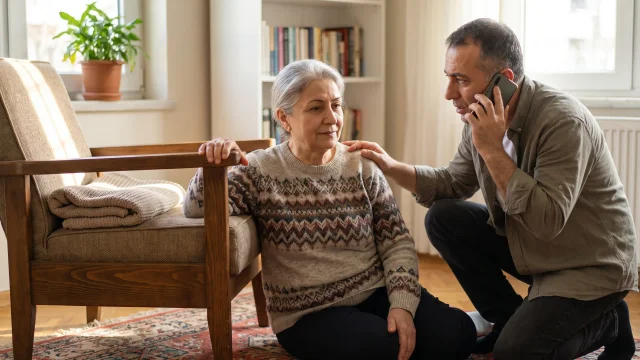
An elderly-patient head trauma requires the bystander to double their attention. The WHO falls fact sheet marks the over-60 group with the highest fatal-fall rate; per U.S. data, 20-30% of elderly fallers experience hip fracture, bruising, or head trauma 9. Two special risk factors are prominent in Türkiye:
Anticoagulant/antiplatelet medication use. In Türkiye, a large proportion of the elderly over 65 use one or more antithrombotic medications: aspirin (cardiovascular protection), clopidogrel (after coronary stent), warfarin (mechanical heart valve, atrial fibrillation), new oral anticoagulants — apixaban, rivaroxaban, dabigatran (atrial fibrillation, venous thromboembolism). These medications increase the risk of intracranial hemorrhage many-fold after a fall; the patient may have no external signs at the start but subdural hematoma may progress to a fatal picture within hours-days. In Türkiye emergency practice, head trauma in an elderly anticoagulant-user is a computed tomography (CT) indication even in the low-risk category. The bystander's task is to call 112 and relay the patient's medication list to the SKKM operator and to the arriving ambulance team.
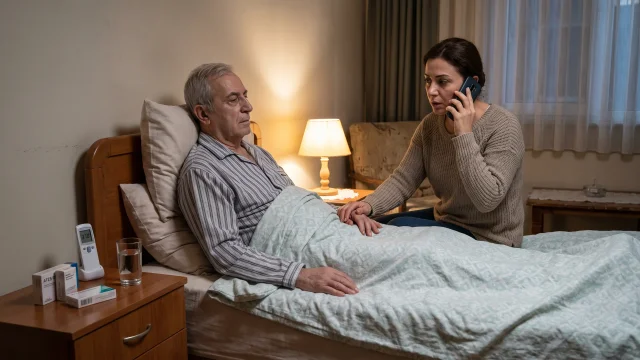
Insidious clinical course. Due to brain atrophy in the elderly, there is extra space inside the skull; a subdural hematoma may fill this space without producing symptoms — the patient "looks fine" but consciousness may deteriorate over days. Instead of normalizing "mild headache" after a fall in the elderly, close observation for 24-48 hours is needed. Increased confusion, memory problems, imbalance, repeated vomiting, excessive sleepiness — any of these are reasons to go to the hospital. Elderly care facilities and nursing homes have standard protocols for post-fall nurse assessment and physician call for this picture; our emergency health protocols in nursing homes guide details the process.
Household-fall prevention practices in the elderly: fixing or removing rugs; bathroom grab bars; night hallway lighting; non-slip mats on bathroom-kitchen floors; non-slip soles on shoes and slippers; vitamin D and calcium supplementation (with physician recommendation); balance exercise (tai chi, walking); osteoporosis screening (DEXA) and treatment; vision examination and glasses renewal; physician review of sedative-effect medications (benzodiazepines, first-generation antihistamines) for fall risk. These measures reduce the likelihood of head trauma; the trauma that does not occur is the best trauma.
Summer Concussion Pattern
In Türkiye, the summer season (June-September) creates a distinct increase in pediatric head trauma. The pattern is multi-component:
- Child playground and bicycle-skateboard-scooter accidents. Children spend more hours outdoors during summer vacation; falls from trees, fences, play structures, bicycle-skateboard-scooter imbalance, and tripping and falling backward increase. This is the group where helmet use is vital — helmets are mandatory for bicycle, skateboard, scooter, motorcycle; in the starter age group, parental supervision and correct helmet size are critical.
- Poolside and beach falls. On wet tile, marble, or ceramic floor + bare feet + running combinations falls are inevitable. Spinal injury risk is particularly high in poolside diving accidents; head-first dive into shallow water is a classic cause of cervical spinal cord injury. Slide-trampoline accidents in water parks are also causes of head injury.
- Vehicle and motorcycle accidents in holiday regions. During summer, motorcycle and electric scooter use increases; vertex-frontal-occipital impacts are frequent in helmetless riders. In traffic accidents concussion comes with multi-trauma; the bystander's first task is to call 112 from a safe distance — our first 10 minutes after winter traffic accidents guide contains the core protocol that is valid in summer as well.
- Adolescent and young adult sport injuries. Football (head-to-head collision, goalkeeper fall), basketball (personal contact), boxing-taekwondo-wrestling (combat sports), skiing-water and diving are concussion causes. "No same-day return-to-play" is the world standard after concussion in sports: a suspected concussion in a young athlete leads to removal from play that day and no return until a full assessment by a certified healthcare professional 5. This rule should be particularly emphasized in summer camps and sports schools — a second concussion in a young athlete before the first heals can lead to second-impact syndrome; rare but potentially fatal.
- Elderly bathroom-kitchen-poolside falls. Fatigue increases in summer heat; insufficient water intake can lead to hypotension and syncope; the result is a fall + head trauma. Our common health problems in summer heat guide covers heat stroke and dehydration risks in a broader context.
- Occupational accidents. In the summer season, construction site work and agricultural harvesting peak; scaffold falls, tool impacts, and agricultural machinery blows are causes of multi-trauma and concussion.
Knowing these patterns clarifies the correct information to give the SKKM operator during a 112 call: "7-year-old girl, fell backward from 1 meter in the playground, dazed for 5 seconds, vomited once within 20 minutes, currently awake but dizzy, uncomfortable with light, no anticoagulants" — this clear sentence facilitates the operator's correct triage selection.
Istanbul Neurosurgery and Pediatric Emergency On-Call Chain
Among the primary tertiary centers with 24-hour neurosurgery on-call in Istanbul for serious brain trauma referrals are Kartal Dr. Lütfi Kırdar City Hospital and Sancaktepe Şehit Prof. Dr. İlhan Varank Training and Research Hospital (Anatolian Side), Başakşehir Çam and Sakura City Hospital and Bakırköy Dr. Sadi Konuk Training and Research Hospital (European Side), Istanbul University-Cerrahpaşa Cerrahpaşa Faculty of Medicine, Istanbul University Istanbul Faculty of Medicine (Çapa), Marmara University Pendik Training and Research Hospital, and Şişli Hamidiye Etfal Training and Research Hospital. Pediatric severe head trauma is referred to Bakırköy Prof. Dr. Cemil Taşcıoğlu City Hospital, Istanbul University-Cerrahpaşa Pediatrics, Marmara Pendik Pediatrics, University of Health Sciences Ümraniye and Zeynep Kâmil hospitals.
Destination selection is coordinated by the 112 Health Command Control Center (SKKM) based on the patient's age, GCS score, presence of multi-trauma, bleeding picture, known medical history, anticoagulant use, and distance to the scene; the bystander does not need to select a hospital. As the Turkish Neurosurgery 2025 national survey shows, the first CT decision is made by the emergency medicine physician and neurosurgery consultation is called based on the finding 6; therefore a center with strong emergency service, 24-hour CT, and neuroradiology support is preferred.
For inter-city transport needs (transport from a holiday region to Istanbul, or referral from Istanbul to surrounding provinces), our private ambulance for interhospital transfer guide contains the full process. In head-trauma patient transport, airway protection, correct positioning (head elevated 30 degrees, neck in neutral), oxygen support, and continuous consciousness monitoring are essentials — one of the indications for ICU-level monitoring during transport; our air vs ground ambulance selection guide explains the air ambulance consideration for long distances.
Recovery, Return-to-Play, and Post-Concussion Syndrome
Concussion recovery is not linear; there are ups and downs over days and weeks. The Gazi review states the duration clearly: "Symptoms typically resolve within 7-10 days, but a small proportion of patients report symptoms that persist for months or even years. Recovery in children may take longer than in adults." 5
Acute period (0-48 hours). Physical and cognitive rest is essential. Bed rest is not mandatory, but: screen time (phone, tablet, TV, video games) is minimized; reading and studying are reduced; a quiet and dim environment is preferred; alcohol is not consumed; paracetamol is preferred for pain (aspirin and ibuprofen are not recommended due to bleeding risk 5); driving is not permitted.
Gradual return (2-7 days and beyond). As symptoms begin to lighten, activity is increased in stages. The international standard for athletes is the 6-step Return-to-Play protocol 5: (1) symptom-free rest; (2) light aerobic activity (walking, stationary bike at low tempo); (3) sport-specific exercise (running, ball dribbling; non-contact); (4) non-contact full training; (5) contact full training (with clinician approval); (6) return to competition. Each step lasts at least 24 hours; if symptoms return, one step back. The same logic is applied for Return-to-Learn for school return: short days, permission for breaks, screen time limitation, dimmed classroom lighting, exam postponement, notification of the school counselor when needed.
Post-Concussion Syndrome. Symptoms lasting longer than 4 weeks lead to a Post-Concussion Syndrome diagnosis; the Gazi review states this picture is seen in 10-20% of patients 5. Risk factors are as follows 5: low socioeconomic status, post-traumatic amnesia, severe initial symptoms, migraine history, psychiatric history, female sex, young age, prior concussion history, early return to sport after concussion, and excessive cognitive activity. Prolonged symptoms are managed by neurology, pediatric neurology, or sports medicine outpatient clinics; cognitive rehabilitation, psychotherapy, vestibular rehabilitation, and sleep hygiene interventions may be used.
Long-term complications. A single concussion rarely leaves permanent damage; however recurrent concussions (especially in contact sports — boxing, American football, ice hockey, wrestling, martial arts) have been associated with Chronic Traumatic Encephalopathy (CTE) in the long term. The exact causality of this picture continues to be a research area; however the principle of "not letting a second concussion happen before the first heals" supports the caution logic.
When Bleeding, Shock, and Neck Injury Occur Together
Head trauma does not come alone. Head + neck-spine + chest trauma in a traffic accident; head + hip-thigh fracture + internal bleeding in a fall from height; head + cervical spinal cord injury in a sport collision are possible additional pictures. SB May 2025 Chapter X.A p.132 gives a critical warning: "If the patient has loss of consciousness due to head injury, always consider that a neck injury may accompany it." 2 In this picture:
- Call 112 immediately and clearly state that the event is multi-trauma, that shock signs have begun (pallor, sweating, rapid pulse, low blood pressure) — this information triggers SKKM's coordination of both a physician-led ambulance and a nearby trauma center.
- Keep head-neck-spine aligned; move the patient only if there is a second danger — in that case with the "log-roll" technique with 4 people.
- Give nothing by mouth; no water, tea, or painkiller.
- Keep warm; cover with a blanket or jacket — hypothermia worsens bleeding and shock.
- Control visible external bleeding with direct pressure; a tourniquet can be applied as a last resort in massive extremity bleeding.
- If unconscious but breathing, place in recovery position; if breathing stops, begin Basic Life Support; use jaw-thrust maneuver for the airway when neck is suspected.
The most dangerous early complication associated with head injury is intracranial pressure elevation. It is diagnosed and treated only in hospital; the on-scene contribution is to minimize time loss. In cases of epidural or subdural hematoma requiring neurosurgical intervention, "opening a flap" (craniotomy) or making a small hole (craniostomy) significantly reduces mortality but time is critical — the time between the 112 call and reaching the operating room is called the "golden time."
Nova Ambulans Head Trauma and Neurological Transport — Available 24/7
In concussion and more severe head traumas, correct positioning, correct destination selection, and en-route consciousness monitoring directly affect the clinical outcome — the Turkish Neurosurgery 2025 national neurosurgery survey shows that early emergency chain is decisive in Türkiye practice 6. Nova Ambulans provides 24/7 patient transport services across Istanbul. In head, neck, and spine traumas, we plan the transport chain among tertiary centers with 24-hour neurosurgery coverage — Kartal Dr. Lütfi Kırdar City Hospital, Başakşehir Çam and Sakura City Hospital, Istanbul University-Cerrahpaşa Cerrahpaşa Faculty of Medicine, Istanbul University Çapa Faculty of Medicine, Marmara University Pendik, and Şişli Hamidiye Etfal Training and Research Hospital — with vacuum stretcher, long spine board, cervical collar (adult + pediatric sizes), head immobilizer, oxygen support, and continuous consciousness-pulse-saturation monitoring. In pediatric cases, we coordinate with Cerrahpaşa Pediatrics, Marmara Pendik Pediatrics, and Istanbul University Çapa Pediatrics services. For patients with permanent neurological sequelae, we plan home-hospital transfers, neurology-neurosurgery outpatient follow-up, and periodic transport to rehabilitation centers with a wheelchair + companion package via our 0216 339 00 39 line; the price is shared in writing at the first call. Our teams are staffed with certified Ambulance and Emergency Care Technicians (AABT) and Emergency Medical Technicians (EMT) under the T.C. Ministry of Health Regulation on Ambulances and Emergency Health Vehicles and Ambulance Services; during transport, manual head-neck stabilization, airway protection, oxygen support, and AVPU consciousness monitoring are performed completely.
Sources
Numbers in the text refer to the sources below.
- First-Aid Pocket Book 2025 — Consciousness Disorders and Injuries (pp.19-20, pp.47-48) (opens in a new tab)Turkish Red Crescent (Türk Kızılay) — First-Aid Publications, January 1, 2025
- First-Aid Training Book (May 2025) — Chapter X.A Head, Neck, and Spine Injuries (pp.130-133) and Chapter VII.B Consciousness Disorder (pp.91-95) (opens in a new tab)T.C. Ministry of Health of the Republic of Türkiye — General Directorate of Emergency Health Services, May 1, 2025
- First-Aid Training Presentations — Module 6. First Aid in Consciousness Disorders and Serious Illness Situations (Last Updated: 22 April 2025) (opens in a new tab)T.C. Ministry of Health — General Directorate of Emergency Health Services, April 22, 2025
- Death and Cause of Death Statistics, 2024 — News Bulletin 54195 (opens in a new tab)T.C. Turkish Statistical Institute (TÜİK), June 19, 2025
- Approach to Minor Head Traumas in Children (opens in a new tab)Turkiye Klinikleri (Taşar MA editor). Approach to Common Presenting Symptoms in the Pediatric Emergency Clinic, 1st Edition, Ankara, 2022, pp.133-139. Authors: Tomar Güneysu S, Derinöz Güleryüz O — Gazi University Faculty of Medicine, Pediatric Emergency Department, Ankara., January 1, 2022
- Perspectives of Turkish Neurosurgeons on Concussion/Mild Traumatic Brain Injury: A National Survey (opens in a new tab)Turkish Neurosurgery 2025;35(2):237-250; Civlan S, Bakirarar B, Tonge C, Elbir C, Egemen E, Dere UA, Albuz B, Turkoglu ME, Coskun ME, Yakar F — Pamukkale University Faculty of Medicine Department of Neurosurgery, Turkish Neurosurgical Society. PMID 40129202, DOI 10.5137/1019-5149.JTN.46658-24.2, January 1, 2025
- Does This Child Have a Concussion?: The Rational Clinical Examination Systematic Review (opens in a new tab)JAMA 2026 (6 April); Shah SN, Chizuk HM, Fong HF, Hannon M, Mannix RC — Division of Emergency Medicine, Boston Children's Hospital, Harvard Medical School. PMID 41941197, PMC PMC13372223, DOI 10.1001/jama.2026.1233, April 6, 2026
- HEADS UP — Signs and Symptoms of Concussion (updated September 2025) (opens in a new tab)Centers for Disease Control and Prevention (CDC), U.S. Department of Health and Human Services, September 1, 2025
- Falls (Fact Sheet, 26 April 2021) (opens in a new tab)World Health Organization (WHO), April 26, 2021
Nova Ambulans Sağlık Kurulu (Medical Board)
Periodically reviewed by our editorial board of emergency physicians, paramedics and clinical coordinators.
This content is informational only and does not replace professional medical evaluation. In emergencies, call 112 or +90 216 339 00 39.